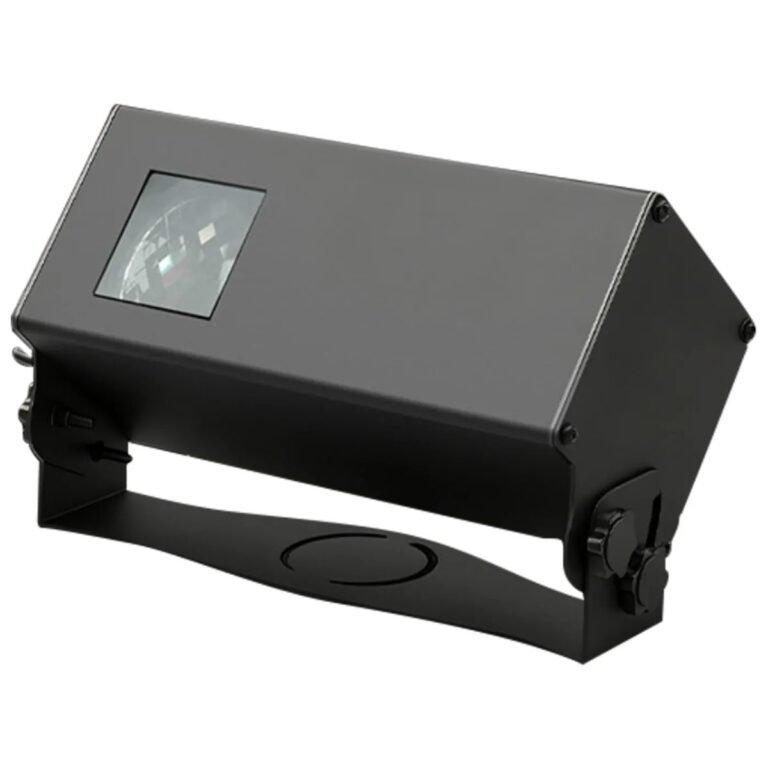


Most buyers shortlist decorative projectors by unit features, sample effect and product quotation. Carton data arrives after the product decision, when the forwarder asks for volume and gross weight. When I review a shortlist, I now put the carton row beside the product row before the buyer becomes committed to a model. I calculate volume and gross weight per sellable unit, then mark every unconfirmed field instead of treating the supplier's first packing line as fixed.
The problem is not that unit specifications are unimportant. The problem is that the sellable unit travels through the supply chain inside another product: the inner box, protective structure and master carton.
Compare star projectors by carton volume per sellable unit, gross weight per unit, protection method and loading constraints before choosing the model. A compact product can travel inefficiently, while two packing plans for the same product can create different volume, handling and damage tradeoffs.
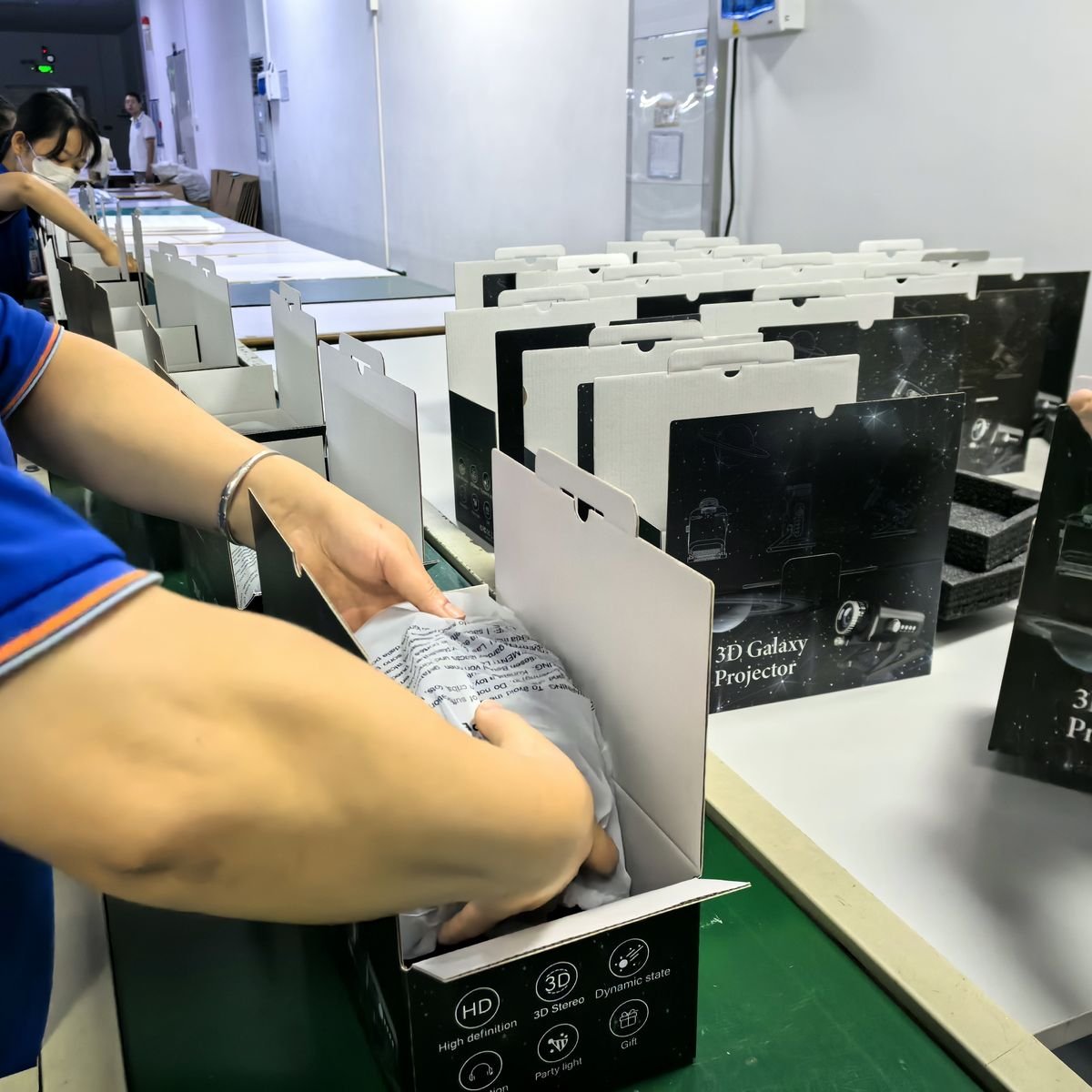
Our product data contains 24 packing plans across 23 products. One model, BWL-SP-011, deliberately retains two real carton configurations: 12 units and 16 units per carton. I will use that fact without publishing the internal carton dimensions in this draft; those dimensions remain pending public-use approval. The buying method still works with any supplier's packing list.
Use the indoor star projector range to shortlist the effect first, then compare the exact form factors and packing identities in the complete product catalog before asking a forwarder to calculate the load.
Why Is Unit Price the Wrong First Number for Comparing Two Projectors?
A unit quotation measures the product before it moves. Importers sell the product after transport, receiving, storage and fulfilment have acted on the carton.
Unit price alone cannot compare two projector offers because packaging changes freight volume, shipment weight, warehouse handling, pallet use and damage exposure.1 Start with the sellable unit, then calculate how much carton volume and gross weight each unit consumes.

The core calculations are simple:
I run these calculations even when two units look similar on a sample table. I have seen our own data show why visual compactness is not enough: the carton quantity, protection layout and missing weight fields can change the logistics decision without changing the effect the customer sees.
- Carton CBM = length × width × height in metres.
- Volume per sellable unit = carton CBM ÷ units per carton.
- Gross weight per sellable unit = carton gross weight ÷ units per carton.
- Packaging ratio = packed gross weight compared with product or inner-box weight, used as a diagnostic rather than a quality score.
Do not add product quotations to the article or comparison sheet shared publicly. The useful comparison can be done with physical efficiency alone.
| Model comparison | Product sheet answers | Packing calculation answers |
|---|---|---|
| Visual effect | What the customer sees | Nothing |
| Feature set | What the unit can do | Nothing |
| Units per cubic metre | Nothing | How volume converts into sellable units |
| Handling exposure | Nothing | How many cartons, lifts and labels the shipment creates |
| Protection margin | Sometimes implied | How the structure may respond to stacking and movement |
| Warehouse fit | Rarely shown | Whether dimensions trigger operational constraints |
The wrong conclusion is that “smaller carton is always better.”2 A volume reduction that removes protective clearance, weakens corners or forces a difficult inner-box arrangement can shift cost into damage and rework. Packing efficiency is a constrained optimization: reduce empty space without removing the structure needed for the route.3
The best carton is not the smallest box. It is the smallest repeatable packing system that protects the approved product through the buyer's real route.
What Does a Packing List Tell You—and What Does It Hide?
A packing list looks complete when it includes dimensions, quantity and weights. It still may not describe the internal structure or the measurement state.
A useful packing list identifies unit size, inner-box size, master-carton size, units per carton, net weight, gross weight and packing configuration. It does not automatically reveal divider structure, foam density, accessory placement, pallet pattern, stack limit or whether the values came from a production carton.4

Read the list as a hierarchy:
| Level | Record | Buyer check |
|---|---|---|
| Product | Unit dimensions and net weight | Exact configuration and accessories included |
| Retail pack | Inner-box dimensions and gross weight | Artwork, inserts, manual, adapter and protection |
| Master carton | Outer dimensions, net/gross weight, quantity | Real production carton and closure method |
| Shipment | Carton count, pallet plan and total volume/weight | Route, warehouse and carrier constraints |
The most common hidden problem is state. Is this a catalog estimate, a quotation-row value, a sample measurement, or a confirmed production configuration? Our data preserves that distinction. Some packing records are complete, while others deliberately list pending fields such as carton weights or inner-box dimensions.
I do not promote a catalog number into a production fact just because it is convenient for a freight calculation. I label where the value came from, which configuration it describes and what still needs to be measured after the buyer's artwork, adapter and inserts are finalized.
Reconciliation Checks
Before calculating a container or LCL shipment, run three checks:
- Weight reconciliation. Does carton net weight roughly reconcile with unit net weight multiplied by carton quantity? Packaging and rounding explain differences; a large unexplained gap needs review.
- Dimension logic. Can the stated number of inner boxes plausibly fit the outer carton in a repeatable orientation?
- Version identity. Does the packing plan match the product variant, accessories, plug and private-label packaging being ordered?
| Packing-list line | Weak answer | Useful answer |
|---|---|---|
| Carton dimensions | “Standard carton” | Measured production configuration and unit count |
| Gross weight | “About the same” | Scale reading or confirmed packing record |
| Inner box | Omitted | Dimensions, inserts and included accessories |
| Multiple plans | One row silently chosen | All valid options with tradeoffs explained |
An importer should not calculate from a PDF that lacks a date or configuration label. Packing changes after artwork, manuals, adapters or inserts change. Version the list with the approved packaging sample.
What Changes When One Projector Has Two Carton Plans?
Buyers often interpret two packing rows as a data error. Sometimes they are two valid ways to arrange the same sellable product.
When one projector has two carton plans, units per carton, outer volume, gross weight, handling count and internal geometry can all change while the product stays the same. Compare both plans per sellable unit and inspect the protective structure before choosing.

BWL-SP-011 has two user-confirmed records in our data: one packs 12 units per carton and the other 16. I am keeping the exact carton dimensions out of this public draft until their public use is approved. That does not prevent the buyer from using the decision table:
| Comparison field | 12-unit plan | 16-unit plan | Decision question |
|---|---|---|---|
| Units per carton | 12 | 16 | How many cartons will the shipment create? |
| Carton CBM | Use approved supplier dimensions | Use approved supplier dimensions | Which plan uses less volume per unit? |
| Gross weight per carton | Use approved packing record | Use approved packing record | Can the carton be handled safely in the route? |
| Internal layout | Inspect sample | Inspect sample | Which arrangement controls movement and compression? |
| Retail-pack orientation | Record pattern | Record pattern | Does artwork or product orientation matter? |
| Pallet fit | Simulate | Simulate | Which layout wastes less pallet footprint or height? |
The Calculation That Matters
Suppose Plan A has carton volume A and quantity qA, while Plan B has volume B and quantity qB.
volume per unit = carton volume / carton quantity
Compare A/qA with B/qB. Do not compare A with B alone. A larger master carton can be more efficient when it carries proportionally more sellable units.
Then add route constraints:
- maximum acceptable carton gross weight for warehouse handling;
- pallet footprint and allowed height;
- whether the shipment is loose-loaded, palletized or mixed;
- compression risk from carton stacking;
- retailer or fulfilment-centre dimensional rules;
- need to split cartons for downstream distribution.
A Packing Review That Changed the Forwarder's Question
A buyer approves BWL-SP-011, then discovers during forwarder planning that the quotation used only one packing row. I stop the forwarder calculation and show both valid configurations. I ask the buyer to compare volume per unit, carton handling, internal protection and pallet pattern before treating either plan as final.
Instead of asking the forwarder “How many units fit?”, the buyer sends both configurations and asks which one fits the actual route after weight, handling and pallet rules are applied. Final selection stays open until the loading simulation and physical pack review agree. The buyer takeaway is simple: the supplier must expose the choice before the forwarder treats the first row as fixed.
Why Can’t Decorative-Light Cartons Be Stacked to the Roof?
Container calculators assume every cubic metre is available. Real cartons have weight, compression, orientation and loading boundaries.
Theoretical container volume is not usable loading volume.5 Carton strength, gross weight, pallet geometry, voids, mixed SKUs, handling clearance and the product's internal protection reduce what can be loaded safely and repeatably. Use a loading plan, not CBM division alone.

Decorative projectors create several packing challenges:
When I look at a tighter carton, I ask what material was removed and where the load moved. If nobody can show the inner arrangement and route test, I do not describe lower CBM as a logistics improvement; I describe it as a hypothesis that still needs protection evidence.
- Optical faces and lenses may not tolerate point loading.
- Adjustable brackets or unusual housings create empty shapes inside the box.
- Adapters, stakes, remotes and accessories create concentrated pressure if not fixed.
- Retail boxes can be presentation surfaces as well as protection.
- Mixed indoor and outdoor models create cartons with very different weights.
| Loading assumption | What happens in practice | Buyer action |
|---|---|---|
| Container CBM ÷ carton CBM | Ignores gaps, orientation and access | Request a row-by-row or pallet simulation |
| Maximum stack height | Ignores compression and bottom-carton load | Confirm carton specification and route conditions |
| Same outer size means same weight | Product and accessory density differ | Use carton gross weight, not visual estimate |
| Tightest pack is safest for freight | Less void can mean less impact protection | Approve structure through handling tests |
| Palletization never matters | Warehouse or retailer may require it | Calculate palletized and loose-loaded cases separately |
This is the risk-disclosure section: a more efficient carton is not proof of lower delivered damage. We do not have a published damage-rate dataset for these configurations, so I will not attach a performance promise to either plan. The buyer should approve the physical pack and route test, then monitor receiving evidence.
A useful process includes drop, vibration or compression evaluation appropriate to the buyer's channel6, but the exact protocol should be agreed rather than borrowed from another product. A compact indoor unit and a heavier outdoor housing do not create the same carton risk.
Which Packing Questions Should You Ask Before You Shortlist a Model?
Once a sample is approved, buyers resist reopening the product choice. Ask packing questions while two or three models are still commercially possible.
Before shortlisting, request the packing hierarchy, data status, all valid carton configurations, volume and weight per sellable unit, protection method, pallet or loose-loading assumption, and the fields that will change after private-label packaging.

Put these questions into the RFQ:
I prefer to ask them while the buyer still has two or three acceptable product options. At that stage I can compare the carton honestly. After artwork and sample approval, the same question often feels like a threat to a decision everyone already wants to defend.
- What are the unit, inner-box and master-carton dimensions?
- How many units are packed per carton?
- Are net and gross weights confirmed from a packed production carton?
- Does this product have more than one valid carton plan?
- What insert, divider or foam structure protects the optical face and accessories?
- What changes when our manual, adapter, artwork or insert is added?
- Is the loading estimate loose-loaded or palletized?
- Which fields are confirmed, estimated or still pending?
| Supplier response | Procurement meaning |
|---|---|
| Sends one undated packing row | Calculation input, not yet controlled |
| Names variant and measurement state | Usable for comparison |
| Shows two configurations and tradeoffs | Packaging is being treated as a design variable |
| Cannot explain volume per unit | Forwarder will discover the issue later |
| Updates after artwork approval | Change control is working |
Any supplier who waits until the final quotation to reveal packing has separated product selection from landed operations. Ask early enough that the carton can still influence the model decision.
The moment to optimize carton CBM is before the product is emotionally “chosen,” not after the sample has become untouchable.
How to Compare a Mixed-SKU Shipment
Single-model CBM is only the first layer. Distributors often combine compact indoor units, larger optical products and heavier outdoor housings in one shipment. The mathematically smallest cartons may still create a poor load when footprints, weights and pallet rules do not combine well.
Build the mixed plan from carton rows, not averages:
| Mixed-load field | Why it matters |
|---|---|
| Carton identity by SKU | Prevents one model's dimensions from representing another |
| Carton count | Drives labels, handling and receiving work |
| Footprint and orientation | Determines row and pallet fit |
| Gross weight | Keeps heavy cartons from being planned above lighter ones |
| Stack or handling limit | Constrains usable height |
| Destination split | Avoids reopening mixed cartons for onward distribution |
Ask the forwarder or warehouse to simulate the actual carton list. A weighted-average CBM per unit can help with a high-level forecast, but it cannot produce a loading pattern.7 Keep a buffer for real operational constraints instead of promising the theoretical maximum as an order quantity.
Mixed shipments also magnify version risk. If one private-label box changes after the loading plan is built, recalculate the complete arrangement rather than replacing only that row's CBM. One dimension change can alter how neighbouring cartons fit.8 The output should be a dated loading assumption tied to the approved packaging versions, not a permanent capacity claim.
At receiving, compare the planned carton list with the shipment marks before unloading data is accepted. A correct total CBM can still hide the wrong mix of carton versions. Recording the actual counts by SKU gives purchasing a clean input for the next forecast and exposes whether the approved packing plan survived production.
Where Is Our Own Packing Data Still Incomplete?
A supplier can publish many detailed carton rows and still have meaningful gaps. The gap map is more useful than a completeness percentage.
Our current catalog records 24 packing plans across 23 products, but several rows still lack specific weights, inner-box dimensions or unit dimensions. We preserve those missing fields instead of copying values from a related model, and buyers should require confirmation before using an incomplete row for loading.

Examples of the gap types include:
I am deliberately showing these gaps because a clean-looking spreadsheet can create false confidence. When a field is missing, I keep it missing until our team can connect a measurement to the exact packed configuration. That is more useful to a buyer than a complete table assembled from neighbouring SKUs.
- a packing row with carton quantity and dimensions but carton weights still pending;
- a product with master-carton data but no inner-box dimension;
- a product with unit weight but unit dimensions unconfirmed;
- a model family where the quotation does not contain a reliable packing row.
Those products can still be manufactured and evaluated. The missing field limits what calculation can be approved. It does not justify filling the table from another SKU.
Use a status column:
| Status | Meaning | Permitted use |
|---|---|---|
| Catalog-listed | Copied from a named source catalog | Early comparison, subject to current confirmation |
| Factory-quotation listed | Present in the specific quotation row | Quote-stage planning for that configuration |
| User-confirmed dual configuration | Two plans intentionally retained | Compare both, then approve one |
| Partial, pending confirmation | Named fields missing | Do not finalize loading with those fields |
| Measured production pack | Checked against the approved packed unit | Shipment planning and receiving reference |
The final step is read-back. After a private-label box is approved, repack one complete sellable unit, measure and weigh it, update the row, and recalculate the shipment. The artwork process is not finished when the PDF is approved; it is finished when the physical pack matches the logistics record.
Conclusion
The carton is not an administrative detail behind the product. It is the physical system that converts a factory unit into a sellable unit at the buyer's warehouse. Compare volume and weight per unit, expose multiple packing plans, preserve incomplete fields, and test protection under the actual route. BWL-SP-011's two real configurations are a useful reminder: the same projector can create two different logistics decisions. The buyer who asks before shortlisting still has leverage to choose; the buyer who asks after production only has a calculation.
My rule is to approve the carton twice: once as a calculation and once as a physical packed system. If those two records do not describe the same product, I do not let the theoretical CBM become a purchase assumption.
Frequently Asked Questions
How do I calculate carton CBM for star projectors?
Multiply carton length, width and height in metres. Divide that CBM by units per carton to compare volume per sellable unit across models or packing plans.
Is the carton with more units always more efficient?
No. Compare volume and gross weight per unit, internal protection, handling limits and pallet fit. A higher carton quantity can still create a worse route outcome.
Why can one projector have two packing plans?
The same product can use different inner-box arrangements or master-carton quantities. Each plan changes volume, weight, handling count and protection geometry.
What packing data should I request before ordering?
Request unit, inner-box and carton dimensions; unit and carton weights; quantity per carton; protection structure; data status; and every valid configuration.
Can I estimate container quantity by dividing total CBM by carton CBM?
Only as a rough ceiling. Real loading loses space to orientation, gaps, pallets, weight distribution, access and carton compression limits.
When should private-label packaging be remeasured?
After the physical artwork, manual, adapter, inserts and accessories are packed together. Reweigh and remeasure the approved sellable unit before final shipment planning.
Should a supplier fill missing carton fields from a similar model?
No. Keep the field pending until the exact configuration is measured or confirmed. Similar products can use different boxes, inserts and quantities.
"How to Comply with Federal Hazardous Materials Regulations", https://www.fmcsa.dot.gov/regulations/hazardous-materials/how-comply-federal-hazardous-materials-regulations. Supply-chain and packaging studies treat package size, mass, handling requirements, and transport damage as cost factors that extend beyond the ex-factory product price. Evidence role: general_support; source type: research. Supports: Evidence that packaging dimensions, weight, and configuration affect transport and handling costs beyond the product's quoted unit price.. Scope note: The evidence supports a comparative costing framework but does not establish the cost difference between any two projector offers. ↩
"The Impact of Package Size on Consumption", https://www.canr.msu.edu/afre/uploads/files/AFRE_Seminar_Papers/Cakir_Seminar_paper.pdf. Transport-packaging studies show that reducing package volume can change cushioning clearance and impact transmission, so lower package cube does not by itself establish better protection. Evidence role: mechanism; source type: paper. Supports: The mechanism by which reduced package volume can alter cushioning, impact transmission, and product damage risk.. Scope note: The effect depends on the product, materials, test protocol, and distribution route; it should not be generalized to every compact carton. ↩
"Accelerated Benders Decomposition for Variable-Height ...", https://arxiv.org/pdf/2308.01104. Packaging-engineering literature frames package design as a multi-objective problem in which space and material efficiency must be balanced against protection, handling, and distribution requirements. Evidence role: mechanism; source type: research. Supports: Packaging optimization models that balance volume or material reduction with product protection and distribution constraints.. Scope note: Optimization models are context-dependent and do not identify the best carton without product-specific measurements and route assumptions. ↩
"Deliberate Planning of 3D Bin Packing on ...", https://arxiv.org/html/2504.04421v4. Packaging-test and logistics documentation frameworks distinguish basic package dimensions and mass from internal cushioning, stacking, palletization, and configuration-control information. Evidence role: definition; source type: institution. Supports: The additional information commonly required to characterize transport packaging beyond dimensions, quantity, and weight.. Scope note: Documentation requirements vary by organization, carrier, product category, and test program. ↩
"Stow: Robotic Packing of Items into Fabric Pods", https://arxiv.org/html/2505.04572v1. Container-loading studies and freight guidance distinguish nominal internal capacity from practical utilization because carton geometry, weight distribution, voids, access, and handling constraints limit the achievable load. Evidence role: general_support; source type: institution. Supports: The difference between theoretical container capacity and practical loading capacity caused by geometry, weight, voids, and operational restrictions.. Scope note: Actual utilization depends on the container, carton dimensions, loading method, and route-specific rules. ↩
"Computer Science", https://arxiv.org/list/cs/new. International transport-packaging test protocols use drop, vibration, compression, and related evaluations to reproduce distribution hazards and assess whether a packaged product can withstand them. Evidence role: expert_consensus; source type: institution. Supports: Recognized transport-packaging test categories and the principle of selecting tests according to distribution conditions.. Scope note: A test protocol suitable for one channel or product may not represent the hazards of another route, product design, or handling environment. ↩
"A Constructive Heuristic Algorithm for 3D Bin Packing of Irregular Shaped ...", https://arxiv.org/pdf/2206.15116. Three-dimensional bin-packing and container-loading research treats carton arrangement as a geometric optimization problem involving orientation, support, weight, and compatibility constraints rather than volume totals alone. Evidence role: mechanism; source type: paper. Supports: Why aggregate volume measures do not solve the geometric and constraint-based problem of arranging cartons in a container or pallet.. Scope note: The statement concerns planning capability; a weighted average may still be adequate for early estimates when detailed loading information is unavailable. ↩
"A Constructive Heuristic Algorithm for 3D Bin Packing of ...", https://arxiv.org/pdf/2206.15116. Three-dimensional packing research demonstrates that feasible arrangements depend on the dimensions and orientations of individual items, so changing one carton can invalidate an arrangement involving neighboring cartons. Evidence role: mechanism; source type: paper. Supports: The dependence of feasible loading arrangements on the dimensions and orientations of individual items.. Scope note: The practical effect depends on the complete carton mix, loading rules, and available slack in the approved plan. ↩