
If you're reading this, you've probably already searched Alibaba, scrolled through Made-in-China, and maybe even messaged a few suppliers on WhatsApp. You've seen star projectors ranging from what looks like a toy to units that could light up a boutique hotel lobby — and you still can't tell which supplier is real and which one is just a middleman forwarding your order to someone else.
I get it. I talk to importers and brand owners every week, and almost all of them come to us with the same frustration: "I can't tell the difference between a factory and a trading company, and I've already wasted time on samples that didn't match the listing."
This guide is written from the inside — from someone who walks the production line every day, handles quality complaints firsthand, and knows exactly where things go wrong between a sample approval and a 2,000-unit shipment. I'll walk you through what to ask, what to check, and what most suppliers won't tell you upfront.
How Do You Tell a Real Factory from a Trading Company?
This is the question I hear most often, and honestly, it's harder than it should be. Trading companies have gotten very good at presenting themselves as manufacturers. Some even rent factory showrooms for the day when buyers visit.
Here's what I tell every new importer who contacts us:
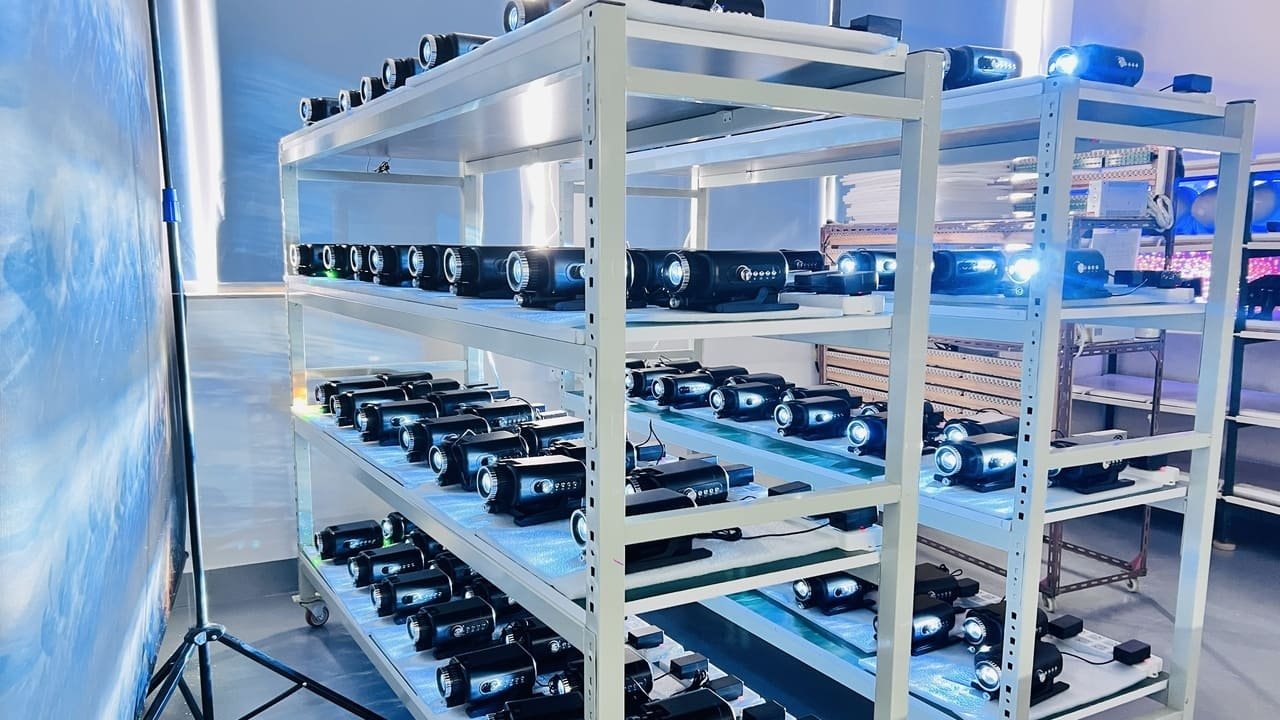
Ask for a live video walkthrough of the production line. Not a pre-recorded promo video with cinematic music — a real-time video call where someone walks you through the SMT soldering station, the laser module assembly area, and the aging test racks. A trading company can't fake this. They'll either dodge the request or show you a generic warehouse.
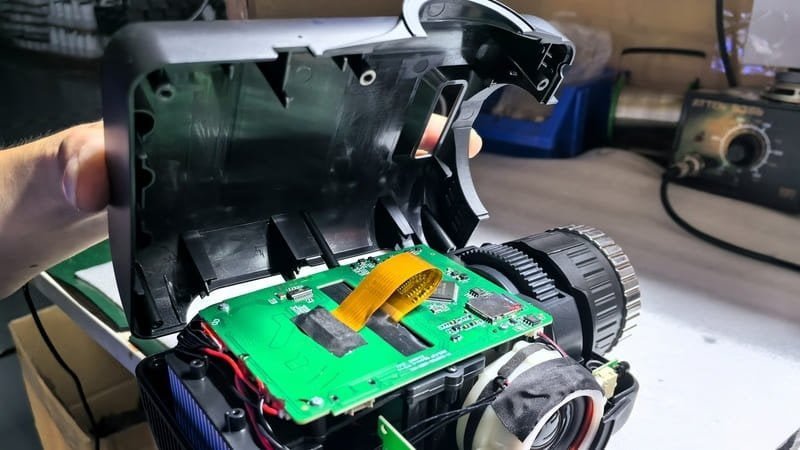
Check the factory audit reports. Legitimate manufacturers in this industry typically have BSCI or WCA audits from international buyers.1 These are third-party inspections — they verify the factory exists, has the staff they claim, and meets basic labor and safety standards. A trading company won't have these because they don't own a factory to audit.
Look at the product range breadth. A real star projector manufacturer will have 20-40 SKUs across multiple product lines2 — indoor, outdoor, different projection technologies, different price tiers. A trading company typically offers 3-5 "hot sellers" because they're only sourcing what moves fast. If a supplier's catalog looks like a curated Amazon storefront rather than a factory's full production portfolio, that's a signal.
At our facility in Zhongshan, Guangdong, we operate a 5,000 sqm factory with approximately 200 staff. We've been in the laser and LED projection space since 2011. When you ask us for a factory tour, we show you the actual lines where your order will be produced — not a rented showroom.
| Verification Method | What It Tells You | Red Flag If... |
|---|---|---|
| Live video call of production line | They actually manufacture the product | They offer a "showroom visit" instead or delay indefinitely |
| BSCI / WCA audit report | Factory is third-party verified | They can't produce any factory-level audit documentation |
| Full product catalog (20+ SKUs) | They develop and produce multiple lines | Catalog has 3-5 items that all look sourced from different factories |
| Company registration + factory address match | Legal entity owns the facility | Registration is in a different city from the "factory" |
| Response to technical questions about production | They understand how the product is made | They need to "check with the engineer" on basic questions about laser modules or LED specs |
Want to verify us? We'll walk you through our production line on a live video call — no appointment needed during business hours. Message us on WhatsApp and we'll set it up the same day.
What Types of Star Projectors Are Actually Available for Wholesale?
Most importers start their search with "star projector" as a single category. But once you get into the manufacturing side, you quickly realize this is actually 4-5 distinct product lines with very different components, price points, and target markets.
Here's how we categorize our production internally — and more importantly, which line fits which type of buyer:
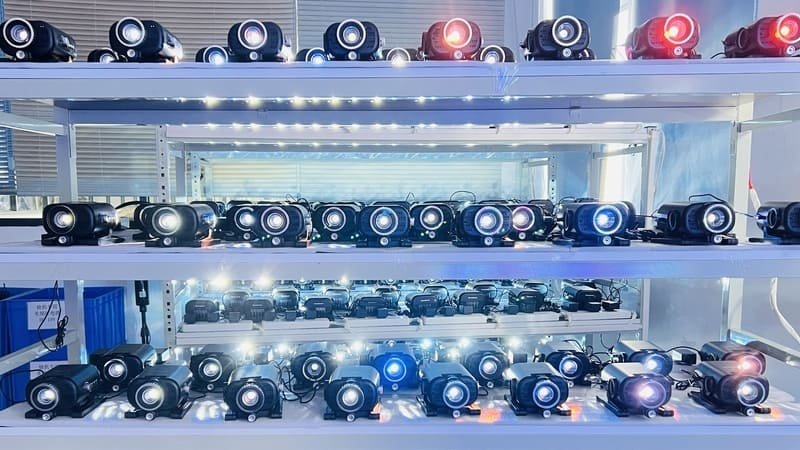
Indoor Star & Aurora Projectors
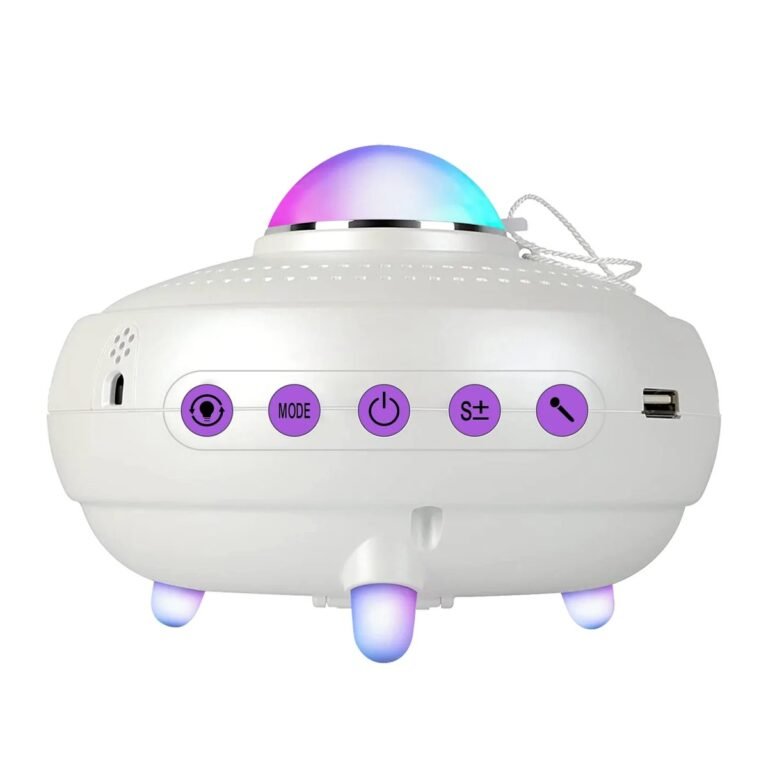
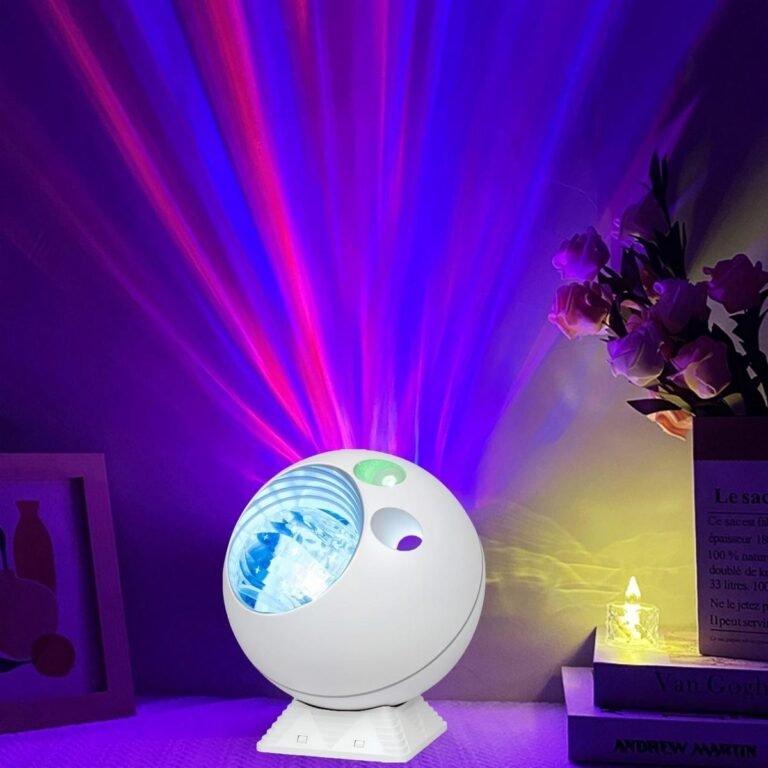
This is the highest-volume segment. These are the units you see dominating Amazon, TikTok Shop, and bedroom décor blogs. They typically combine a green laser module (532nm, Class 1) for the star field with RGBW LED modules for the aurora/nebula cloud effect.
What makes this segment interesting for wholesale is the variation. Within our catalog alone, we have models ranging from basic remote-controlled units (star projectors to Bluetooth-enabled audio-visual projectors with multiple projection modes, white noise, and party sync.
The buyers who do well in this segment are usually Amazon private-label sellers, home décor distributors, and gifting companies. The key is finding the right feature-to-cost ratio for your channel — a bedroom projector for TikTok impulse buyers needs different specs than one targeting boutique hotel procurement.
Outdoor Landscape & Decorative Projectors
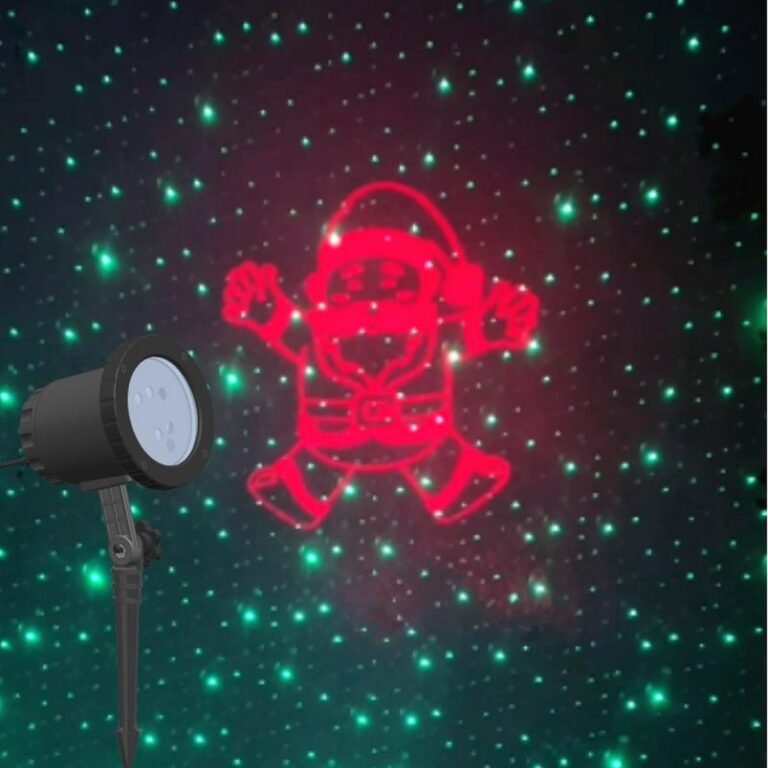
This is where the engineering gets serious. Outdoor projectors need IP65 or higher weatherproofing, die-cast aluminum housings, and cable runs of 5 meters or more. Our outdoor firefly projectors project colored laser patterns across 50-300 sqm of garden, façade, or landscape surface.
The buyer profile here is completely different — landscape lighting distributors, garden center chains, holiday décor importers, and commercial property managers. The seasonality is also more pronounced (more on that below).
Glasses-Free 3D Projection (Emerging Category)
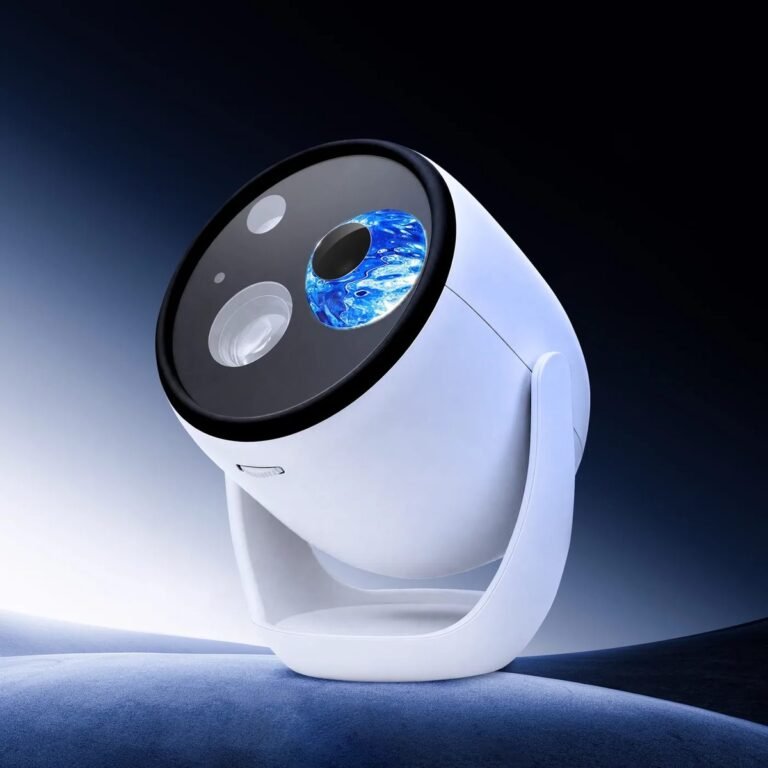
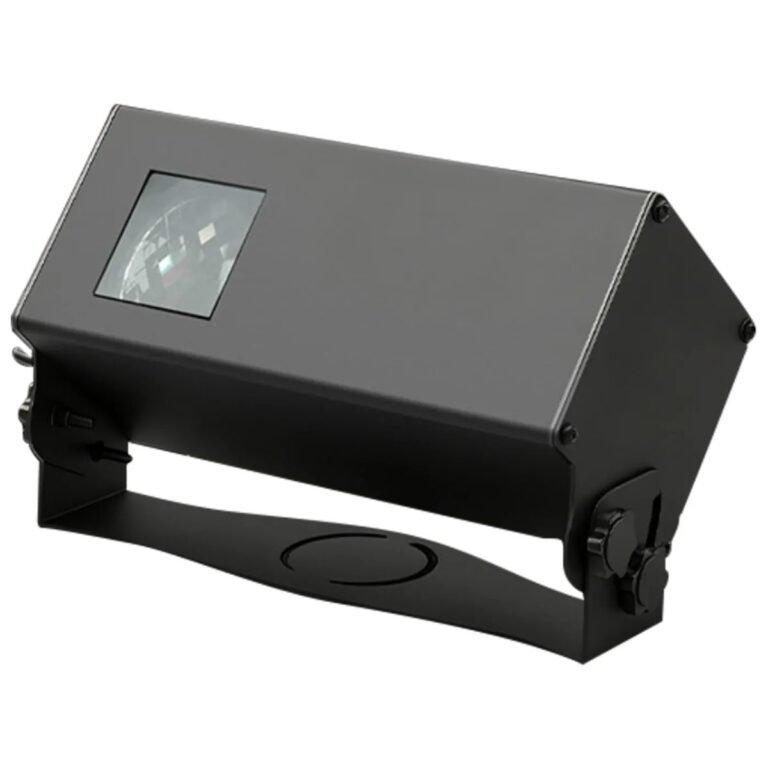
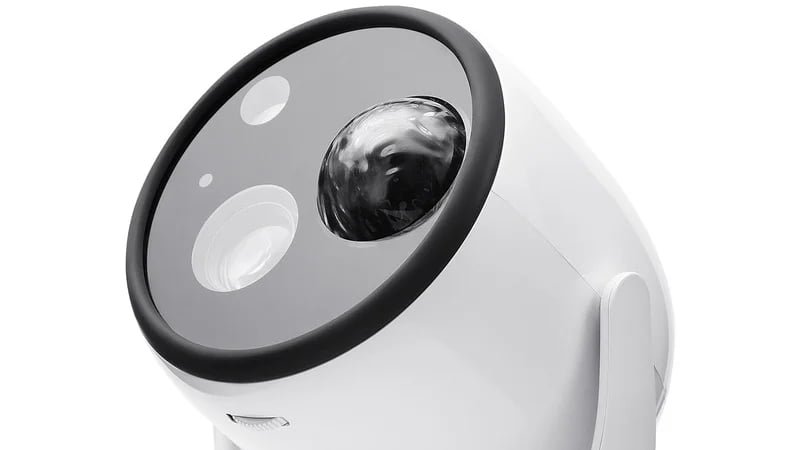
This is our flagship development line. The BWL-3D-001 uses a multi-channel optical lens system — Fresnel lens, diffusion, and focusing optics — to create a naked-eye 3D holographic effect without glasses. It's a 36W unit projecting across 25-50 sqm with 90+ scenes.
I'm highlighting this because it represents where the industry is heading. Most of the "star projectors" on the market today are functionally identical — LED + laser through a rotating disc. The brands that will differentiate in 2027 and beyond are the ones that lock in access to next-generation projection technology now.
Which Line Fits Your Business?
| Buyer Profile | Primary Need | Recommended Category | Key Specs to Focus On |
|---|---|---|---|
| Amazon / TikTok private-label seller | High volume, competitive price, visual appeal | Indoor Star & Aurora Projectors | Bluetooth, remote, USB-C, sound modes |
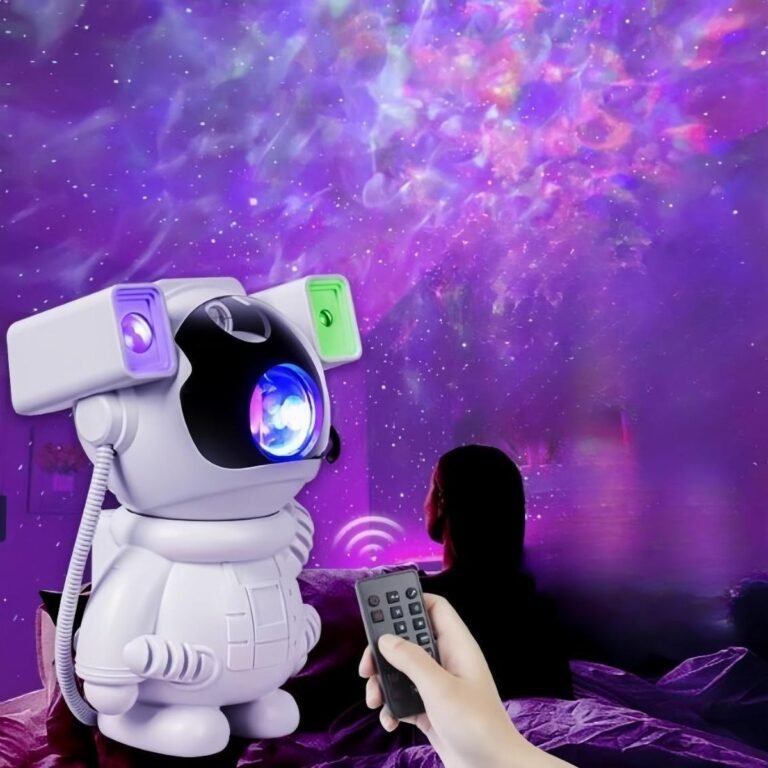
| Home décor / gifting distributor | Unique design, giftable packaging, mid-range quality | Indoor Star & Constellation Projectors | Zodiac themes, astronaut designs, white noise |
| Landscape lighting distributor | Weatherproof, high coverage, professional install | Outdoor Landscape Projectors | IP65+, projection distance 5-20m, die-cast housing |
| Holiday décor importer | Seasonal patterns (Christmas, Halloween), outdoor-rated | Outdoor Holiday Projectors | Pattern variety, IP65, plug-and-play |
| Hotel / hospitality procurement | Premium visual effect, silent operation, reliability | Glasses-Free 3D Projectors | 3D effect, large projection area, scene variety |
| Brand owner building a new line | Full customization, OEM/ODM | Any — depends on market positioning | MOQ flexibility, custom packaging, logo placement |
What Are the Hidden Quality Risks in Star Projector Sourcing?
I'm going to be honest about something most suppliers won't tell you: this is an industry where what you see in a sample and what shows up in a 2,000-unit shipment can be two different things. Not because suppliers are dishonest (though some are), but because there are genuine manufacturing variables that create batch-to-batch differences.
Here are the risks I see importers run into repeatedly:
1. Laser Module Inconsistency
The laser diode is the most expensive single component in most star projectors. It's also the one with the widest quality variance between suppliers. A green 532nm laser module from a reputable diode manufacturer will hold consistent brightness and color over thousands of hours.3 A cheap alternative will drift in wavelength, lose brightness, or fail entirely within months.
The problem? You can't tell the difference by looking at two units side by side on day one. The divergence shows up at month 3 or month 6 — which is when your customers start complaining and your return rate climbs.
What to ask your supplier: "Which diode manufacturer do you use for the 532nm module, and what's the rated lifespan?" If they can't answer this, they don't control their own component sourcing.
2. Motor Noise and Lifespan
Star projectors use small DC motors to rotate the projection disc or the laser diffraction grating. Cheap motors develop a noticeable hum or clicking sound within weeks — and for a product that's marketed for bedroom ambience, motor noise is a deal-killer.
I've seen importers receive a perfect-sounding sample, approve it, and then get a shipment where 10-15% of units have audible motor noise. The reason? The sample was hand-picked from a small test batch. The bulk order used a different motor lot.
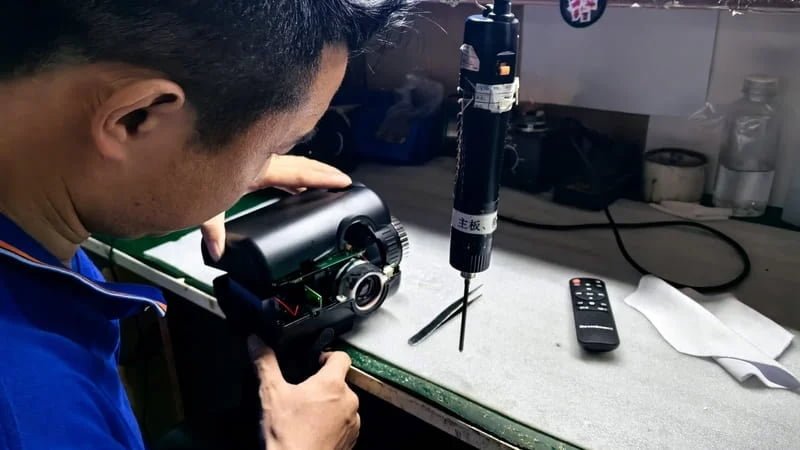
What to ask your supplier: "Do you test motor noise on every unit or on a sample basis? What's your accepted dB threshold?"
3. LED Color Drift Across Batches
RGBW LED modules should produce consistent color across all units in an order. In practice, LED binning (the process of sorting LEDs by color temperature and brightness) varies between chip lots.4 If a factory doesn't control their LED binning, you'll get units where the "warm white" is actually cool white, or the blue channel is noticeably different from the sample.
This is especially problematic for brand owners who are building a consistent product identity. If your customer buys two of the same projector and they produce noticeably different aurora colors, your brand perception takes a hit.
4. IP Rating Inflation (Outdoor Products)
For outdoor projectors, the IP rating (ingress protection) is critical. IP65 means the unit is protected against water jets from any direction.5 But here's the thing — some suppliers claim IP65 without actually running the standardized test. They'll seal the housing, call it waterproof, and put IP65 on the spec sheet.
What to ask: "Can you provide the IP test report from a third-party lab, or show me the sealing process on the production line?" A legitimate factory can show you both.
5. Certification Gaps
In the star projector industry, the key compliance frameworks include IEC 60825-1 for laser safety classification, CE marking for European markets, FCC for the US, and UL/UL588 for certain retail channels. The certification landscape is complex because different SKUs may have different certification coverage.
Important: Never assume that a company-level certification (like "we have CE") automatically covers the specific model you're ordering. Always ask for model-specific certification documentation. If a supplier can't produce it for the exact SKU you're quoting, that certification doesn't exist for your purposes.
Have specific quality concerns about a product line you're evaluating? Send us your current supplier's spec sheet and sample photos — we'll give you an honest technical comparison, no strings attached.
How Should You Evaluate a Sample Before Committing to a Bulk Order?
After 15 years of handling quality disputes between our production team and overseas buyers, I've developed a checklist that catches about 90% of issues before they become shipment-wide problems.6 Here's what I recommend:
The 7-Point Sample Evaluation Checklist
1. Run it continuously for 72 hours. Most quality issues — motor noise, LED flicker, overheating — don't appear in the first hour.7 Set it up in a room, turn it on, and leave it running for three days. Check it at 24, 48, and 72 hours. If anything changes, you've caught a reliability issue before it reached your customers.
2. Measure the actual projection area. Suppliers love to quote maximum projection area under ideal conditions (pitch-dark room, white ceiling, optimal distance). Set it up in realistic conditions and measure what you actually get. If the spec says 25-50 sqm and you're getting 15 sqm of usable projection in a normal room, that's a spec inflation issue.
3. Listen for motor noise at night. This sounds basic, but do it. At 2 AM, in a quiet bedroom, with no background noise. If you can hear the motor, your customers will too — and they'll leave reviews about it.
4. Check color consistency across all lighting modes. Cycle through every mode, every color, every speed setting. Look for flickering transitions, color gaps (where you can see the color switching instead of blending), and any modes that don't match what the spec sheet describes.
5. Test the remote range through walls. IR remotes need line-of-sight. RF remotes work through walls. Confirm which type your sample uses, and test it from the next room. For products with app control, test the app setup process from scratch — if it takes 10 minutes to pair, your customers will give up and return it.
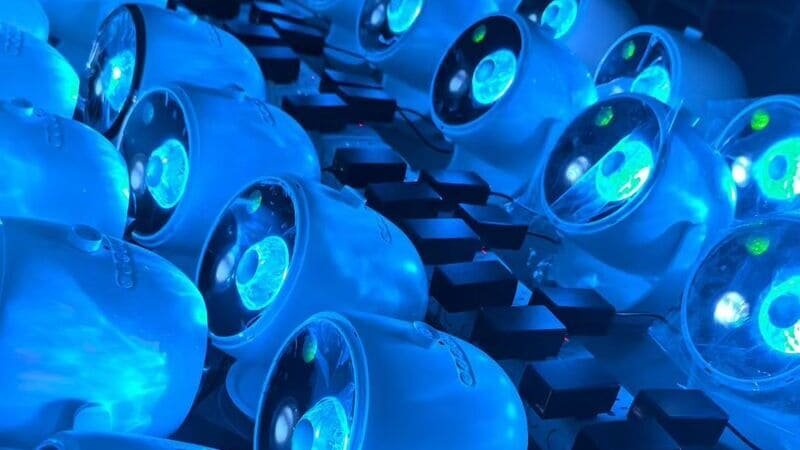
6. Weigh it. Seriously — use a kitchen scale. Weight is a proxy for build quality.8 A heavier unit typically means a metal heat sink, a real speaker driver instead of a piezo buzzer, and denser housing material. Compare the weight to the spec sheet. If it's significantly lighter than claimed, components may have been substituted.
7. Open it. If your supplier relationship allows it, open the sample and look inside. Check if the PCB is cleanly soldered (no cold joints or flux residue), if the wiring is organized (not a rat's nest), and if the laser module is properly heat-sinked. This tells you more about long-term reliability than any external inspection.
When to Request a Pre-Production Sample
The sample you evaluate during quoting is typically from existing stock. Before committing to a large order — especially if you've requested any customization — ask for a pre-production sample (also called a golden sample or PP sample). This is a unit pulled from the actual production run configured for your order, with your packaging, your logo (if applicable), and your specific configuration.
This is your last checkpoint before the full run. If it's right, approve it in writing. If it's not, fix it now — it's dramatically cheaper to adjust at this stage than to sort through 2,000 units in your warehouse.
What Does Private Label and OEM Actually Look Like for Star Projectors?
"OEM" and "private label" get thrown around a lot, but they mean very different things — and the cost and MOQ implications are significant. Let me break down what's actually realistic:
Level 1: Logo and Packaging Only (Lowest MOQ)
You take an existing model from our catalog, put your logo on it, and design your own retail box. This is the fastest route to market and has the lowest MOQ. The product itself is unchanged — same molds, same components, same firmware.
Best for: New brand owners testing a market, Amazon sellers who need to differentiate from generic listings, distributors who want branded inventory.
Level 2: Cosmetic Customization (Medium MOQ)
Beyond logo and box, you can customize surface finish (color, texture), button layout, and included accessories. The core electronics and optics stay the same. This level requires a slightly higher MOQ because we need to set up the cosmetic changes on the line.
Best for: Brand owners building a product line with a consistent design language, retail chains that want an exclusive colorway.
Level 3: Full OEM/ODM (Higher MOQ, Longer Lead Time)
This is where we modify or develop the product to your specification. New housing molds, different optical configurations, custom firmware, different power architectures. This is a development project, not just a manufacturing order — it involves tooling costs, prototyping cycles, and 3-6 months of lead time before the first production unit.
Best for: Established brands launching a proprietary product, companies entering the market with a genuinely differentiated offering.
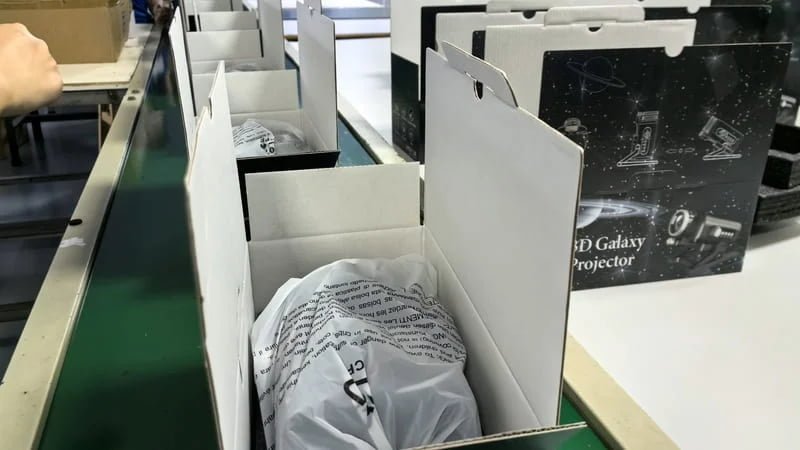
| Customization Level | What's Included | Typical Lead Time | Who It's For |
|---|---|---|---|
| Level 1: Logo & Packaging | Your brand on existing product + custom box | 2-3 weeks after artwork approval | New brands, Amazon sellers, small distributors |
| Level 2: Cosmetic Custom | Custom color, finish, accessories + Level 1 | 4-6 weeks | Growing brands, retail exclusives |
| Level 3: Full OEM/ODM | Custom mold, electronics, firmware + Level 1 & 2 | 3-6 months (tooling + prototyping) | Established brands, proprietary products |
When Should You Order? The Seasonal Buying Calendar
Timing your order wrong in this industry means either missing the peak season or sitting on inventory for months. Here's how the demand cycle actually works, based on what I see from our order book each year:
The Annual Cycle
January–March: Post-Holiday Lull & Planning Window This is when smart buyers place development orders and lock in OEM projects. Factory capacity is available, lead times are shortest, and you have time to iterate on samples. If you're planning a new product launch for Q4, start the development conversation now.
April–June: Ramp-Up Season Orders for Q3 and Q4 delivery start coming in. If you need custom packaging or OEM modifications, this is your deadline — any later and you risk missing the holiday window. Indoor projector orders for back-to-school gifting season (August-September) peak here.
July–September: Peak Production & Outdoor Season The factory is at full capacity. Outdoor projector demand spikes as landscape lighting distributors and holiday décor importers finalize their seasonal inventory. Lead times extend by 1-2 weeks. Standard products are still available, but custom orders placed after August may not ship before November.
October–December: Holiday Rush & Fulfillment Black Friday, Christmas, holiday decoration season. If you didn't order by September, you're scrambling. This is not the time to start a new supplier relationship — it's the time to reorder from a relationship you've already built.
The Timing Rule
Order 90-120 days before you need inventory on your shelf.9 That's 30-45 days for production, 30-45 days for ocean freight, and 15-30 days buffer for customs clearance, quality inspection, and the inevitable small delay. Air freight can compress this to 45-60 days, but the cost per unit eats into your margin significantly.
Planning your next order cycle? Tell us your target delivery window and we'll work backward to set up the right timeline — including sample approval, production, and shipping milestones.
Conclusion
Sourcing star projectors at wholesale isn't complicated — but it does require asking the right questions early. The importers I see succeed consistently are the ones who verify the supplier before the sample, evaluate the sample before the order, and plan the timeline before the season.
Here's what to take away from this guide:
Verify first. A live production line walkthrough and factory audit report tell you more than any Alibaba Gold Supplier badge. If a supplier can't show you where your product is made, they're not making it.
Understand the product lines. "Star projector" is not one product — it's 4-5 distinct categories with different components, price points, and buyer profiles. Match the product line to your channel before you start comparing prices.
Don't skip the 72-hour test. Most quality issues — motor noise, LED drift, overheating — are invisible on day one. The sample evaluation checklist above will catch problems that cost thousands of dollars at shipment scale.
Time your orders to the season. The 90-120 day rule is non-negotiable for ocean freight. If you're selling holiday product and you haven't ordered by September, you're already late.
Start the conversation before you need to place an order. The best supplier relationships are built during the slow season (Q1), not during the rush (Q3-Q4) when everyone is competing for production capacity.
I wrote this guide because I believe the star projector market still has room for importers and brand owners who take sourcing seriously — who build products their customers actually keep instead of return. If that's the kind of business you're building, we should talk.
Frequently Asked Questions
What's the typical MOQ for star projectors?
MOQ depends on the customization level. For existing catalog models with your logo and packaging, the MOQ is typically in the hundreds of units. For full OEM development with custom molds, the MOQ is significantly higher because the tooling investment needs to be amortized. Message us with your target model and we'll give you the specific MOQ for that configuration.
Do you ship directly to Amazon FBA warehouses?
Yes. We regularly ship directly to FBA warehouses in the US and Europe. We can prepare shipments according to Amazon's labeling and packaging requirements, including FNSKU labels, carton-level labeling, and pallet configurations. We'll need your FBA shipping plan details to coordinate.
How do I know if a star projector meets laser safety requirements for my market?
Laser safety is governed by IEC 60825-1 internationally, and adopted by the FDA (US) and CE (EU) frameworks. Class 1 lasers are considered safe for consumer use under all conditions of normal use. For the specific models you're importing, request the model-level laser safety documentation — don't rely on company-level claims.
Can I get samples before placing a bulk order?
Absolutely. We recommend every buyer evaluates physical samples before committing to a bulk order. We can arrange sample shipments via express courier (DHL/FedEx/UPS) with delivery in 5-7 business days to most countries. The sample process typically works like this: you tell us which models you're interested in, we confirm availability and sample pricing, and ship upon confirmation.
What happens if there's a quality issue with my shipment?
We stand behind our products. For manufacturing defects identified within a reasonable inspection window, we offer replacement units, credit toward future orders, or rework depending on the nature and scale of the issue. The key is documentation — photo and video evidence of the defect, the quantity affected, and your original order reference. Having a clear quality agreement established before the first order makes this process dramatically smoother for both sides.
Do you support drop shipping or small test orders?
Our business model is built for wholesale and bulk manufacturing. While we understand the appeal of drop shipping for testing a market, our strength is in producing consistent quality at volume. For market testing, we recommend ordering a small initial batch (at our minimum MOQ), selling through that inventory to validate demand, and then scaling up with a larger order. This gives you real market data while still getting factory-direct quality and pricing.
What packaging options are available for private-label orders?
We offer full packaging customization — retail box design, insert cards, user manuals, warranty cards, and outer carton branding. You provide the artwork (or we can recommend design partners), and we handle printing and assembly. For the retail box, we support standard corrugated, premium rigid boxes, and windowed packaging. Packaging artwork typically needs 5-7 business days for proofing before production begins.
How do indoor and outdoor projectors differ from a sourcing perspective?
The key differences are in materials, compliance, and pricing. Outdoor units require weatherproof housings (typically die-cast aluminum vs. engineering plastic for indoor), higher IP ratings (IP65 for outdoor vs. no rating needed for indoor), and longer power cables with weather-sealed connectors. This means outdoor projectors have higher unit costs, different certification requirements (additional weatherproofing testing), and are more sensitive to seasonal demand patterns. If you're considering both lines, they effectively operate as two separate product categories from a sourcing and inventory perspective.
Ready to Start? Here's Your Next Step
If you've made it this far, you already know more about star projector sourcing than most importers do after their third order. The difference between a good sourcing experience and a frustrating one usually comes down to starting the conversation with the right questions — and you now have those questions.
Here's what I'd suggest as your next move:
- Tell us what you're looking for — which product category interests you, what market you're targeting, and what volume you're thinking about
- We'll send you our full catalog — with detailed spec sheets, not just beauty shots
- Pick 2-3 models for samples — we'll arrange express shipment so you can evaluate in person
- Evaluate using the checklist above — then come back with questions
No pressure, no minimum commitment at this stage. I'd rather spend an hour helping you understand if we're the right fit than close a deal that ends in a quality dispute six months later.
"JADE: Expert-Grounded Dynamic Evaluation for Open- ...", https://arxiv.org/pdf/2602.06486. Institutional descriptions of BSCI and WCA audits support their use as third-party assessments of defined social-compliance and workplace conditions in supplier facilities. Evidence role: general_support; source type: institution. Supports: An institutional source should explain that BSCI and WCA are third-party social-compliance or factory-audit schemes used to assess specified labor, ethical, and workplace conditions.. Scope note: Such audits do not establish that every legitimate manufacturer has been audited, nor do they by themselves verify manufacturing capability or ownership. ↩
"Inferring Inventory Dynamics from Supply Chain Networks", https://arxiv.org/html/2607.10642v1. Supplier-assessment research identifies product breadth and demonstrated production capability as potentially informative indicators of manufacturing scope. Evidence role: general_support; source type: research. Supports: Manufacturing and supplier-assessment research should identify product breadth as a possible capability indicator while distinguishing it from proof of factory status.. Scope note: The literature does not establish a universal 20–40-SKU threshold for genuine manufacturers. ↩
"A comprehensive study of second and third harmonic ...", https://arxiv.org/html/2508.02395v1. Laser-reliability studies support the relevance of operating conditions and aging mechanisms to the stability of optical output and wavelength in green laser sources. Evidence role: mechanism; source type: paper. Supports: Laser-reliability studies should describe how aging, temperature, drive current, and device construction affect optical power and wavelength stability.. Scope note: Results for particular laser diodes or modules cannot establish a universal thousands-of-hours lifetime for unspecified projector components. ↩
"[astro-ph/9801030] Extended Red Emission (ERE) detected in the ...", https://ar5iv.labs.arxiv.org/html/astro-ph/9801030. LED-engineering literature describes binning as the classification of emitters by measured optical characteristics, including luminous output and chromaticity, which can affect color matching. Evidence role: mechanism; source type: research. Supports: LED engineering sources should explain binning by photometric and chromaticity characteristics and document variation among manufactured emitters or lots.. Scope note: The extent of variation depends on the LED manufacturer, bin definitions, and the quality-control process used in the finished product. ↩
"ORPHEUS: Living Labs for End-to-End Data Infrastructures ...", https://arxiv.org/pdf/2111.09422. IEC 60529 defines the IPX5 water-protection level as protection against water projected by jets from any direction. Evidence role: definition; source type: institution. Supports: IEC 60529 documentation should define the IP code and the level represented by the fifth character, including protection against water jets.. Scope note: The rating describes standardized test performance; it does not establish long-term outdoor durability, installation suitability, or protection against immersion. ↩
"Artificial Intelligence-Based Smart Quality Inspection for Manufacturing", https://pmc.ncbi.nlm.nih.gov/articles/PMC10058274/. Quality-assurance literature supports pre-shipment inspection and reliability screening as methods for detecting some defects before distribution. Evidence role: statistic; source type: paper. Supports: Quality-assurance research should address the effectiveness and limitations of pre-shipment inspection, screening, and sampling procedures.. Scope note: General quality-assurance evidence cannot validate the author's specific 90% detection rate or the effectiveness of this particular checklist. ↩
"A Survey on STT-MRAM Testing:Failure Mechanisms, Fault ...", https://ar5iv.labs.arxiv.org/html/2001.05463. Reliability literature supports the use of extended operation and burn-in testing to reveal some intermittent, thermal, or early-life failures that shorter tests may miss. Evidence role: mechanism; source type: paper. Supports: Reliability engineering literature should explain early-life failures, wear-in testing, thermal stress, and the relationship between test duration and defect detection.. Scope note: It does not show that most failures in star projectors emerge only after one hour or that 72 hours is an adequate universal test duration. ↩
"What Does “Product Quality” Really Mean?", https://sloanreview.mit.edu/article/what-does-product-quality-really-mean/. Engineering assessment methods may use mass as a clue to component or enclosure construction, but they do not treat weight alone as a general proxy for product quality. Evidence role: general_support; source type: research. Supports: Engineering-quality research should clarify whether mass correlates with relevant construction features or reliability in comparable electronic products.. Scope note: Any relationship is product-specific and cannot replace inspection of materials, thermal design, assembly, and reliability performance. ↩
"Maritime Port Supply Chain Resilience: A Systematic Review", https://arxiv.org/html/2510.09844v1. International-logistics guidance supports building production, transport, customs, and contingency time into inventory planning for imported goods. Evidence role: general_support; source type: institution. Supports: International logistics sources should support the need to account for production, ocean transit, port handling, customs clearance, inspection, and schedule variability in import planning.. Scope note: These sources cannot establish 90–120 days as a non-negotiable lead time for every supplier, route, product, or shipping mode. ↩