
A buyer asks for a “naked-eye 3D projector” and attaches a video of a logo apparently floating in open air. A factory answers with a galaxy scene covering a wall. Both sides use the same phrase and discuss completely different products. When I receive this kind of request, I do not begin with resolution, scene count or price. I ask the buyer to show me where the image is supposed to appear. That one action usually exposes the category mismatch before the sample discussion starts.
The problem is not that one side has misunderstood the English. The problem is that “3D,” “hologram” and “projector” are market labels spread across devices with different image paths, installation needs and retail promises.
A 3D galaxy projector sends light onto a wall, ceiling or other surface to create a depth-like scene. A rotating LED display builds an image within the swept area of fast-moving blades and can appear to float against a dark background. If the buyer needs a logo suspended in open space, a projection lamp is the wrong product class.
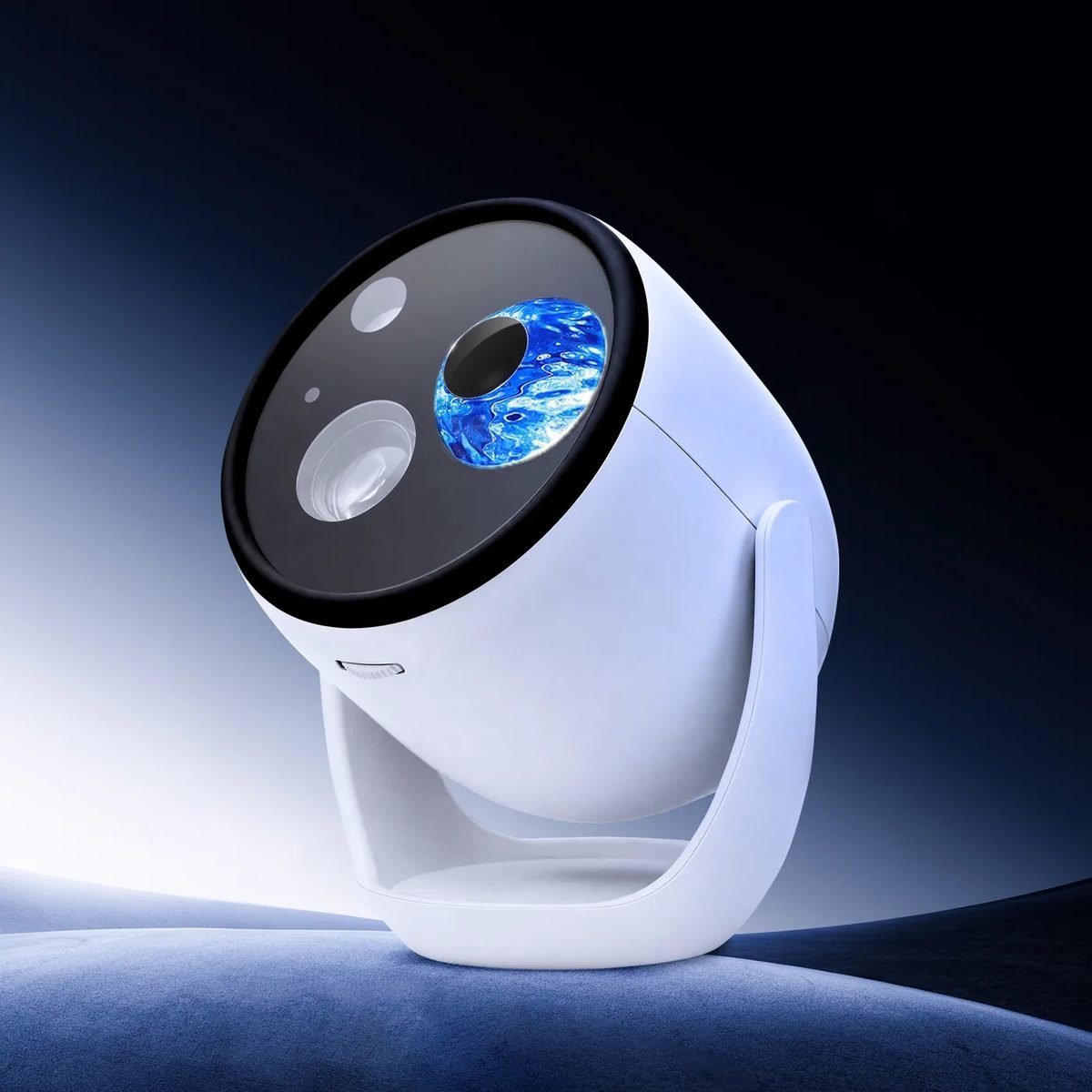
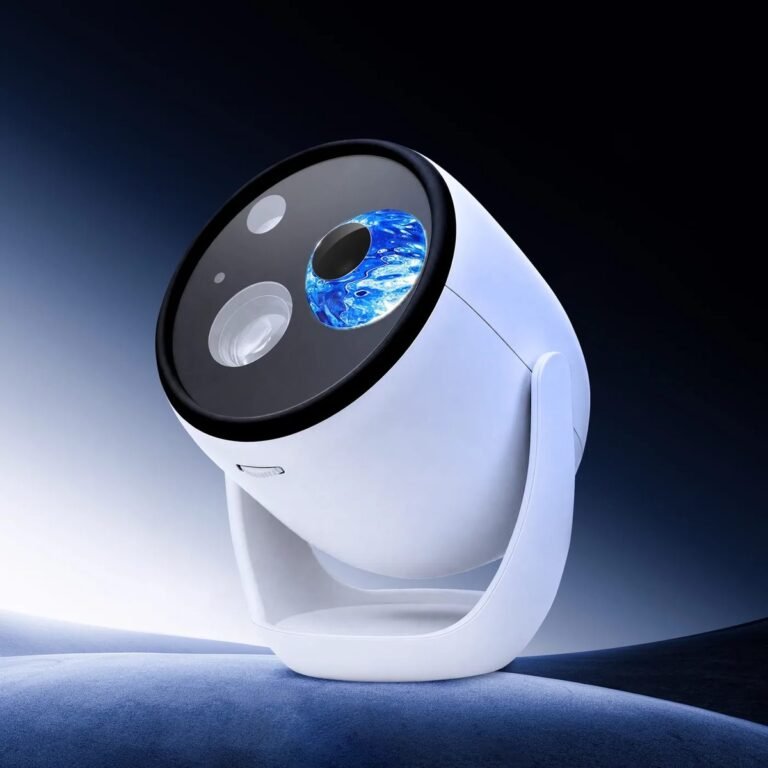
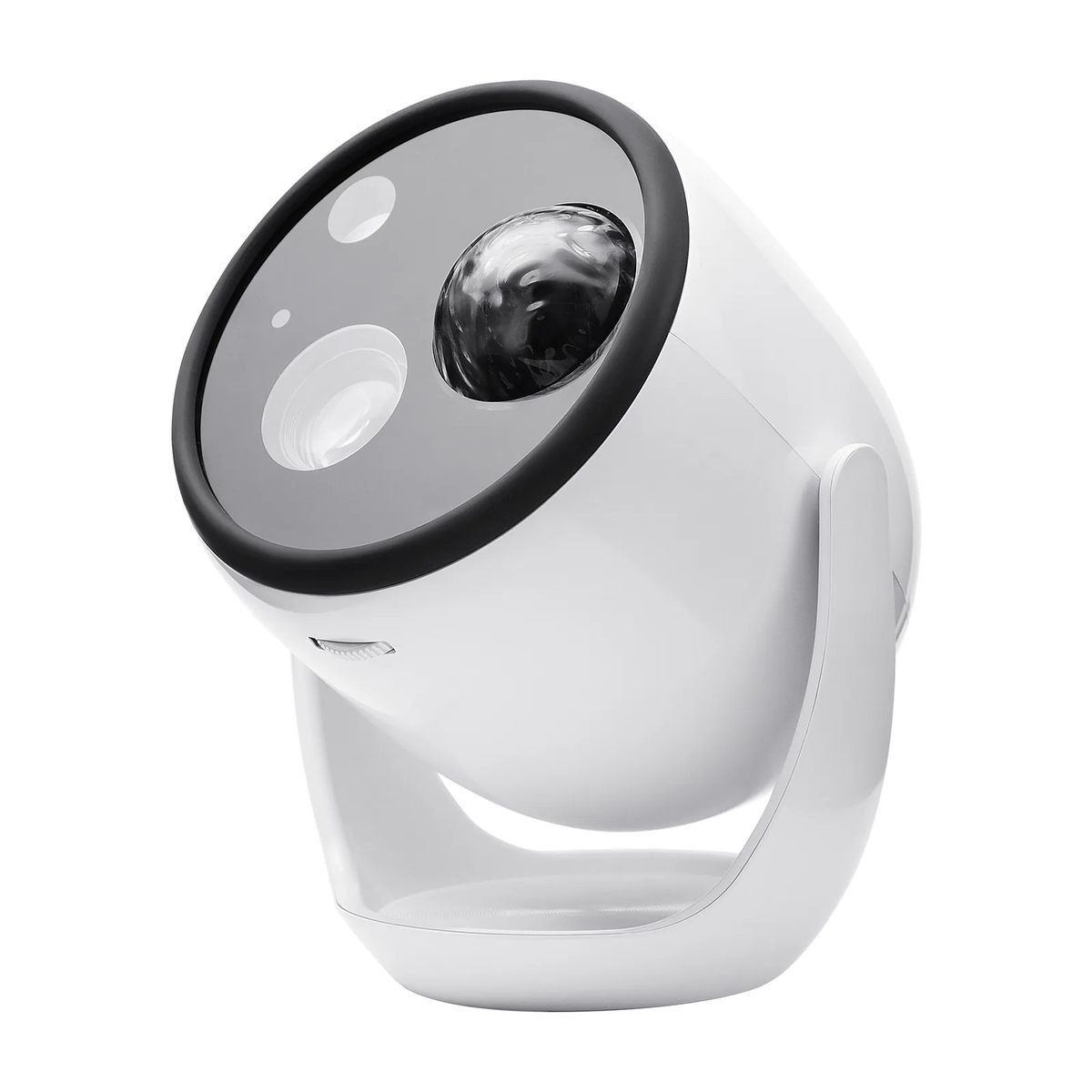
At Bowlum, the market language we use for this line is 3D Galaxy Projector. Our catalog also describes BWL-3D-001 as a naked-eye 3D product, but the physical buying fact comes first: its light needs a receiving surface. Below, I will redraw the category map, show the one question that separates the products, and turn that distinction into an RFQ and sample test.
BWL-3D-001 belongs with our indoor star projectors, and buyers can check its public identity in the complete product catalog before comparing it with a different display mechanism.
Which Three Product Types Get Sold Under “Naked-Eye 3D”?
Search results and supplier catalogs mix devices because all three can produce a depth impression without the viewer wearing glasses. That shared outcome hides different hardware.
Buyers commonly encounter three categories: projection-based decorative lights, rotating LED fan displays and true holographic or specialist display systems. They differ in where the image exists, what surface or structure it needs, and whether the buyer is sourcing ambience, signage or a technical installation.
| Product family | Where the visible image appears | Typical buyer objective | First installation question |
|---|---|---|---|
| 3D galaxy projector | On a wall, ceiling or other receiving surface | Immersive ambience and scene projection | What surface will receive the light? |
| Rotating LED fan display | Within the circular sweep of rotating LED blades | Floating-style logo, animation or retail signage | Where can the guarded rotating unit be mounted? |
| Specialist holographic display | Within a purpose-built optical or display system | Exhibition, stage or technical display | What complete system and viewing geometry are required? |
The table explains why “Can it show my logo?” is not enough. A projection-based product may support custom scene content, but the logo will still land on a surface.1 A rotating display may show a logo within its fan diameter, but it brings moving hardware, viewing-angle and mounting considerations. A specialist display may require an installation rather than a boxed consumer product.
I classify the request by image location before I read the product title. If I can point to the wall, ceiling, rotating plane or optical enclosure that contains the visible image, I have a physical category I can test. If I only have words such as “3D” or “hologram,” I still have a marketing label, not a procurement definition.
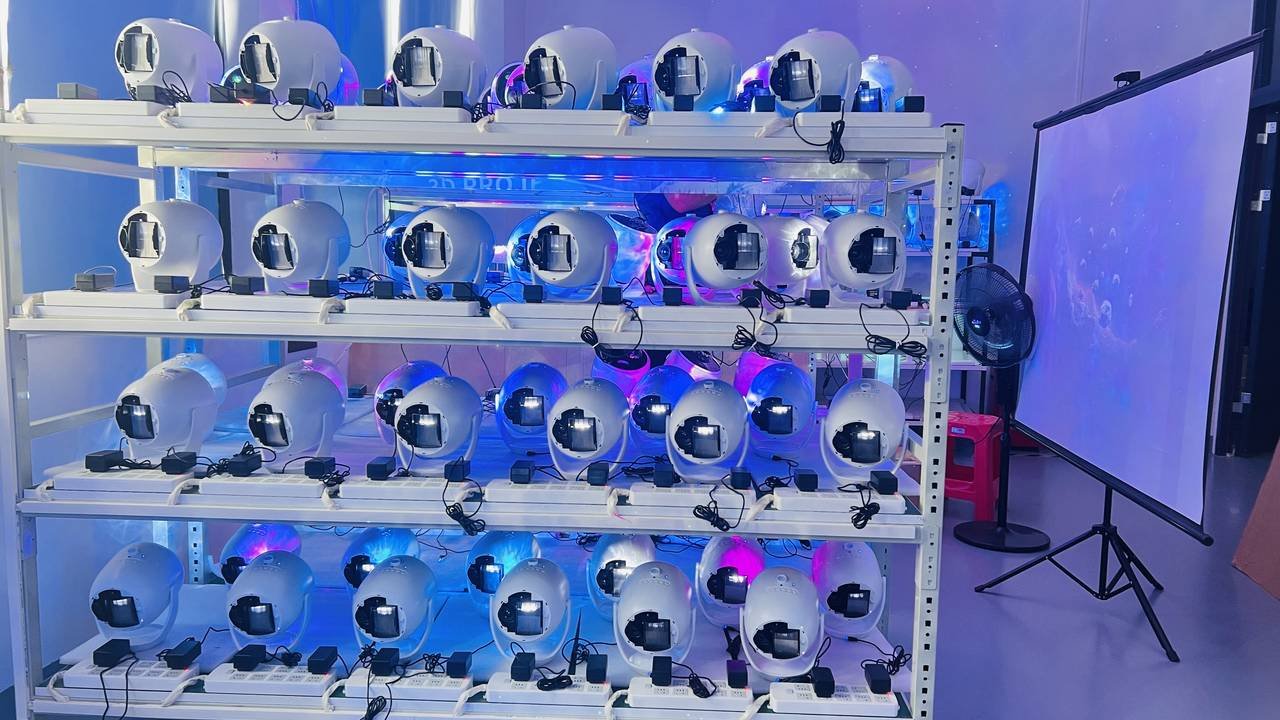
Our BWL-3D-001 is the only product in our current catalog explicitly identified by the source catalog as a naked-eye 3D projection model. Its optical description includes focusing, diffusion and Fresnel multi-channel optics with side-emitting diffuse projection. Those facts support the projection category. They do not support calling the product a fan, a free-space hologram or an image that floats anywhere in a room.
If two products need different physical places for the image to appear, they are not interchangeable because a search result uses the same adjective.
How Does a Rotating LED Hologram Fan Build Its Image?
The floating impression can make buyers assume a beam projects the animation into the air. The visible structure is actually tied to the rotating display.
A rotating LED fan places LEDs along fast-moving blades and controls them by position so the eye perceives a complete image across the circular sweep.2 The image belongs to that rotating plane.3 It is not projected onto a wall, and it does not occupy arbitrary open space beyond the device.
I separate this mechanism from projection even when the two sales videos create a similar first impression. I look for the rotating plane, mounting point and safe clearance in one continuous demonstration. If those physical elements are absent from the evidence, I do not let a cropped “floating” visual settle the category.
The sourcing consequences follow from that mechanism:
- Image boundary. The display area is limited by the fan's rotating diameter and layout.4
- Mounting. The unit normally needs a fixed position and safe clearance around moving parts.
- Background. A darker background helps the blade structure disappear from perception.5
- Content. The buyer cares about media format, animation workflow and how content loads.
- Safety and access. Placement must account for a rotating device in a public or retail environment.6
That can be exactly right for a shop logo, event visual or trade-show display. It is usually wrong for a buyer who wants a bedroom ceiling or a whole wall covered by an atmospheric scene.
What It Cannot Do
A fan display cannot project its logo onto the ceiling across the room. Its image does not expand with throw distance. It also does not produce the same diffuse room ambience as a galaxy light. Those are not quality limitations; they are category boundaries.
| Buyer request | Fan-display response | Projection-light response |
|---|---|---|
| Floating-style logo in one fixed location | Potential fit | Usually wrong category |
| Whole-wall galaxy ambience | Wrong mechanism | Potential fit |
| Ceiling scene from a bedside position | Wrong mechanism | Potential fit |
| Retail animation with transparent-looking background | Potential fit | Needs a visible receiving surface |
| Soft room-filling mood light | Not its primary job | Core decorative use |
We do not manufacture hologram fans. That sentence is commercially useful because it prevents a buyer from approving the wrong sample after weeks of technical discussion.
How Does a Projection-Based 3D Galaxy Effect Work?
The word “3D” encourages buyers to imagine an object detached from the wall. In a decorative projector, depth is a visual effect created through the projected scene and optical path.
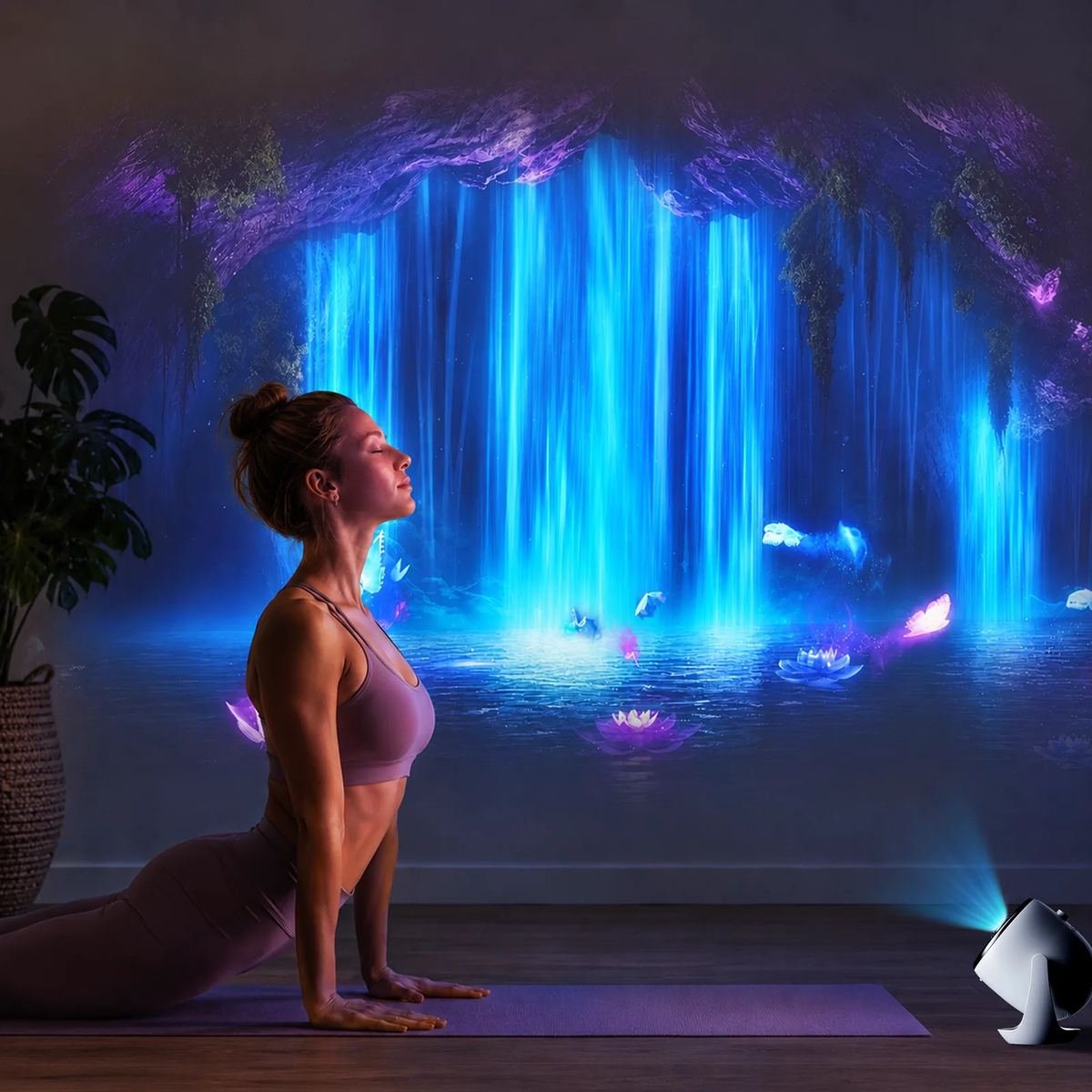
A projection-based 3D galaxy product routes light and scene content through an optical system onto a receiving surface.7 Layering, focus, diffusion, movement and image content create the impression of depth.8 The image still depends on surface, distance, ambient light and viewing position.9
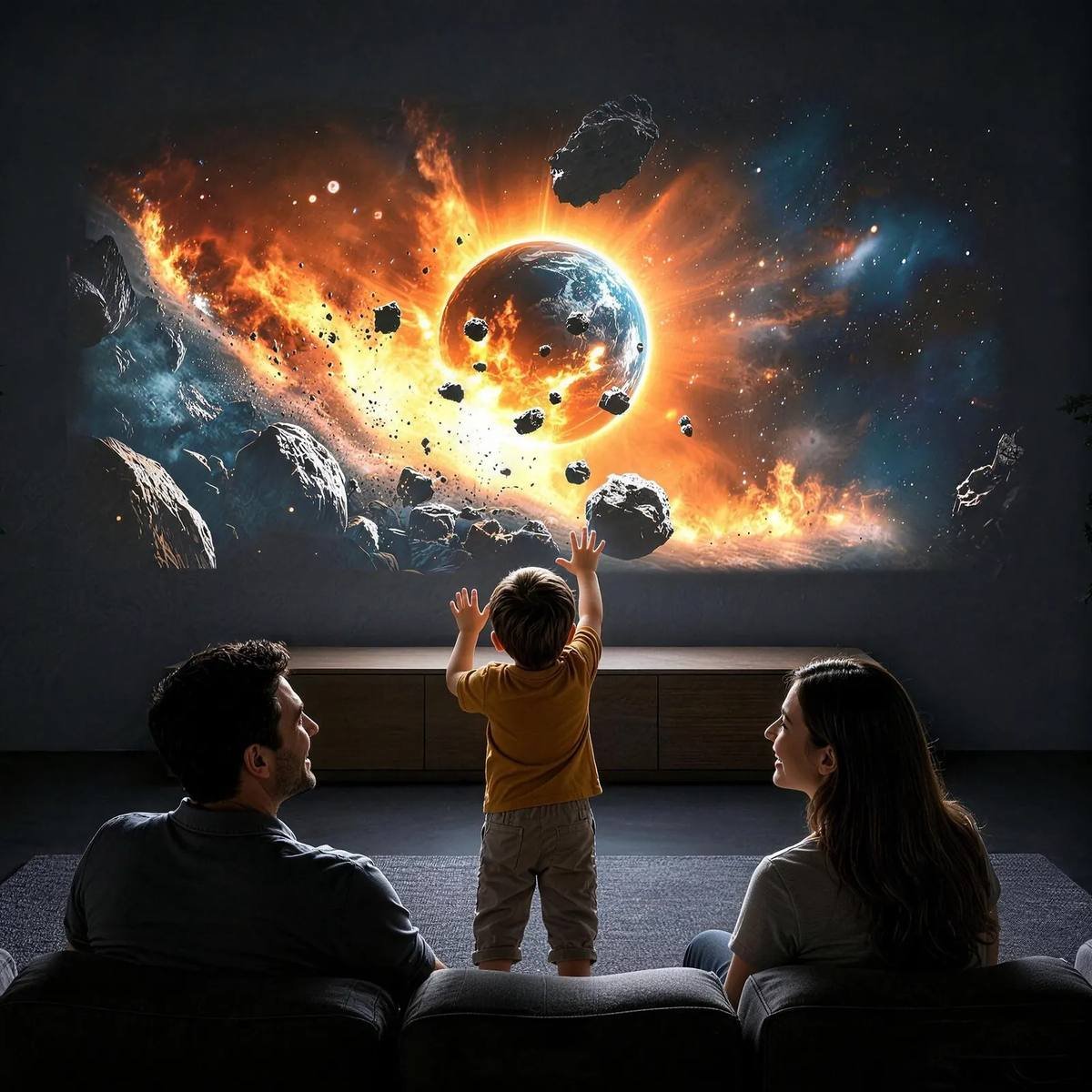
BWL-3D-001 combines several optical ideas named in the catalog: focusing, diffusion, Fresnel and multi-channel lenses, plus diffuse side projection. For a buyer, that matters because the visible result is an assembled optical path. It cannot be specified by the word “3D” alone.
When I review this projector with a buyer, I ask to see the intended wall or ceiling before I approve the visual brief. I then keep the surface, distance and room light in the sample record. That prevents an effect filmed in one dark showroom from becoming an unsupported promise about every retail or hospitality space.
Ask for these five conditions:
- Receiving surface. Wall, ceiling, screen or another material; colour and texture affect the result.
- Throw distance. The sample must be viewed at the intended installation distance.
- Focus behaviour. Confirm how the image is adjusted and where it remains acceptable.
- Ambient light. A dark marketing image does not predict a normally lit retail or hospitality space.
- Viewing position. Depth impressions can change with angle and distance.10
| Optical variable | What it changes | Buyer acceptance record |
|---|---|---|
| Focus | Edge definition and scene readability | Fixed sample distance and focus setting |
| Diffusion | Softness and blend between layers | Matched close and wide views |
| Surface | Contrast, colour and texture | Photograph or sample of intended material |
| Ambient light | Visibility and perceived depth | Same scene with normal lights off and on |
| Scene content | The visual narrative and depth cues | Approved scene inventory or video |
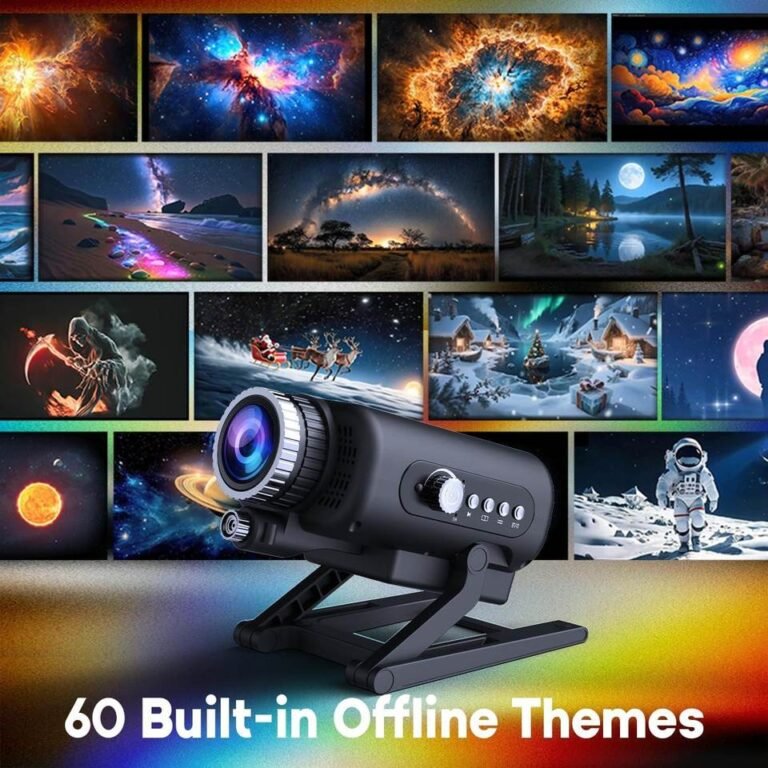
Our catalog records 90 scenes for BWL-3D-001 and states that scene content supports customization and expansion. That supports a conversation about content. It does not mean every logo, animation or file format is automatically available. The buyer must define content, delivery method and approval scope as a separate workstream.
What Single Question Tells You Which “3D Projector” a Supplier Is Selling?
Buyers often start with resolution, content or size. One physical question cuts through the vocabulary before specifications begin.
Ask: “Where does the image appear?” If the answer is “on a wall, ceiling or screen,” you are discussing projection. If it appears within a rotating circular plane, you are discussing an LED fan display. If the answer requires a complete optical installation, request a system diagram before treating it as a boxed product.
Follow with four practical questions:
I use this question before I discuss specifications because it forces both sides to name the same physical object. I would rather close the wrong product path in one message than make a polished quotation for a device that cannot produce the buyer's intended image.
| Question | Why it matters |
|---|---|
| What physical surface or plane contains the image? | Identifies the product mechanism |
| What dimensions limit the visible result? | Separates throw geometry from device diameter |
| What content can be changed, and how is it loaded? | Defines the customization project |
| What must be installed or guarded? | Reveals mounting, clearance and safety needs |
An Inquiry That Started With the Wrong Product Category
A gift-channel buyer asks whether our 3D galaxy projector can show a customer logo floating in the air. I ask for a reference video and mark the physical location of the image. It shows a rotating LED fan, so I stop the specification discussion. My answer is direct: that is not what we make. BWL-3D-001 projects onto a wall or ceiling; it does not create a free-space logo.
The useful part of the conversation starts after the no. The buyer explains that the real goal is not a fan but a large atmospheric scene for a retail display. I redirect the review to the wall, throw distance and scene content, then put a surface-based demonstration ahead of any content customization discussion.
The buyer leaves with a different RFQ: it asks where the image appears, what surface receives it and what the demonstration must show. Those questions settle the category before either side spends time specifying the wrong device.
A supplier who says “we do not make that product” early is saving the buyer more value than one who stretches a keyword to keep the inquiry alive.
What Is BWL-3D-001 in Plain Procurement Language?
Product titles collect market vocabulary. Procurement needs a narrow description that can survive a sample review.
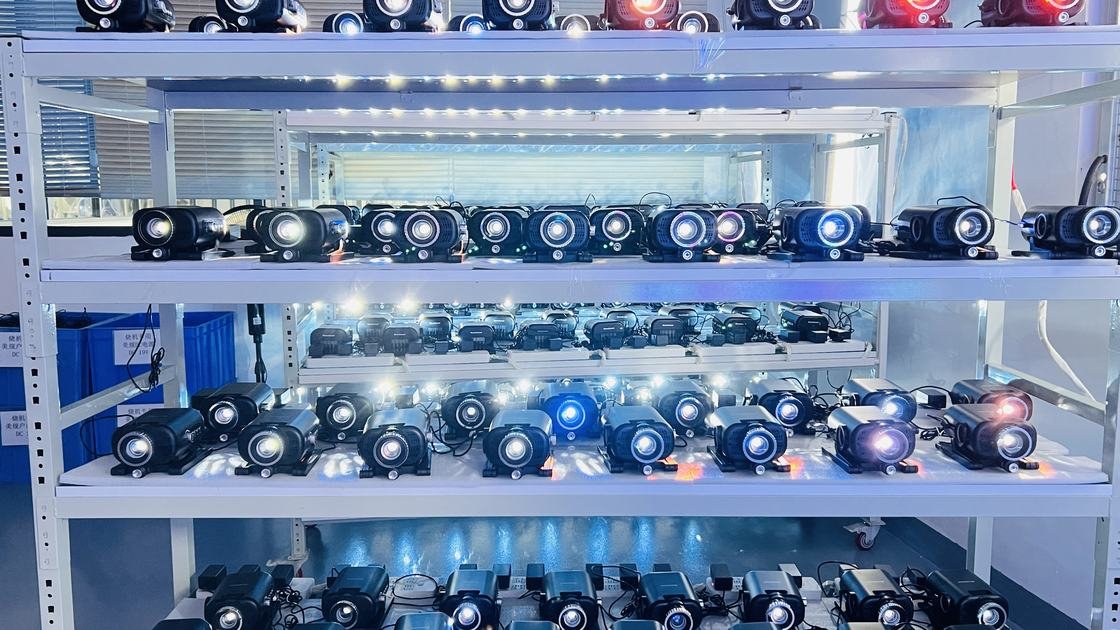
BWL-3D-001 is an indoor 3D galaxy projection light that sends customizable scene content through a multi-channel optical system onto a wall or ceiling. It uses adjustable focus, includes 90 recorded scenes, and requires a receiving surface. It is not a rotating LED fan and does not produce a free-space hologram.
Translate that into the RFQ:
I describe the product this narrowly even though a broader “hologram” label may attract more clicks. In my experience, a precise limitation builds more trust than an impressive phrase that disappears when the buyer asks for a wide-angle demonstration.
| Field | What to record for the buying decision |
|---|---|
| Public product | BWL-3D-001 |
| Product class | Indoor 3D galaxy projection light |
| Image location | Wall, ceiling or other receiving surface |
| Optical description | Focus, diffusion, Fresnel and multi-channel projection path |
| Scene content | Current source records 90 scenes; custom request defined separately |
| Control | Remote and Bluetooth audio features recorded for this product |
| Sample condition | Surface, distance, ambient light and viewing position |
Do not add claims the source does not support. We do not call the image a true hologram. We do not say it floats in air. We also do not use BWL-3D-002 as proof of the same naked-eye 3D designation: its public name is 3D Galaxy Projector Lite, but the current source record does not make the same explicit naked-eye classification.
That last point is how buyers can judge supplier discipline. Related commercial names do not automatically share a technical statement. The more impressive the phrase, the more carefully its product boundary should be drawn.
Which Product Fits Which Retail or Project Channel?
The categories do not form a ladder from cheap to premium. Each succeeds when its physical image path matches the buyer's merchandising job.
Choose a 3D galaxy projector for immersive surface-based ambience, a rotating fan display for fixed floating-style signage, and a specialist system for a designed technical installation. Match the mechanism to the venue, content workflow, viewing distance and maintenance capability before comparing specifications.

| Channel need | Stronger starting category | Reason |
|---|---|---|
| Bedroom or living-room ambience | 3D galaxy projector | Uses walls and ceilings as a broad visual field |
| Gift or home-decor product line | 3D galaxy projector | Boxed decorative-light format and scene-led merchandising |
| Shop logo or event animation in one fixed zone | Rotating LED fan display | Content appears within the device's circular plane |
| Museum or stage concept with controlled viewing | Specialist display system | Installation can manage geometry and supporting equipment |
| Hotel wall or ceiling atmosphere | Projection product, subject to site test | Surface and ambient conditions can be specified |
I choose the starting category from the merchandising job, not from which product name sounds more advanced. Then I ask each supplier to demonstrate its mechanism under comparable conditions. That keeps a buyer from comparing one category's edited hero video with another category's physical limitation.
Risks to Disclose Before Shortlisting
A projector image depends on a surface and ambient light.11 A fan display brings rotating hardware, mounting and access considerations. A specialist system can require integration skills far beyond a consumer product. None is universally more “3D” in a way that removes those limits.
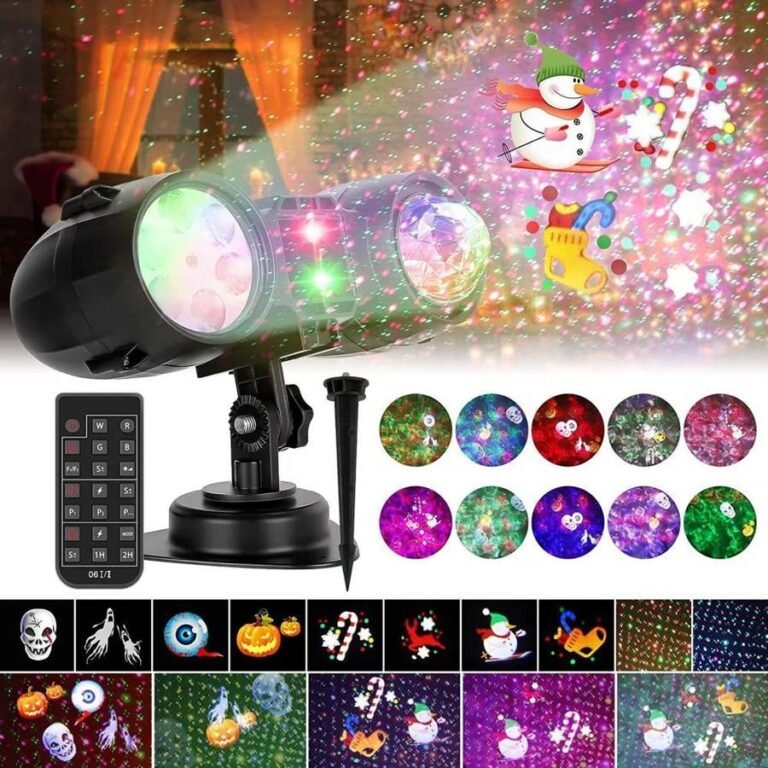
For BWL-3D-001, effect images are useful evidence of the intended visual direction, not of performance under every venue condition. Test the exact product at the intended distance and surface. Approve scene content separately from the hardware. Keep the buyer's final listing language tied to what the sample actually does.
Any supplier who cannot answer where the image exists is selling vocabulary before engineering. That is the point to stop the comparison and request a physical diagram or live demonstration.
What Should a Supplier Demonstration Show?
A demonstration should prove the mechanism before it tries to impress the buyer. Ask for one continuous clip that begins with the product and room, then shows the path from projector to receiving surface. Include a side angle wide enough to show that the image lands on the wall or ceiling. After that, the supplier can darken the room and show the visual effect at its best.
Use the following shot list:
| Shot | What it settles |
|---|---|
| Product label and full housing | Exact item being demonstrated |
| Projector and receiving surface in one frame | Physical image path |
| Room lights on, then off | Dependence on ambient light |
| Near and intended throw positions | Scale, focus and spread |
| Viewing angle from left and right | How the depth impression changes |
| Control sequence | Which scenes and adjustments belong to the product |
If the buyer is comparing a rotating display, request the same physical clarity from that supplier: show the stationary device, mounting structure, rotating plane, guard or clearance, background and content-loading workflow. Do not compare one product's polished marketing clip with another product's engineering demo. Give both categories the same evidence standard.
The demonstration also sets the boundary for listing language. If the wide shot shows a wall receiving the scene, the buyer should not crop the final advertisement so tightly that the image appears suspended in free space. A truthful wide view can still be visually strong, and it reduces the chance that the end customer expects a different technology.
Archive the continuous original beside the edited sales clip. When a distributor, marketplace reviewer or customer-support team later asks what the product really does, the original establishes the product, room and image path in one piece of evidence. It also gives the next content team a source that cannot be mistaken for a fan display.
Conclusion
“Naked-eye 3D” is a buyer-intent trap because it groups products that place images in different physical locations. Start with one question—where does the image appear?—then choose the category. BWL-3D-001 is a 3D galaxy projector: it creates a depth-like decorative scene on a wall or ceiling through a multi-channel optical path. It is not a hologram fan, and saying so clearly is part of selling the right product. Once the mechanism is correct, content, controls, surface and sample acceptance can become real procurement decisions.
That clarity also prevents the buyer's listing, sample brief and packaging artwork from promising a display mechanism the supplied product was never designed to create.
My decision rule is simple: if I cannot show the buyer exactly where the image exists, I am not ready to recommend the product class. I would rather make the boundary visible in the first conversation than leave the buyer to discover it after a sample arrives.
Frequently Asked Questions
Is a 3D galaxy projector the same as a hologram fan?
No. A 3D galaxy projector sends an image onto a wall or ceiling. A hologram fan builds an image within the circular plane swept by rotating LED blades.
Does a 3D galaxy projector create an image floating in open air?
No. The projection needs a receiving surface. Scene content and optics can create a depth impression, but the image remains surface-based.
What is the fastest way to identify the product type?
Ask where the visible image appears. A wall or ceiling means projection; a rotating circular plane means an LED fan display.
Can BWL-3D-001 project a custom logo?
Its source catalog states that scene content supports customization and expansion, but a buyer must define the requested content, format and approval scope. The result will still project onto a surface.
What should I test on a 3D galaxy projector sample?
Test the intended surface, throw distance, focus, ambient light, viewing position and approved scene content. Record the conditions so the bulk result can be compared.
Is every product called “3D galaxy” a naked-eye 3D projector?
No. Commercial naming is not enough. Ask for the optical mechanism and product-specific source description before applying that designation.
Which product is better for retail signage?
It depends on the desired image location. A fixed floating-style logo may fit a fan display, while a large atmospheric wall or ceiling scene may fit a projection product.
"Teacher-AI Collaboration for Curating and Customizing ...", https://arxiv.org/html/2507.00456v2. Educational descriptions of projection systems distinguish image content from image formation: changing the displayed file changes the scene, while the optical system continues to form that scene on the receiving surface. Evidence role: general_support; source type: education. Supports: A source should distinguish the digital content sent to a projector from the optical process that forms that content on a receiving surface.. Scope note: Specialized projection techniques can alter surface geometry or apparent placement, so the statement applies to ordinary surface-based projection rather than every advanced display system. ↩
"Infrared POV Attacks on Traffic Sign Classification", https://arxiv.org/html/2606.30153v1. Research on rotating LED displays describes image formation by synchronizing LED emission with the angular position of moving elements, allowing successive samples to be integrated perceptually across the swept plane. Evidence role: mechanism; source type: paper. Supports: A technical source should explain how LEDs mounted on rotating elements are timed by angular position to form a perceived two-dimensional image.. Scope note: The source should support the display mechanism generally, not prove the specifications or performance of any particular commercial fan. ↩
"Persistence of vision", https://en.wikipedia.org/wiki/Persistence_of_vision. Technical accounts of persistence-of-vision displays locate the reconstructed image in the geometric region traced by the moving light sources, rather than describing it as a freely propagating image in room space. Evidence role: definition; source type: research. Supports: A source should define the image-forming region of rotating persistence-of-vision displays as the path or plane traced by the moving emitters.. Scope note: This is a general geometric description and does not establish the exact visible boundary of every fan design. ↩
"Light Field Super-Resolution: A Critical Review ...", https://arxiv.org/html/2510.07879v1. Descriptions of rotating persistence-of-vision displays relate the reconstructed image region and spatial sampling to the radius and arrangement of the rotating light sources. Evidence role: mechanism; source type: paper. Supports: A technical source should relate the display's image dimensions and sampling geometry to the radius, blade arrangement and rotation of the emitter assembly.. Scope note: The exact usable image boundary also depends on control electronics, optical diffusion, safety guards and viewing conditions. ↩
"Interactions between contrast and spatial displacement ... - PMC", https://pmc.ncbi.nlm.nih.gov/articles/PMC3657570/. Studies of visual contrast and moving displays indicate that reduced background luminance can lower the salience of display structures while increasing the apparent contrast of emitted imagery. Evidence role: mechanism; source type: paper. Supports: A source should address how background luminance and contrast affect the visibility of moving display hardware and the perceived continuity of displayed imagery.. Scope note: The effect depends on blade speed, illumination, viewing distance, camera exposure and the observer's position; a dark background does not make the hardware universally invisible. ↩
"1910.212 - General requirements for all machines. | Occupational Safety ...", https://www.osha.gov/laws-regs/regulations/standardnumber/1910/1910.212. Government machinery-safety guidance treats accessible rotating components as potential hazards and emphasizes guarding, separation, or other measures to prevent contact with moving parts. Evidence role: expert_consensus; source type: government. Supports: Government safety guidance should support the need to guard or control access to rotating machinery and to manage clearance around moving parts.. Scope note: Applicable requirements depend on jurisdiction, product design, installation height and venue risk assessment; general guidance is not a product-specific compliance determination. ↩
"Text-to-Image Generation for Projector-Camera System ...", https://arxiv.org/html/2607.03046v1. Standard accounts of optical projection define a projector as a system that directs modulated light through lenses or related optics to form an image on a receiving surface. Evidence role: definition; source type: education. Supports: An educational or encyclopedic source should explain that a projector uses an optical path to form an enlarged image on a screen or other surface.. Scope note: This general definition does not verify the optical configuration, scene count or performance of the named product. ↩
"Effect of Pictorial Depth Cues, Binocular Disparity ... - PMC - NIH", https://pmc.ncbi.nlm.nih.gov/articles/PMC2526171/. Vision research identifies depth impressions as arising from multiple pictorial and dynamic cues, including occlusion or layering, relative focus, motion and scene organization, without requiring the depicted object to occupy physical three-dimensional space. Evidence role: mechanism; source type: paper. Supports: A vision-science source should identify monocular and dynamic cues, including occlusion, focus, motion and image structure, that contribute to perceived depth.. Scope note: The evidence concerns general human depth perception and does not demonstrate the magnitude or quality of depth produced by this particular projector. ↩
"Transient Adversarial 3D Projection Attacks on Object ...", https://arxiv.org/html/2409.17403v1. Display and projection research shows that projected-image appearance is conditioned by the reflectance of the receiving surface, projection geometry, ambient illumination and viewing geometry. Evidence role: general_support; source type: research. Supports: A source should document how screen reflectance, throw geometry, ambient illumination and viewing angle affect projected-image contrast and appearance.. Scope note: The source should be treated as contextual optical support; it cannot predict acceptance in a specific room without testing that room and product. ↩
"Viewpoint-Tolerant Depth Perception for Shared Extended Space ...", https://arxiv.org/html/2508.06889v1. Perception research indicates that viewing position and distance alter perspective, retinal image scale and the availability of depth cues, which can change the observer's impression of depth in a displayed scene. Evidence role: mechanism; source type: paper. Supports: A source should explain how observer position changes retinal image cues, perspective, apparent scale or other factors involved in depth perception.. Scope note: The result is observer- and content-dependent and should not be interpreted as proof that every viewer will perceive the same depth effect. ↩
"DiffPC: Diffusion-Based Projector Photometric Compensation", https://arxiv.org/html/2606.17521v1. Research on projection displays reports that ambient illumination and receiving-surface reflectance influence image contrast and visibility, making room and surface conditions relevant to evaluation. Evidence role: general_support; source type: research. Supports: A source should support the relationship between screen reflectance, ambient light and the contrast or visibility of projected images.. Scope note: This supports the environmental dependency in general and does not establish a universal brightness threshold for the product discussed. ↩