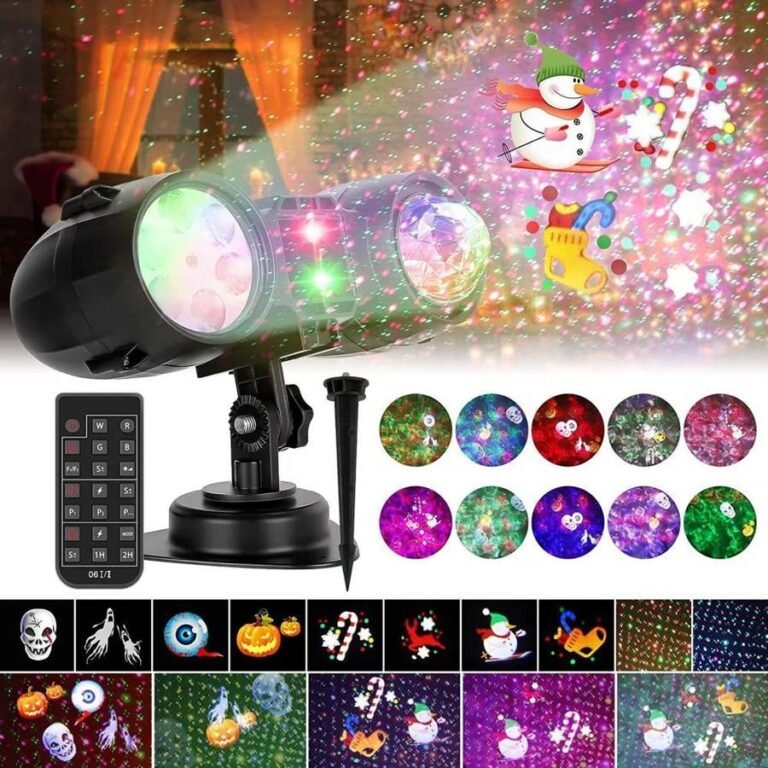

“The outdoor Christmas projector is not working” sounds like a diagnosis, but it is only a complaint label. When I receive that sentence, I do not begin with waterproof, and I do not guess which part failed. I ask what the operator can observe: no power, an effect that is present but unclear, intermittent operation, a shifted image, moisture at the lens, or a unit that behaves differently after a temperature change.
Those observations matter because winter does not create one universal projector problem. The product body, air inside the enclosure, adapter and cable, mounting position, optical window, and site conditions form one installed system. The problem is not that buyers ignore winter. The problem is that the word outdoor compresses several independent questions into one label.
A winter projector review should separate five risk paths: external water exposure, internal condensation, the adapter-and-cable power path, mounting or mechanical condition, and cold-condition or optical performance. These are mechanisms to inspect, not a ranking of Bowlum returns or a prediction that a product will fail.
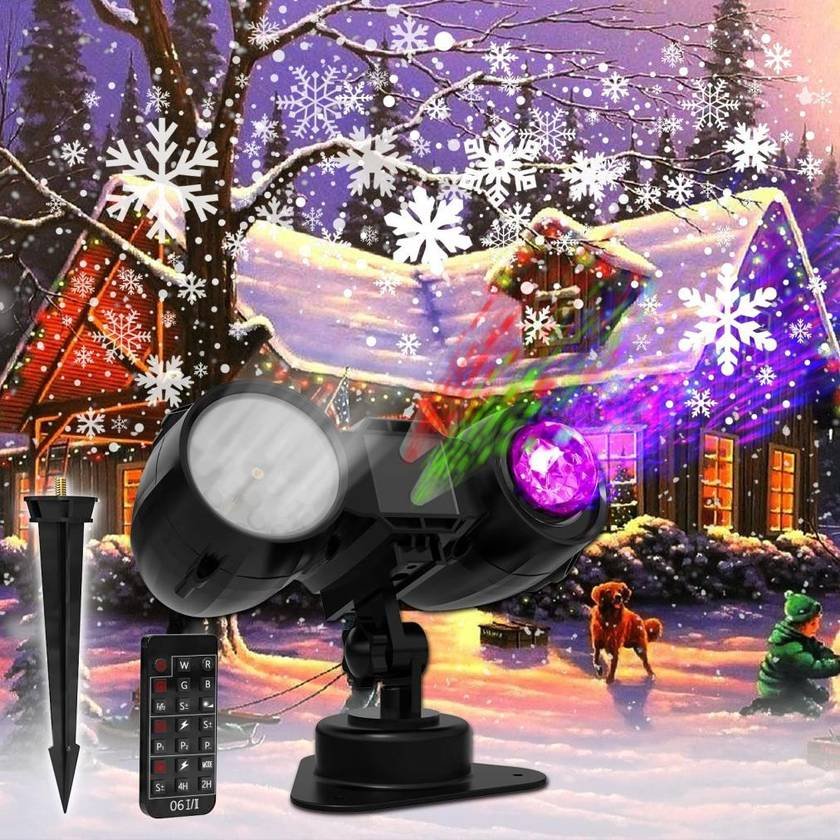
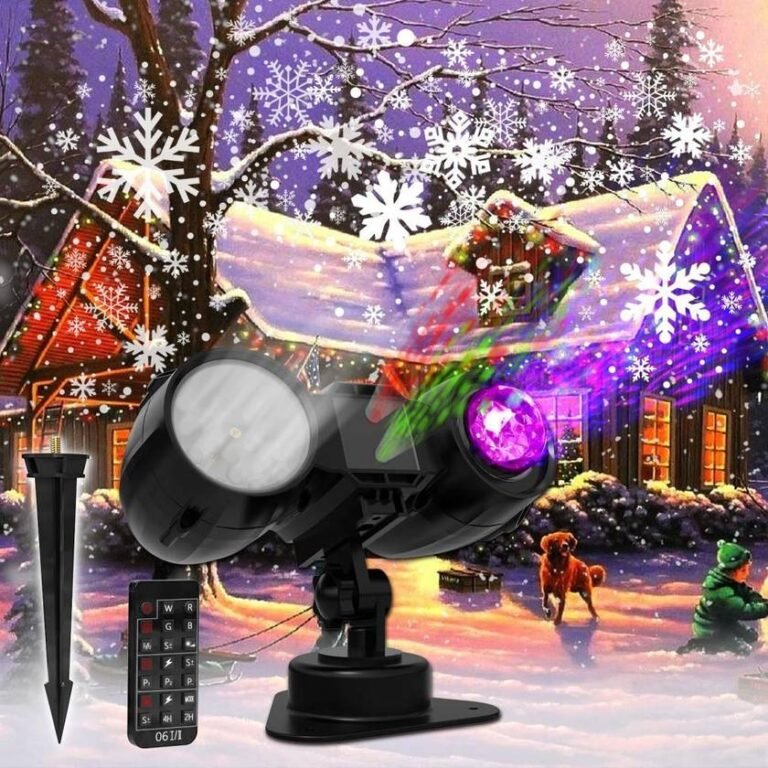
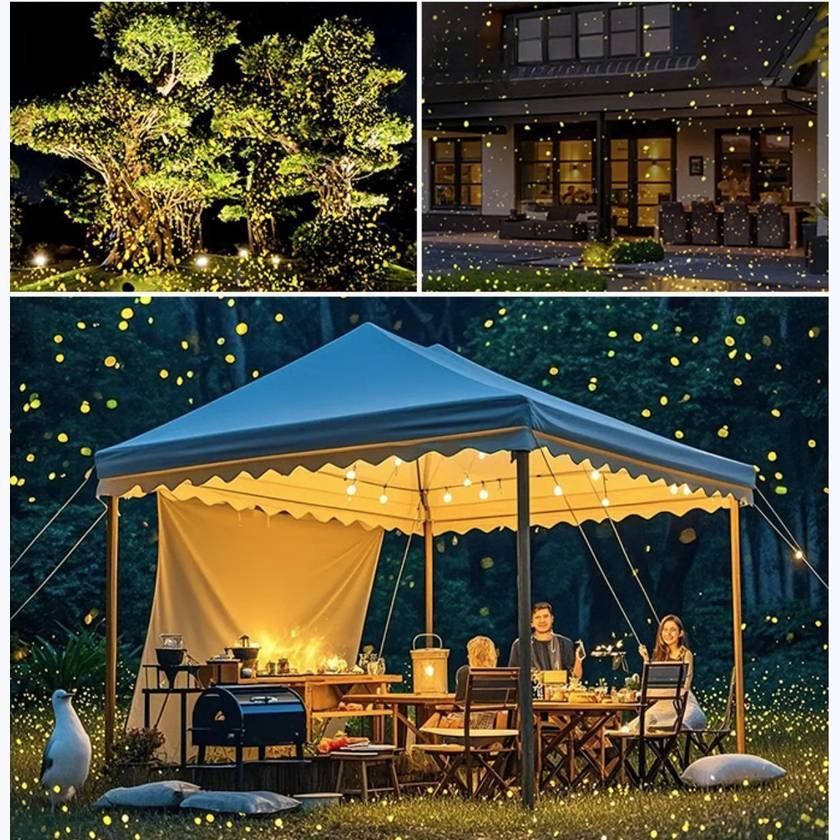
Start with that image. It is our own BWL-HP-003 media asset, and it shows a product against a designed snow scene. It does not document test temperature, exposure duration, mounting, power protection, or a field winter. I make that distinction because a buyer needs evidence for the installed condition, not a visual shortcut.
Below, I turn “not working” into five testable paths, explain what our roughly eight-hour unit aging does and does not establish, and give distributors a pre-installation pilot format. For the deeper moisture-only analysis, use our guide to IP65 projector condensation. For return evidence after a problem, use the separate projector batch QC guide.
What Does “Outdoor Christmas Projector Not Working” Actually Mean?
Support teams often inherit a short customer phrase and immediately convert it into a component failure. That jump destroys the first useful clue: what the person actually saw.
“Not working” should be rewritten as an observable symptom before anyone assigns a cause. Record whether the problem is no power, incomplete or unclear output, intermittent behaviour, changed aim, visible moisture, or condition-dependent operation; then map that observation to one or more risk paths.
I use two columns before I use the word failure: observation and condition. “No image at first power-on outdoors, while the same outlet has not been checked” is usable. “Dead on arrival” is not yet precise enough for engineering. “Haze appeared after the evening temperature dropped and later changed” is usable. “Waterproofing failed” has already selected a cause.
The first pass can use this map:
| Observable symptom | Risk paths to keep open | First evidence to preserve |
|---|---|---|
| No response at power-on | Power path; cold-condition behaviour; product body | Product label, adapter label, outlet/control test and start video |
| Effect appears incomplete or unclear | Optical obstruction; settings; power path; product body | Same scene and settings against a known-good reference |
| Operation is intermittent | Connector/cable; power source; control path; condition change | Continuous video, connection layout and timing |
| Image has shifted or misses the target | Mounting/mechanical condition; changed site geometry | Wide before-and-after photographs of bracket and target |
| Haze or droplets are visible | External water exposure; internal condensation; optical contamination | Wide installation photo, lens close-up and temperature/exposure timeline |
| Behaviour changes between warm and cold starts | Cold-condition path; power path; settings | Matched warm/cold record using the exact same compatible setup |
This is not a table of probable causes, and I will not turn five useful inspection paths into a Bowlum failure ranking. The table is a way to stop a symptom from being mistaken for its cause.
Keep Product Identity Attached
The exact product matters. BWL-OL-003, BWL-OL-004 and BWL-OL-005 are listed as IP65 in our current product records, while BWL-HP-003 is listed as IP44. They also have different construction and power records. A result from one cannot be borrowed as a winter limit for another because the products look related or sit in the same outdoor projector category.
I write the Bowlum SKU, configuration, adapter identity and installation position into the first line of the record. If that identity is missing, the investigation is already trying to compare unlike things.
A useful winter complaint begins with what changed and under which condition—not with the cause someone hopes to prove.
Is the Moisture External Water Ingress or Internal Condensation?
A wet-looking optical window invites a single conclusion: water came through the enclosure. Winter can produce another hypothesis—moisture already inside the air volume can condense when a surface cools.
External water ingress and internal condensation are different mechanisms and should remain separate hypotheses until the product and installation are inspected. An IP listing addresses defined ingress conditions; it does not diagnose every droplet, predict condensation behaviour, or cover the complete installed power system.
External exposure begins outside the product: rain direction, irrigation, roof runoff, pooling, cleaning spray, melting snow, cable entry and connector placement. Condensation begins with air, moisture and temperature transition. The two can coexist. A close photograph of droplets can show that moisture is visible, but it cannot by itself establish which path produced it.
I keep the first inspection deliberately neutral:
| Evidence | What it helps distinguish | What it cannot prove alone |
|---|---|---|
| Wide photograph of the complete installation | Runoff, pooling, irrigation, mounting and connector exposure | The moisture source inside the enclosure |
| Close photograph of lens or optical window | Location, pattern and appearance of haze or droplets | Ingress versus condensation |
| Timeline before, during and after a temperature change | Whether moisture changes with the thermal condition | A final product cause |
| Comparison of exposed and sheltered positions | Whether one site condition clusters with the observation | A universal product conclusion |
| Product-specific IP record and applicable evidence | The stated ingress boundary for the exact configuration | Cold, corrosion, UV or lifetime performance |
Our catalog records BWL-OL-003 and BWL-OL-004 as IP65. BWL-HP-003 is recorded as IP44. I describe those as product-level catalog facts, not as proof that any of them fits every exposed winter position and not as a category-wide certification claim.
Snowmelt Is Not the Only Site Question
Road-salt spray, de-icing residue, pool chemicals and other corrosive exposures are not interchangeable with fresh water. We do not hold product-specific salt-spray results in the facts used for this article, so I do not convert an IP65 catalog line into a corrosion-resistance claim. The practical buyer action is to name that exposure before model approval and request evidence appropriate to it.
The same discipline applies to snow and ice. A product image can show a snow scene; it cannot establish load, drainage, freeze-thaw, or cold-start performance. Those remain separate qualification questions.
Our condensation article goes further into dew point, lens fogging and evidence collection. Here, the important decision is simpler: do not let moisture visible become seal failed before the two mechanisms have been separated.
Why Should the Adapter, Cable, Connector, and Projector Be Checked Separately?
When the visible effect disappears, the projector body receives the blame because it is the part people can see. The power path may contain several components with different identities, exposure positions and compatibility limits.
Treat the outlet or supply, plug, adapter, cable, connector and projector body as separate boundaries. Test only with a verified compatible setup, record each label and swap one variable at a time; a matching plug shape does not establish electrical compatibility.
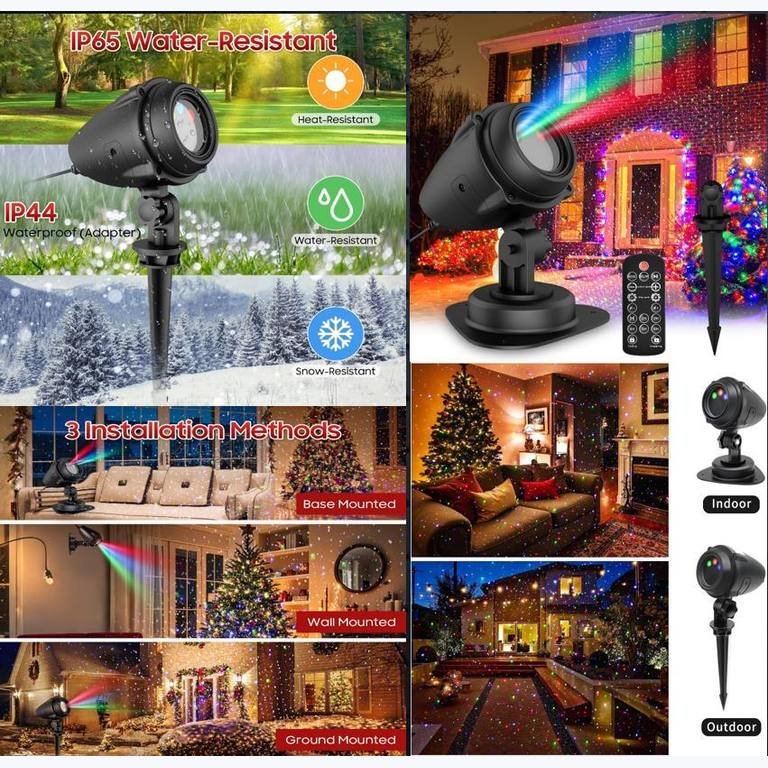
That BWL-OL-005 image is useful because it visibly shows more than a lamp: a body, adapter, cable path, base, stake and remote. It is still marketing artwork, not a test report, and I am not using the weather-resistance labels printed inside it as product evidence. The point is the system boundary. If the body is on a stake while the connector or adapter sits in another exposure zone, “the projector is outdoor” does not describe the whole installation.
Product records also prevent unsafe substitution. BWL-OL-004 lists a 12V/2000mA input, a five-metre cable and adapter power with US, EU and UK plug options. BWL-OL-005 lists a DC12V/1A output path and a five-metre cable. BWL-HP-003 records a 5V/1500mA output and a five-metre cable. Those differences are enough to show why I will not approve a swap because two connectors appear to fit.
Use a controlled sequence:
| Boundary | Record before testing | Controlled question |
|---|---|---|
| Supply point | Location and known-good verification | Is stable power reaching the approved setup? |
| Plug and adapter | Full label and exact product association | Is this the specified compatible adapter? |
| Cable and connector | Route, strain, visible damage and exposure | Does behaviour change without moving every other variable? |
| Projector body | Bowlum SKU, configuration and controls | Does it reproduce with a known-good compatible power path? |
| Remote or app, if included | Control method, settings and pairing state | Does local hardware control change the observation? |
I preserve the original setup first, then compare it with a known-good compatible reference. Changing the adapter, cable, projector and control method together may make the image return, but it erases the answer to which boundary mattered.
Do not ask an end user to open a housing or improvise a power supply. Controlled diagnostics belong with the importer, distributor, qualified service team or factory process agreed for that product.
“The lamp has no image” names the end of the chain. It does not name the component that interrupted it.
How Do Mounting, Mechanical Strain, and Optical Obstruction Change the Diagnosis?
A unit can power on while no longer delivering the approved effect to the intended surface. Winter inspection has to include orientation, bracket position, cable strain and the optical window—not only the on/off state.
Mounting movement, cable strain, blocked drainage, snow or residue on the optical window, and a changed projection angle can all alter the observed result without proving an internal electronic fault. Photograph the complete installed geometry before exposure and compare the same points during inspection.
I ask for one wide frame that includes the projector, bracket, cable route and target surface. A close image of the front window is useful, but it cannot show whether the unit rotated, the bracket loosened, the ground changed, a cable is pulling the enclosure, or a new obstruction entered the light path.
The observation-to-check sequence is practical:
| Observation | Mechanical or optical check | Boundary to preserve |
|---|---|---|
| Effect moved away from the target | Compare bracket, stake/base and reference marks | Do not refocus or re-aim before documentation |
| Effect looks diffuse or low contrast | Inspect external snow, ice, dirt, residue or haze | Do not assume the light source weakened |
| Moisture collects around one side | Record orientation, pooling and drainage path | Do not diagnose enclosure design from one angle |
| Behaviour changes when cable is moved | Stop movement and inspect routing/strain safely | Do not keep flexing until evidence disappears |
| Housing or mount shows impact | Photograph condition and shipping/install history | Separate mechanical damage from weather exposure |
Material Is a Variable, Not a Verdict
BWL-OL-003 and BWL-OL-004 are recorded with one-piece die-cast aluminium housings. BWL-HP-003 is recorded with an engineering-plastic housing. Those are legitimate product facts, but they do not support a universal sentence that one material “survives winter” and the other does not. Housing geometry, seals, optical design, connection boundaries, installation and the actual material specification all matter.
When I compare those products, I keep material as one field in the qualification sheet rather than using it as a durability score. If a project needs evidence for impact, thermal cycling, UV or chemical exposure, the buyer should define the condition and request applicable product evidence instead of treating the material name as the result.
This also prevents an IP44-versus-IP65 installation decision from being collapsed into “higher number plus metal equals safe.” No single line carries the complete winter decision.
What Should a Buyer Test About Cold Start and Temperature Change?
Cold-start behaviour is often discussed as if one light-source family has a universal answer. Without exact product conditions and a controlled comparison, that becomes another unsupported category claim.
Test cold start and temperature transition on the exact product configuration within its supported limits, using the same compatible power path, settings, surface and observation method as a warm reference. Record temperature and timing; do not borrow another SKU's operating range or infer lifetime from one start.
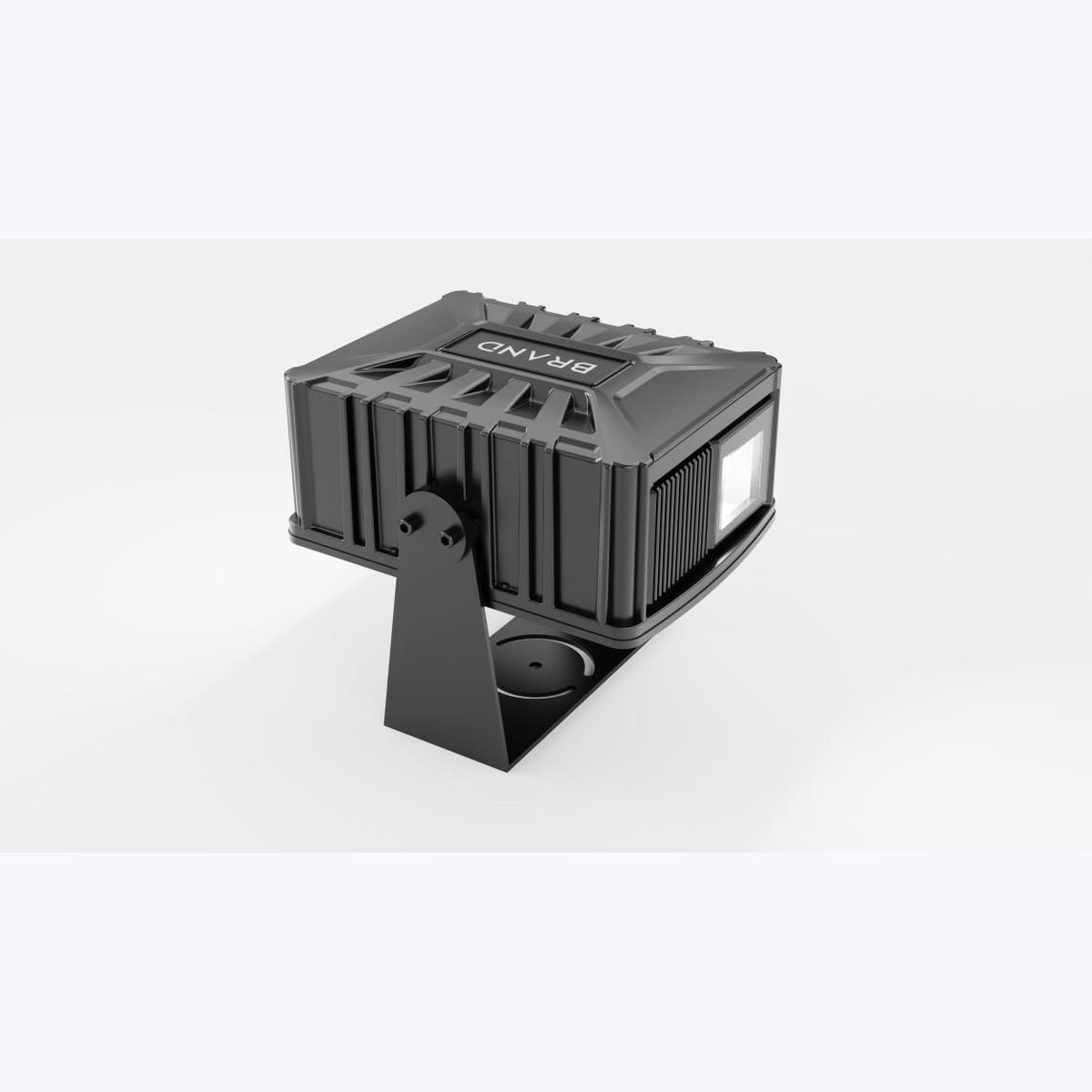
I separate three observations:
- Start: does the exact sample reach its expected operating state using the approved setup?
- Transition: does the visible output, control or optical condition change while temperature equalizes?
- Recovery: after the defined condition ends, what changes and what remains?
The record should be boringly consistent:
| Test field | What to record | Why it matters |
|---|---|---|
| Product identity | Bowlum SKU, variant and sample label | Prevents family-level borrowing |
| Power path | Exact compatible adapter, cable and connector arrangement | Keeps electrical setup constant |
| Condition | Actual temperature, exposure sequence and duration | Makes “cold” reproducible instead of subjective |
| Optical setup | Surface, distance, ambient light, aim and settings | Stops environment from masquerading as product change |
| Observation | Startup, effect, control, sound, haze and recovery | Separates symptoms rather than using “works/doesn't work” |
| Control | Matched warm reference or known-good sample | Gives the comparison a baseline |
Risk Disclosure: A Missing Limit Is Not Permission to Invent One
The public fields used here do not establish one universal operating-temperature range across Bowlum's outdoor line. I will not fill that gap with an industry-normal number, a range copied from a similar housing, or an assumption based on a snow image. The correct next step is product-specific evidence or a buyer-defined sample test within an agreed boundary.
A pilot result is also not a lifetime promise. It can reveal an obvious mismatch, improve the installation instruction and define a repeatable acceptance check. It cannot prove every future winter, every site or every production batch.
“Tested in winter” is not a condition. Product, temperature, transition, power path and acceptance criteria make it one.
How Should Buyers Combine Factory Aging With a Pre-Installation Winter Pilot?
Factory aging and field qualification answer different questions. Treating either one as complete leaves a gap between release control and the installed environment.
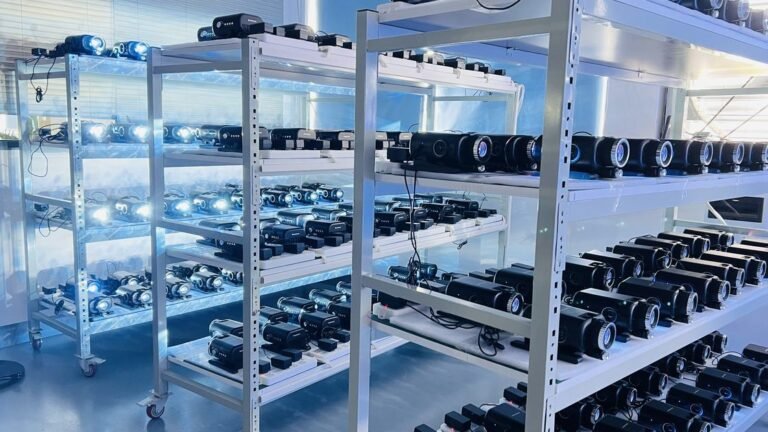
Bowlum runs every unit for roughly eight hours during aging, which is a unit-level factory release control. It does not by itself establish cold-start, condensation, salt, UV, mounting or seasonal-life performance; buyers should pair it with an exact-SKU pilot that reproduces the intended winter installation and records acceptance criteria.
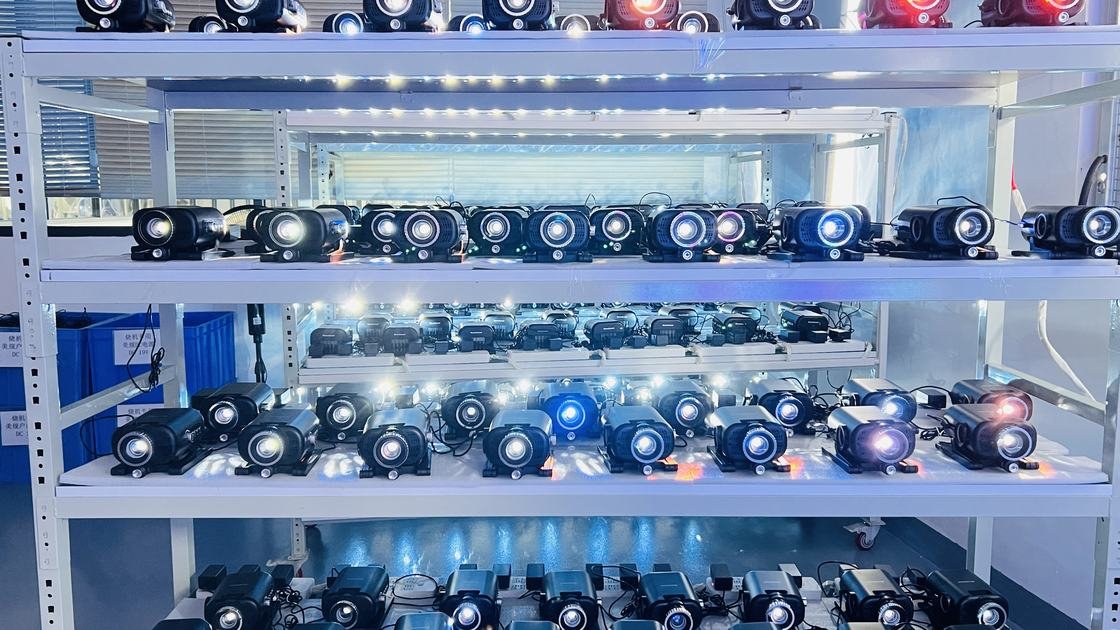
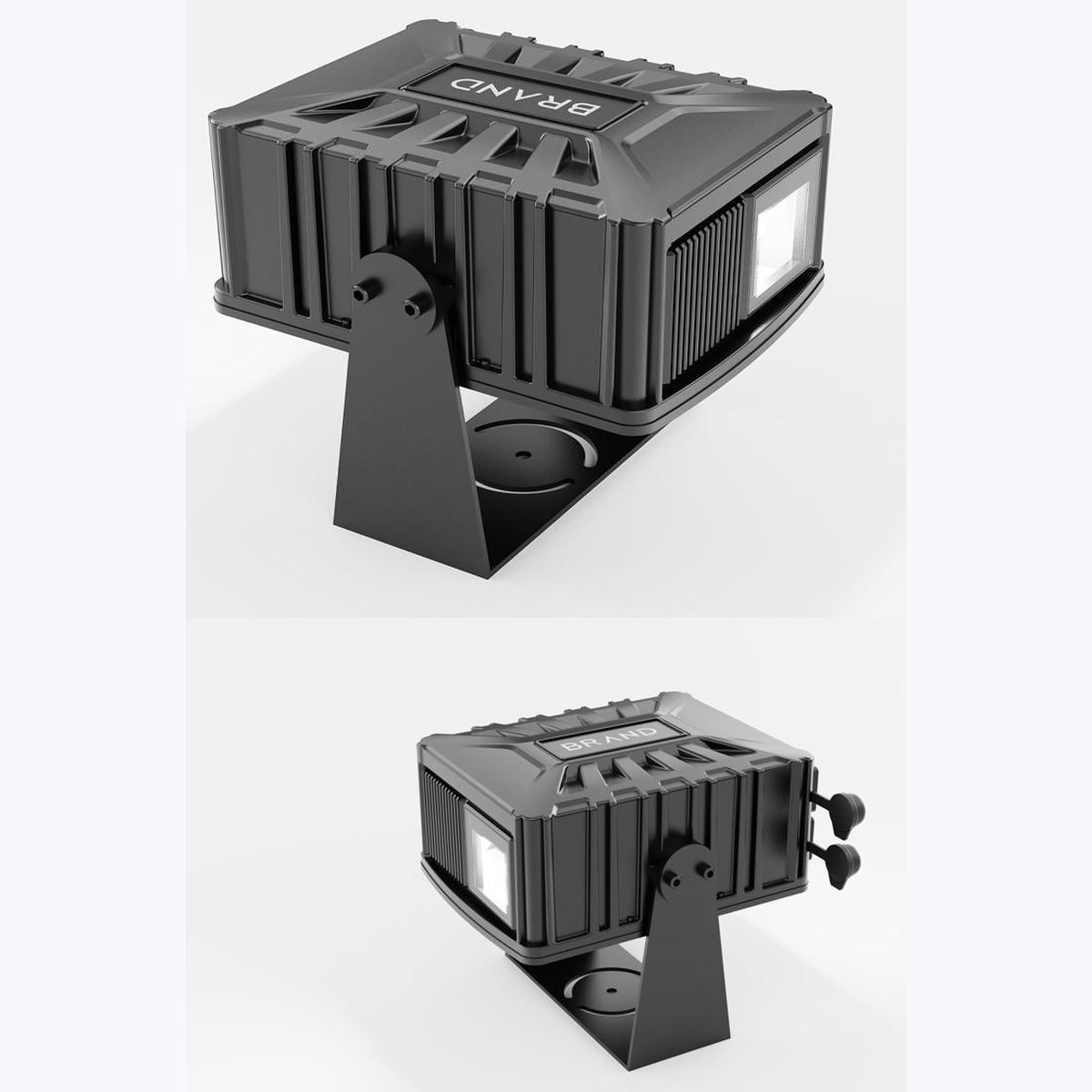
The image above is process evidence: projector units are powered and illuminated on our factory racks. What I can confirm is that every unit receives roughly eight hours of aging rather than only a sample. I do not describe that as a winter chamber, salt-spray test, UV test, ingress test or proof of service life because it is none of those things.
| Stage | It can answer | It cannot answer alone |
|---|---|---|
| Factory unit aging | Did the unit operate through the defined factory aging process? | Will this installation suit a particular winter site? |
| Incoming inspection | Did identity, accessories and visible condition match the order? | How will temperature and exposure affect the installed system? |
| Exact-SKU winter pilot | How does the sample behave under defined site conditions and mounting? | Every future site, season or batch |
| Rollout acceptance | Did installed positions match the approved pilot and documentation? | Unrecorded conditions outside that boundary |
| Service log | What changed, where and under which condition? | Root cause without controlled comparison or inspection |
A Buyer Story: A First-Season Installer Changed the Question Before Rollout
A first-season installer in the Northeast once put one line on a planning sheet: “outdoor projector—winter ready.” The planned positions included a sheltered entrance, an open lawn edge and a low point near a paved drive. The wording treated those positions as one environment, and the product column did not identify the adapter or connection boundary.
I did not approve or reject the project from that line. I asked the installer to place each position on a simple site map, assign the exact product and power path, photograph the intended mount, note water and residue exposure, and write the observable acceptance result. I also separated the cold-start check from the moisture check so a hazy lens would not automatically become an electrical failure.
The installer changed the next step. Instead of treating an IP label as the winter decision, the team asked its distributor for a small, documented pilot across the different positions and kept the full rollout open until those observations existed. There is no field-success claim hidden in that decision; the useful outcome was a testable question before seasonal pressure removed the time to ask it.
Another buyer can reuse the same pilot sheet:
- Identity: exact SKU, variant, adapter, cable and connector.
- Position: mount, angle, target, drainage, nearby water and residue exposure.
- Condition: actual temperature and transition sequence within the supported boundary.
- Acceptance: power-on, effect, control, aim and optical clarity under matched settings.
- Evidence: wide site photo, close product photo, continuous start video and dated log.
- Decision: approve, change installation, request more evidence, select another product, or keep the cause open.
The final line matters. “Cause open” is a legitimate technical status. It is better than forcing a buyer, installer or factory into a confident explanation that the available evidence cannot support.
Conclusion
An outdoor Christmas projector that is “not working” may have a power symptom, an optical symptom, a mounting change, visible moisture, or behaviour tied to a condition. Winter does not turn those observations into one cause, and an IP number does not close the entire system.
The more useful buying question is not “Will this fail in winter?” It is: which of the five risk paths have we defined, which product and installation boundaries have we preserved, and what observation will decide the next action? I use our eight-hour unit aging as one verified factory control, then keep water exposure, condensation, the power path, mounting and cold-condition performance available for exact-SKU qualification. Before approving a rollout, I require the site map, power boundary, matched test condition and observable acceptance result to exist in writing.
Frequently Asked Questions
Why is my outdoor Christmas projector not working in cold weather?
Do not assign the cause from that phrase alone. Record the exact symptom and check five separate paths: external water exposure, internal condensation, adapter/cable power, mounting or mechanical condition, and cold-condition or optical performance.
Does IP65 mean an outdoor projector is winterproof?
No. An IP65 catalog record addresses defined ingress conditions for the exact product boundary; it does not by itself establish cold-start, condensation, corrosion, UV, mounting, optical clarity or service-life performance.
How can I tell water ingress from condensation inside a projector lens?
A photograph of moisture cannot settle the cause. Preserve the complete installation, water-exposure history, temperature timeline and whether the haze changes as temperature equalizes, then inspect the product and site as separate hypotheses.
Can I test an outdoor projector with another adapter that has the same plug?
Not unless compatibility has been verified for that exact product. Plug shape alone does not establish voltage, current, polarity or other electrical compatibility, so use the specified setup and record labels before controlled substitution.
Can snow on the lens make a projector look defective?
Snow, ice, residue or dirt on the optical window can change the visible effect, but that observation does not rule out other causes. Document and inspect the optical surface, mounting and target before assigning an internal fault.
Does Bowlum test every projector before shipment?
Every unit receives roughly eight hours of aging under the factory process. That is a unit-level release control, not a claim that the unit has passed a winter chamber, salt, UV, condensation, site-installation or lifetime test.
What should a distributor include in an outdoor projector winter pilot?
Record the exact SKU and power path, installation position, actual condition and transition, matched optical setup, observable acceptance criteria, and dated photo/video evidence. Include exposed and sheltered positions where they represent the intended rollout rather than testing only the easiest site.