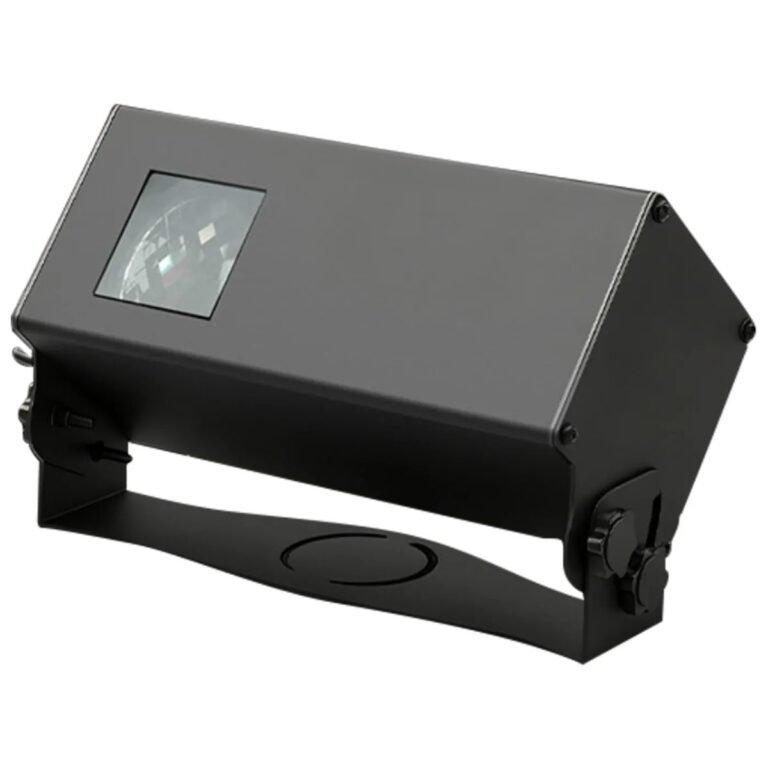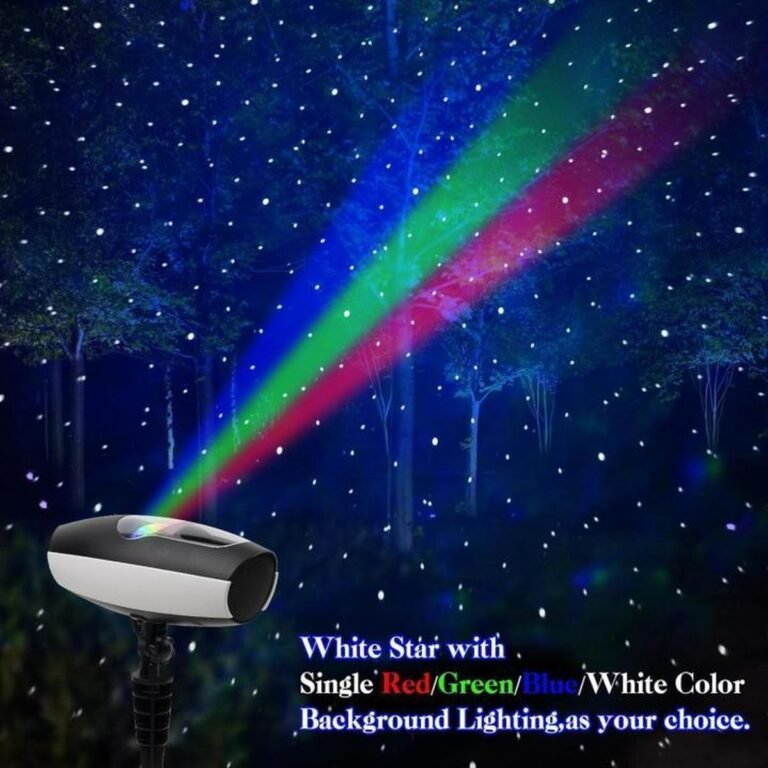

An outdoor-projector buyer sees IP65 and assumes the weather question is closed. When I review that request, I do not answer with the rating alone. I ask where the lamp, connector and adapter will sit, how water drains, how quickly the site cools and whether the optical window can be inspected. Those answers tell me whether the buyer has described an installed system or only repeated a label.
The same code appears on floodlights, junction boxes and projectors, so the products seem comparable. A decorative projector contains an optical window, may include moving parts, and can create internal heat near a surface where even a thin film of moisture changes the visible effect. The problem is not that an IP rating is meaningless. The problem is that it answers a narrower ingress question than buyers often ask it to answer. An outdoor-projector buyer sees IP65 and assumes the weather question is closed. When I review that request, I do not answer with the rating alone. I ask where the lamp, connector and adapter will sit, how water drains, how quickly the site cools and whether the optical window can be inspected. Those answers tell me whether the buyer has described an installed system or only repeated a label.
The same code appears on floodlights, junction boxes and projectors, so the products seem comparable. A decorative projector contains an optical window, may include moving parts, and can create internal heat near a surface where even a thin film of moisture changes the visible effect. The problem is not that an IP rating is meaningless. The problem is that it answers a narrower ingress question than buyers often ask it to answer.
An IP rating describes resistance to defined solid and water ingress conditions; it does not by itself guarantee a clear lens, year-round outdoor reliability or suitability for a specific installation. For projectors, buyers must add condensation, drainage, cable entry, mounting angle, temperature change, UV and service access to the specification.
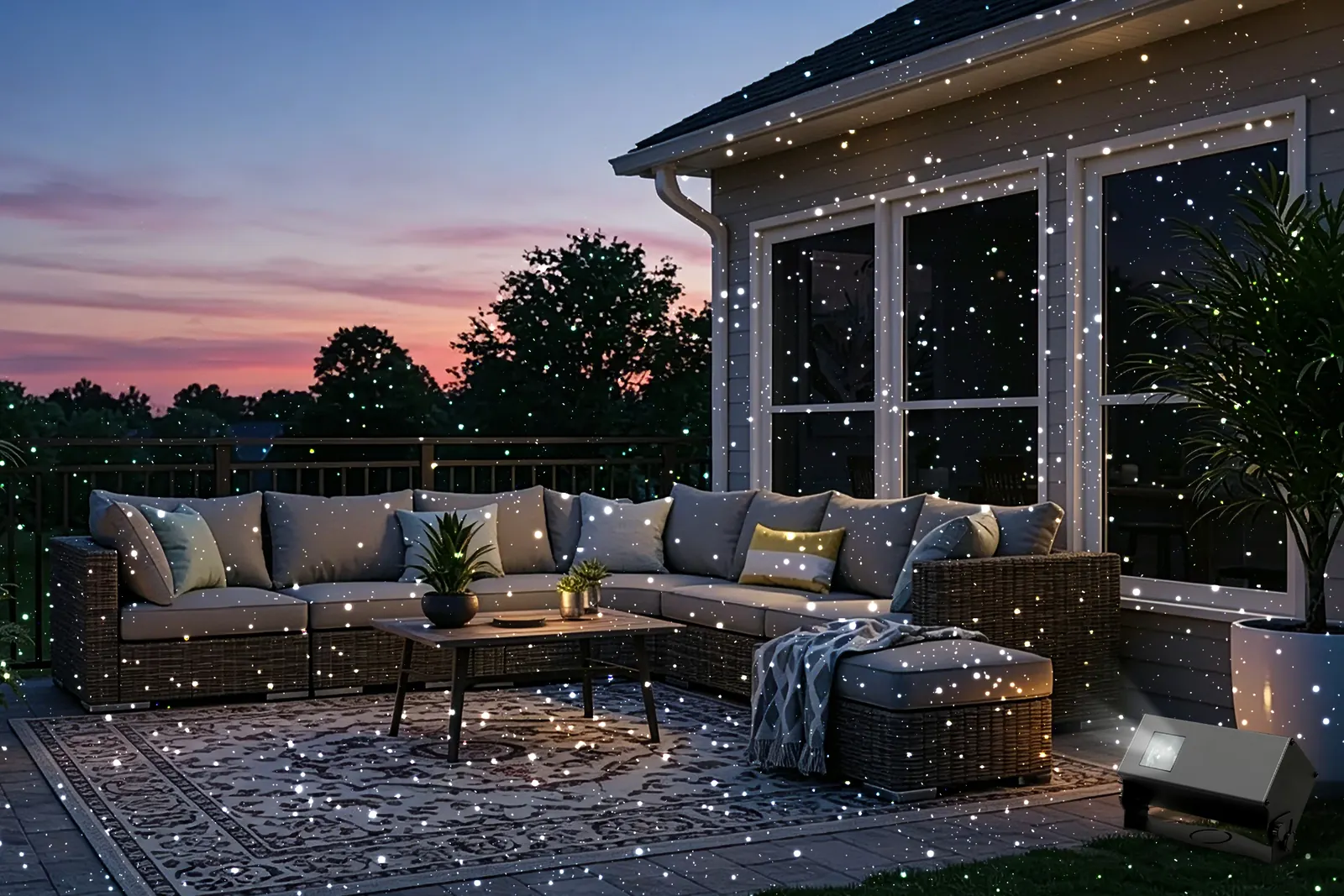
Our catalog records IP values by product. BWL-OL-001 is listed as IP65, while BWL-OL-002 is listed as IP44. I will not turn either record into a certification claim or a promise about every climate. Below, I will show what the code covers, what the optical design adds, and the site questions that can outperform a higher number used without context.
Compare the exact models on the outdoor projector page and in the complete product catalog; do not let the highest rating become a shortcut for the whole category.
What Do IP65 and IP44 Mean for an Outdoor Projector?
Buyers often treat the two digits as a single waterproof score. Each digit describes a different ingress category, and neither describes every environmental stress.
In the IP code, the first digit addresses solid-particle protection and the second addresses water ingress under a defined test category. IP65 indicates a dust-tight enclosure and protection against water jets; IP44 indicates protection against small solid objects and splashing water1. The code still needs an exact product and tested scope.
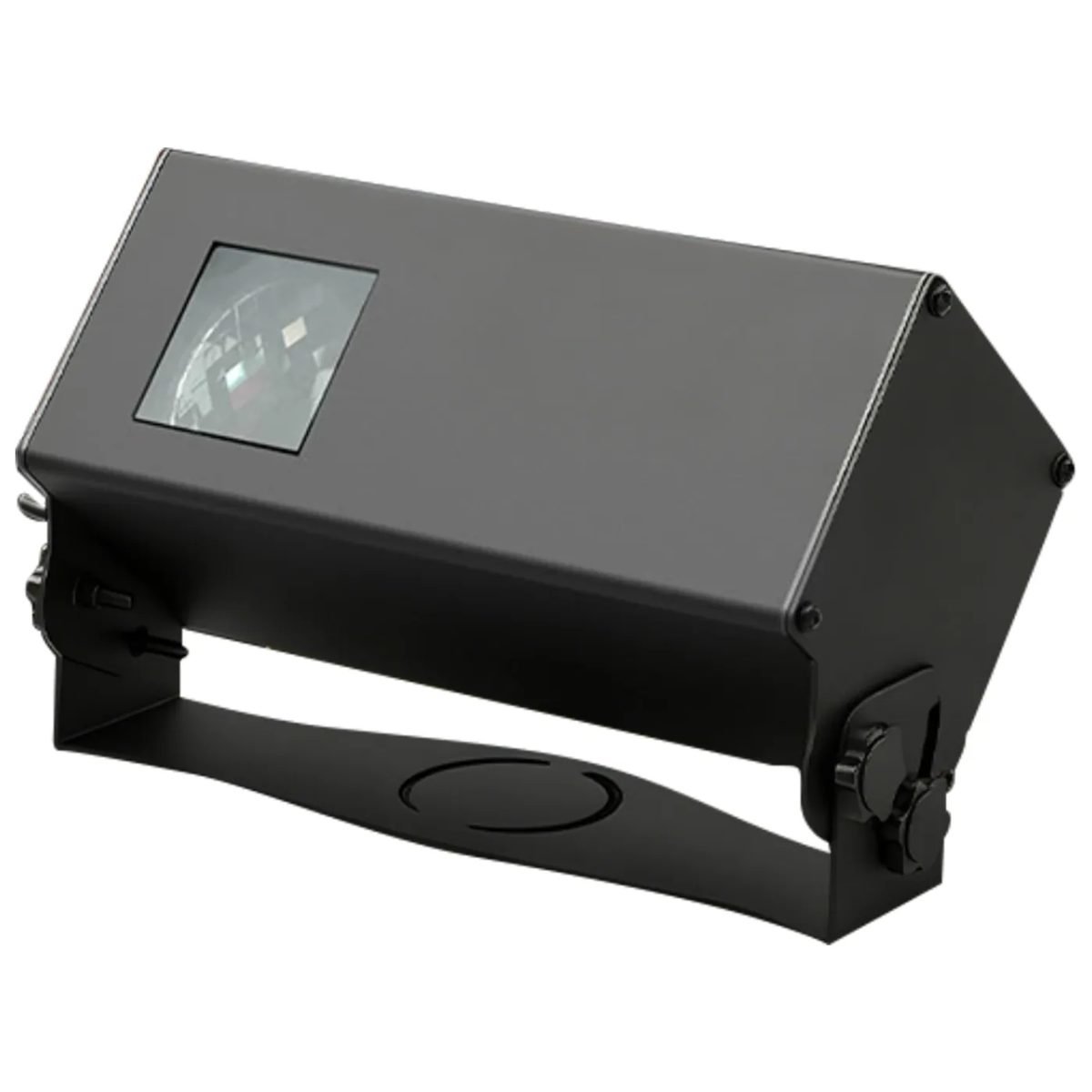
The useful reading is product-specific:
| Product | Catalog IP record | What the buyer can say | What still needs definition |
|---|---|---|---|
| BWL-OL-001 | IP65 | The product record lists IP65 | Test scope, cable/adapter boundary and installation |
| BWL-OL-002 | IP44 | The product record lists IP44 | Splash exposure, mounting and connection protection |
| BWL-OL-003 | IP65 | The product record lists IP65 | Smart-control configuration and complete installed system |
| BWL-OL-004 | IP65 | The product record lists IP65 | Variant, cable path and installation details |
| BWL-OL-006 | IP44 | The product record lists IP44 | Site exposure and connection details |
Do not say “our outdoor line is IP65.” The live catalog includes more than one rating and some product fields can be empty. Grouping all outdoor products under the highest value creates the exact scope error a buyer should be trying to avoid.
I keep each IP value attached to the exact product record because that is the boundary I can defend. If a buyer asks for the whole series, I show the different values and mark the products that still need evidence instead of borrowing the highest number.
The Complete System Question
A housing can carry one rating while the installed system includes a connector, adapter, extension, control box or cable entry with a different exposure boundary2. Ask what assembly the rating describes and where the buyer must provide additional protection.
| Ask the supplier | Weak answer | Useful answer |
|---|---|---|
| What exactly is rated? | “The light is waterproof.” | Product configuration and boundary named |
| Does it include the connector? | “It is for outdoor use.” | Connector and adapter placement stated |
| Which model carries the rating? | “This series.” | Exact product record or report scope |
| What installation is assumed? | “Any garden.” | Mounting angle, drainage and exposure limits |
An IP code belongs to a product configuration. “Outdoor” belongs to an installation. The buyer has to connect the two.
Why Do a Lens and Moving Mechanism Change the Failure Mode?
A floodlight mainly needs to deliver light outward. A decorative projector must preserve an optical path and, in some designs, motion or focus.
A projector's lens or optical window makes small changes in clarity visible in the final effect. Seals, cable entries, focus or motion interfaces, internal heat and mounting orientation can create failure modes that a solid floodlight comparison misses. The IP number does not describe image quality after environmental exposure3.
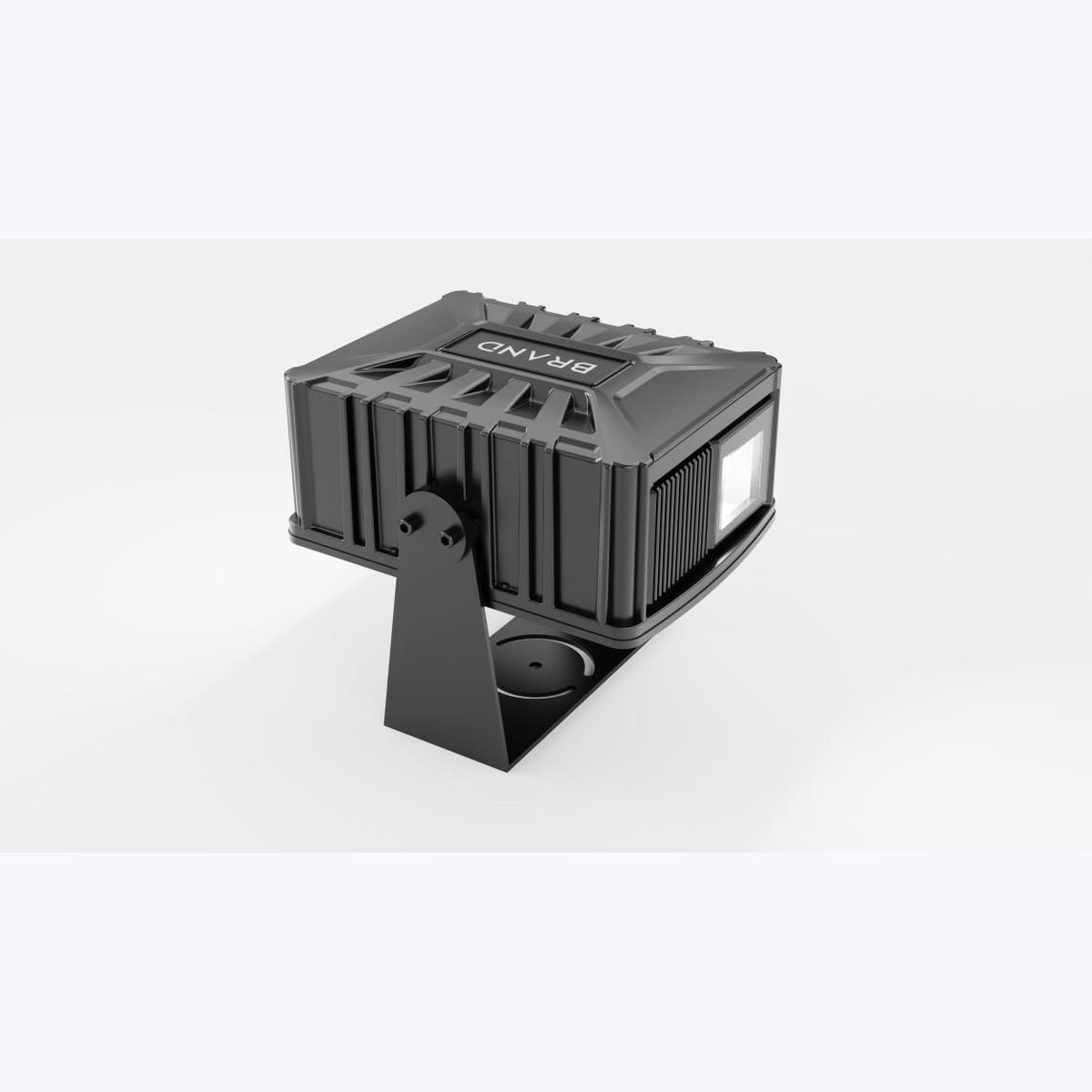
Consider the functional chain:
- The housing keeps unwanted material away from the internal system.
- The optical window must stay clear enough for the intended effect.
- The optical path and any moving element must remain aligned.
- Internal heat must be managed without creating uncontrolled pressure or moisture behaviour.
- The bracket and cable must keep the installed orientation within the design boundary.
| Projector-specific area | Possible effect if compromised | Buyer observation |
|---|---|---|
| Optical window | Haze, scattering or reduced contrast | Compare a clean reference under matched conditions |
| Seal interface | Local ingress path | Inspect around lens, enclosure joints and cable entry |
| Moving mechanism | Changed speed, noise or pattern | Record mode and movement against approved sample |
| Mounting bracket | Water pooling or wrong aim | Document installed angle and drainage path |
| Cable and connector | System-level exposure outside housing | Photograph complete installation, not lamp alone |
This does not mean projectors are unsuitable outdoors. It means the acceptance test should include the visible effect and installed configuration, not only a label check.
I inspect the light path as well as the housing. A unit can still power on while haze, residue or a changed mechanism has already reduced the effect the buyer sells. For me, “operates” and “projects the approved image” are two separate acceptance checks.
The same housing can behave differently when mounted under an eave, near irrigation, low to the ground or exposed to direct sun and rapid night cooling. A product-level IP line cannot encode all those scenarios.
Why Can Condensation Appear Even When External Water Did Not Enter?
Buyers see moisture behind a lens and reasonably conclude the seal failed. Internal condensation can also form when moist air inside the housing cools below the dew point.
Condensation can form from moisture already present inside a projector when the optical window cools and water vapour becomes liquid on the internal surface. That is a different mechanism from rain or irrigation passing through the enclosure. An ingress rating alone does not diagnose which mechanism occurred.
The mechanism is basic:
- warm air can hold more water vapour than cooler air4;
- the projector operates and internal temperature changes;
- the lens or housing cools with the environment;
- if an internal surface falls below the dew point, moisture can condense there.
That can happen without a visible external leak. It can also coexist with ingress; one explanation does not automatically exclude the other.
| Observation | Possible mechanism | Evidence needed |
|---|---|---|
| Moisture after rapid evening cooling | Internal condensation | Temperature timeline and internal/external pattern |
| Water localized near cable entry | External ingress possible | Seal, connector and installation inspection |
| Haze clears after warming | Condensation hypothesis strengthened | Repeated controlled observation |
| Persistent residue on inner lens | Earlier moisture event or contamination | Service inspection |
| Multiple units at one installation | Site condition or install pattern possible | Compare positions and exposure |
A Site Review That Kept Two Causes Open
An importer receives reports of lens fog after winter. The useful response is not “IP65 means water cannot be inside,” and it is not “all fog is condensation.” I request installation height, angle, irrigation exposure, cable routing, temperature history, when the fog appears and whether it clears. I also ask for a wide site photograph before I interpret the close-up of the lens.
Then I compare affected and unaffected units at the same site. If the pattern follows one mounting condition, the installation becomes a test variable. If it follows a product boundary, I bring the record back to our factory team for product inspection. If the evidence is incomplete, I keep the cause open rather than choosing the more convenient explanation.
The review does not force a quick verdict. It creates a matched installation and product comparison that can separate site exposure from a product boundary. The importer now has two testable causes instead of one confident sentence based only on the IP number.
“Moisture visible” is an observation. “Seal failure” and “condensation” are competing hypotheses until the installation and product are inspected.
What Does an IP Rating Not Cover for Projector Buyers?
An IP code can become a shortcut for every outdoor concern. Buyers need a second list for environmental and lifecycle stresses.
An IP rating does not by itself establish resistance to temperature cycling, sustained cold or heat, UV exposure, corrosion, impact, cable strain, optical haze, condensation or long-term operation5. Add the relevant stresses to the product and installation plan instead of assuming a higher IP number absorbs them.
| Outdoor stress | Why IP alone is insufficient | Buyer action |
|---|---|---|
| Temperature change | Ingress test does not define condensation behaviour | Define operating and transition conditions for the project |
| UV exposure | Sunlight can affect materials and labels over time6 | Ask for material and installation guidance |
| Sustained cold or heat | Function and materials may change outside intended range | Confirm product-specific operating limits |
| Corrosive environment | Salt, chemicals or poolside exposure add different risks | State the site environment explicitly |
| Impact and handling | Mechanical damage can break a sealed boundary | Inspect after shipping and installation |
| Cable strain | Pulling or bending can alter the entry path | Define strain relief and routing |
| Optical cleanliness | Image quality can fall before water reaches electronics | Include a visual-effect acceptance check |
Our current factory information notes that newer firefly products may reach higher ingress levels, but exact product values are still pending. We do not publish an IP66–68 statement until those values are attached to exact products. An internal direction is not a public specification.
I would rather leave a higher value unpublished than ask the buyer to rely on a family-level direction. Once our team connects the exact product to the applicable evidence, I can use that value within its scope; until then, “pending” is the honest technical answer.
Risk Disclosure: No IP Number Is a Lifetime Promise
Product condition, installation, ageing, maintenance and environment can change after the original test or catalog record7. A buyer should not translate IP65 into “works outdoors for every season” or “cannot fog.” Those claims require different evidence and conditions.
This is also why product pages should say what is known and leave the rest blank. A lower, accurate product-level value is more useful than the highest family number repeated everywhere.
Build a Field-Exposure Record Before Blaming the Rating
Outdoor complaints are difficult to interpret when the team receives only a close-up of a fogged lens. The image proves moisture is visible; it removes the site that could explain when and how it appeared. Ask installers or pilot customers to create a short baseline record before the first long exposure.
Capture:
- product label and complete installed assembly;
- mounting height, angle and bracket position;
- cable, connector and adapter route;
- nearby irrigation, roof runoff, pooling or splash sources;
- sun and shade position during the day;
- a clear optical-window image before installation;
- the time and weather condition when any change appears;
- whether the change clears after temperature equalizes.
| Evidence | What it can support | What it cannot prove alone |
|---|---|---|
| Wide installation photo | Exposure and orientation context | Internal moisture source |
| Close lens photo | Location and appearance of haze or droplets | Seal failure versus condensation |
| Temperature timeline | Condensation hypothesis | Product cause without inspection |
| Connector photo | System boundary and possible exposure | Internal electronics condition |
| Affected/unaffected comparison | Site or product clustering | Final root cause |
This is not a substitute for a standardized ingress test, and it should not be presented as one. It is field evidence that helps the buyer and factory decide whether the next step is installation correction, controlled environmental testing, product inspection or document review.
For a project rollout, repeat the record on a small number of representative positions before full installation. Choose the exposed edge, the sheltered location and any area near irrigation rather than testing only the easiest site. A pilot cannot guarantee every season, but it can reveal an obvious mismatch while the mounting plan can still change.
Keep maintenance observations in the same format after launch. A dated sequence showing a clear lens, first haze, weather change and later recovery is more diagnostic than a folder of close-ups from unknown times. It also lets the buyer decide whether cleaning access, inspection frequency or mounting guidance belongs in the next installation manual and service record.
Why Do We Treat IP as a Catalog Rating Rather Than a Certification Claim?
The word “certified” implies an evidence relationship that a catalog line alone does not establish. We keep the wording proportional to the source.
When our current source is a model-level catalog field, we state that the product is listed as IP44 or IP65. We do not turn the field into a third-party certification claim, and we do not let it inherit across products. Buyers can request the applicable test evidence for their exact model and market need.
Evidence language should match evidence state:
| Evidence held | Safe wording | Unsafe escalation |
|---|---|---|
| Product catalog lists IP65 | “BWL-OL-001 is listed as IP65” | “The complete series is certified IP65” |
| Product catalog lists IP44 | “BWL-OL-002 is listed as IP44” | Omitting the lower value from a family page |
| Factory says a new range reaches higher levels | “Product-specific value pending” | Printing the range before SKU confirmation |
| Product-specific report retrieved | Describe exact product and scope | Applying it to similar housings without mapping |
This discipline does not weaken the product. It protects the buyer's own listing from a sentence the buyer cannot later support.
I use “listed as” when the source is a catalog field and reserve “certified” for a product-and-evidence relationship I can actually show. That wording is not cosmetic. It tells the buyer what proof exists today and what still needs retrieval.
The same approach applies to installation advice. A supplier can recommend protected connectors, drainage and mounting orientation without claiming those steps upgrade the IP rating. Installation reduces exposure; it does not rewrite the product record.
Which Installation Questions Matter More Than a Higher IP Number?
When comparing IP44 and IP65, buyers can become so focused on the number that they stop describing the site. The site may decide whether either product fits.
Ask where the projector, connector and adapter sit; how water drains; whether irrigation or pooling reaches them; what temperature and sunlight changes occur; how the lens is oriented; and how the unit can be inspected. These answers can eliminate a bad installation before a higher rating is used as compensation.
Use an installation worksheet:
I ask the buyer or installer to complete it before the pilot, not after a problem appears. I can then compare the approved site assumption with the actual mounting and decide whether the next test belongs in the installation, the complete power path or the product itself.
| Question | Record |
|---|---|
| Product and configuration | Exact Bowlum SKU and accessory set |
| Mounting position | Height, angle, bracket and nearby surfaces |
| Water exposure | Rain, irrigation, splash, pooling and cleaning |
| Connection path | Cable, connector, adapter and enclosure locations |
| Thermal condition | Sun, shade, rapid cooling and expected range |
| Optical surface | Access for inspection and cleaning |
| Acceptance | Effect check before and after defined exposure |
Sample and Pilot Sequence
- Verify the exact product-level IP record and supporting evidence required by the buyer.
- Install the sample using the intended bracket, connector and adapter placement.
- Record baseline effect, optical clarity and controls.
- Apply an agreed environmental or installation test appropriate to the project.
- Inspect the complete system, not only whether the lamp turns on.
- Run a limited pilot when the site creates unusual exposure.
Any supplier who answers a detailed installation question only by repeating “IP65” is leaving the site risk with the buyer. The right product can still fail as a project if the installation has no drainage, service access or protected power path.
Conclusion
IP65 is useful, but it is not a complete outdoor-projector specification. Keep the rating attached to the exact product, define the installed system, and separate external ingress from internal condensation. Add temperature, UV, cable, drainage, mounting and optical clarity to the buying plan. A higher number can answer a narrower test more strongly; it cannot answer every question the garden, façade or winter will ask.
My decision rule is to treat the IP code as one verified row inside a larger site review. If I cannot see the complete installation and optical acceptance condition, I am not ready to turn that row into a reliability promise.
Frequently Asked Questions
Does IP65 mean an outdoor projector cannot get condensation?
No. Condensation can form from moisture already inside when a surface cools below the dew point. The IP rating does not by itself diagnose internal fogging.
What is the difference between IP65 and IP44?
IP65 indicates dust-tight protection and resistance to water jets under the applicable test category. IP44 addresses small solid objects and splashing water. Both need an exact product and scope.
Is an IP65 projector suitable for every outdoor climate?
No. Temperature cycling, sustained cold or heat, UV, corrosion, condensation and installation are separate questions that require product- and site-specific review.
What should I ask about an outdoor projector connector?
Ask whether the stated rating includes the connector and cable entry, where the adapter must sit, and what additional protection the installation requires.
How can I tell condensation from water ingress?
Do not decide from one photo. Record when moisture appears, whether it clears, installation angle, water exposure and temperature history, then inspect seals and affected versus unaffected units.
Can I advertise an entire outdoor series as IP65?
Only if every included product has the supporting product-specific basis. Bowlum's current outdoor catalog includes both IP44 and IP65 records, so we keep the claim at SKU level.
What installation details should go into an outdoor projector RFQ?
Include mounting position, water exposure, drainage, cable and adapter path, temperature and sunlight conditions, optical-surface access and the acceptance method.
"IP code", https://en.wikipedia.org/wiki/IP_code. Reference tables derived from IEC 60529 classify IP44 as protection against solid objects of at least 1 mm and splashing water, whereas IP65 denotes dust-tight protection and resistance to water jets. Evidence role: definition; source type: encyclopedia. Supports: The source should map the first and second digits of IP44 and IP65 to their respective solid-object and water-ingress test categories.. Scope note: The table describes the code categories, not the performance of a particular projector or its complete installed assembly. ↩
"Design Principles for AI Humanoids in Human Worlds", https://arxiv.org/pdf/2602.10069. Electrical-enclosure guidance applies an IP classification to the specified enclosure configuration; cable glands, connectors, covers, and installation interfaces must therefore be assessed within the relevant protected boundary. Evidence role: mechanism; source type: government. Supports: The source should explain that ingress protection applies to the tested enclosure or configuration and that interfaces such as cable entries and connectors can alter the protected boundary.. Scope note: The source may establish the boundary principle without determining the rating of a particular projector accessory or installation. ↩
"[2303.09153] Reliable Image Dehazing by NeRF - ar5iv", https://ar5iv.labs.arxiv.org/html/2303.09153. Optical-surface haze and condensation can increase scattering and reduce transmitted contrast, so enclosure ingress classification cannot be used as a direct measure of projected-image quality after exposure. Evidence role: mechanism; source type: paper. Supports: The source should show that haze, contamination, or condensation on an optical surface can increase scattering or reduce transmission and contrast.. Scope note: The optical findings support the mechanism but do not establish how much degradation a particular projector will experience. ↩
"Discussion on Humidity", https://www.weather.gov/lmk/humidity. Meteorological explanations of saturation vapour pressure show that warmer air can contain more water vapour before reaching saturation, which helps explain condensation during subsequent cooling. Evidence role: mechanism; source type: government. Supports: The source should explain the relationship between air temperature, saturation vapour pressure, and the amount of water vapour air can contain.. Scope note: The relationship supports the physical mechanism but does not identify the original moisture source inside a projector. ↩
"What IP ratings really mean for your equipment", https://vikinor.com/news-insights/what-ip-ratings-really-mean-for-your-equipment/. Environmental qualification frameworks treat ingress protection as one test dimension among others, with thermal cycling, ultraviolet ageing, corrosion, mechanical shock, condensation, and service-life performance requiring separate criteria or methods. Evidence role: general_support; source type: institution. Supports: The source should distinguish ingress-protection tests from tests for temperature, ultraviolet exposure, corrosion, mechanical impact, condensation, and service life.. Scope note: The list of stresses is context-dependent; not every listed stress will be relevant to every projector or installation. ↩
"Temperature and light intensity effects on the photodegradation of high ...", https://www.nist.gov/publications/temperature-and-light-intensity-effects-photodegradation-high-density-polyethylene. Materials-weathering research shows that ultraviolet radiation can cause photochemical degradation, discoloration, embrittlement, or loss of legibility in susceptible polymers, coatings, and markings exposed outdoors. Evidence role: mechanism; source type: research. Supports: The source should document photochemical degradation caused by ultraviolet exposure in polymers, coatings, labels, or comparable outdoor materials.. Scope note: The rate and severity of degradation depend on material formulation, UV dose, climate, protective coatings, and exposure duration. ↩
"Chapter 10. Safety and Environmental Management", https://www.hhs.gov/about/hhs-manuals/hhs-facilities-manual/safety-environmental-management/index.html. Reliability literature distinguishes initial qualification results from field performance because ageing, maintenance, installation variability, and changing environmental stresses can alter product condition after testing. Evidence role: general_support; source type: paper. Supports: The source should explain how ageing, maintenance, installation variation, and field exposure can affect reliability beyond the conditions represented in an initial test.. Scope note: This principle does not imply that a tested product will fail in service; it identifies factors that qualification results alone may not capture. ↩