

Every firefly projector listing gives a buyer the same reassuring set of numbers: coverage area, dot count, wattage and a bright effect image. When I compare those claims with what we can reproduce on a factory test rack, the first mismatch is usually not the projector. It is the missing test conditions. The problem is not that suppliers are dishonest. The problem is that listing specs were built to win clicks, not to survive a procurement review.
A firefly projector number becomes useful for procurement only when a buyer can reproduce it. Coverage, dot count and brightness need a stated distance, surface, ambient light level and acceptance method. Without those conditions, the number may help sell a product, but it cannot tell either side whether a shipment passed.
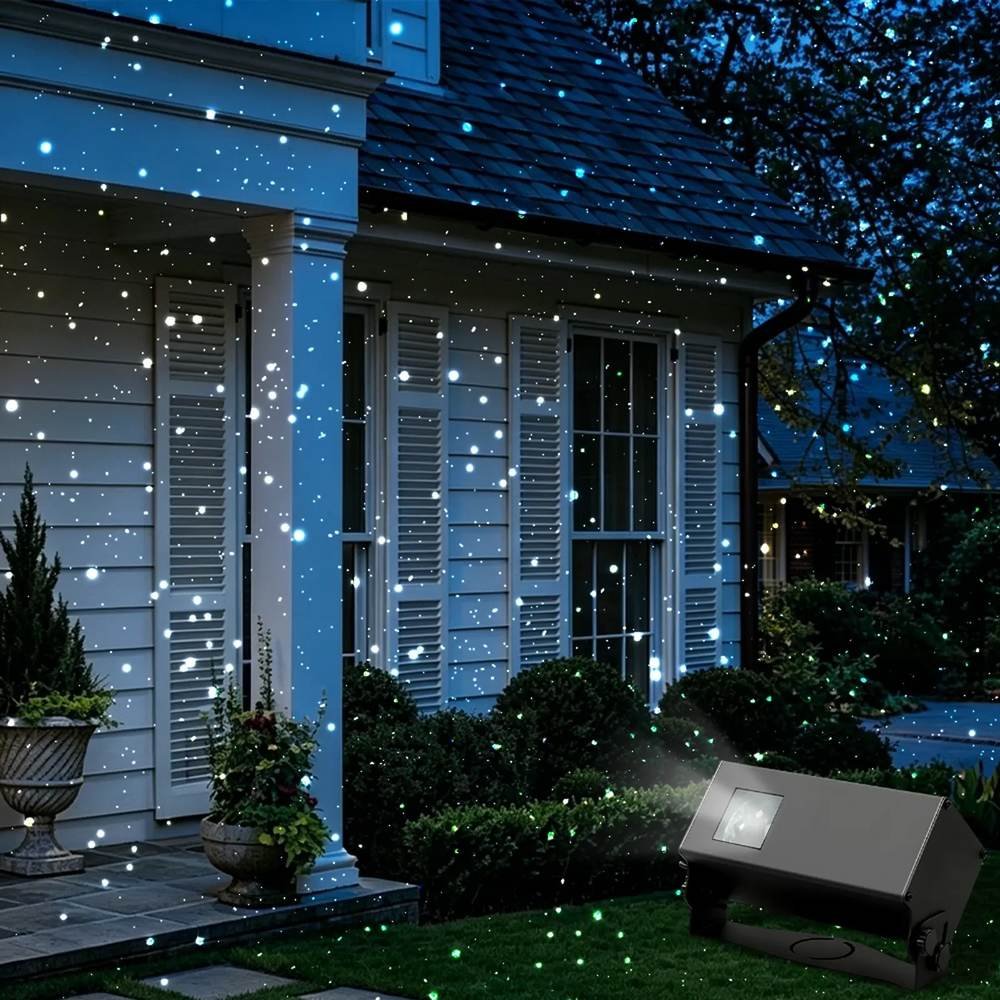
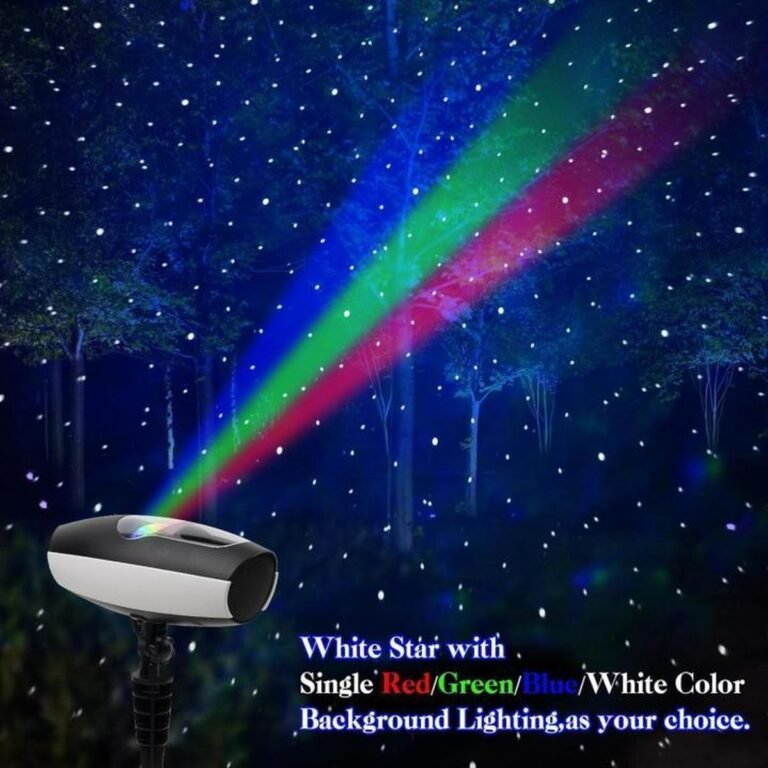
That published BWL-OL-001 image is ours, and it is exactly why I do not treat effect images as test evidence. It shows the product in the condition where a point effect looks strongest, but it does not tell you the throw distance, surface reflectivity, ambient illuminance or camera exposure. Below, I will take the listing apart in the same order I use when a buyer asks us to support an outdoor projector claim: first the optics, then the missing conditions, then the wording that belongs in an RFQ.
Where Does the Firefly Projector Effect Actually Come From?
Buyers often compare the light source first because wattage and colour are easy to place in a spreadsheet. On the production floor, I look at the optical path before I look at the wattage.
A firefly effect comes from a light source passing through an optical element that divides and spreads the output into many points. The light source affects intensity and colour, while the optics determine the pattern, spread and point definition. Two units with similar input power can therefore produce very different results at the same site.
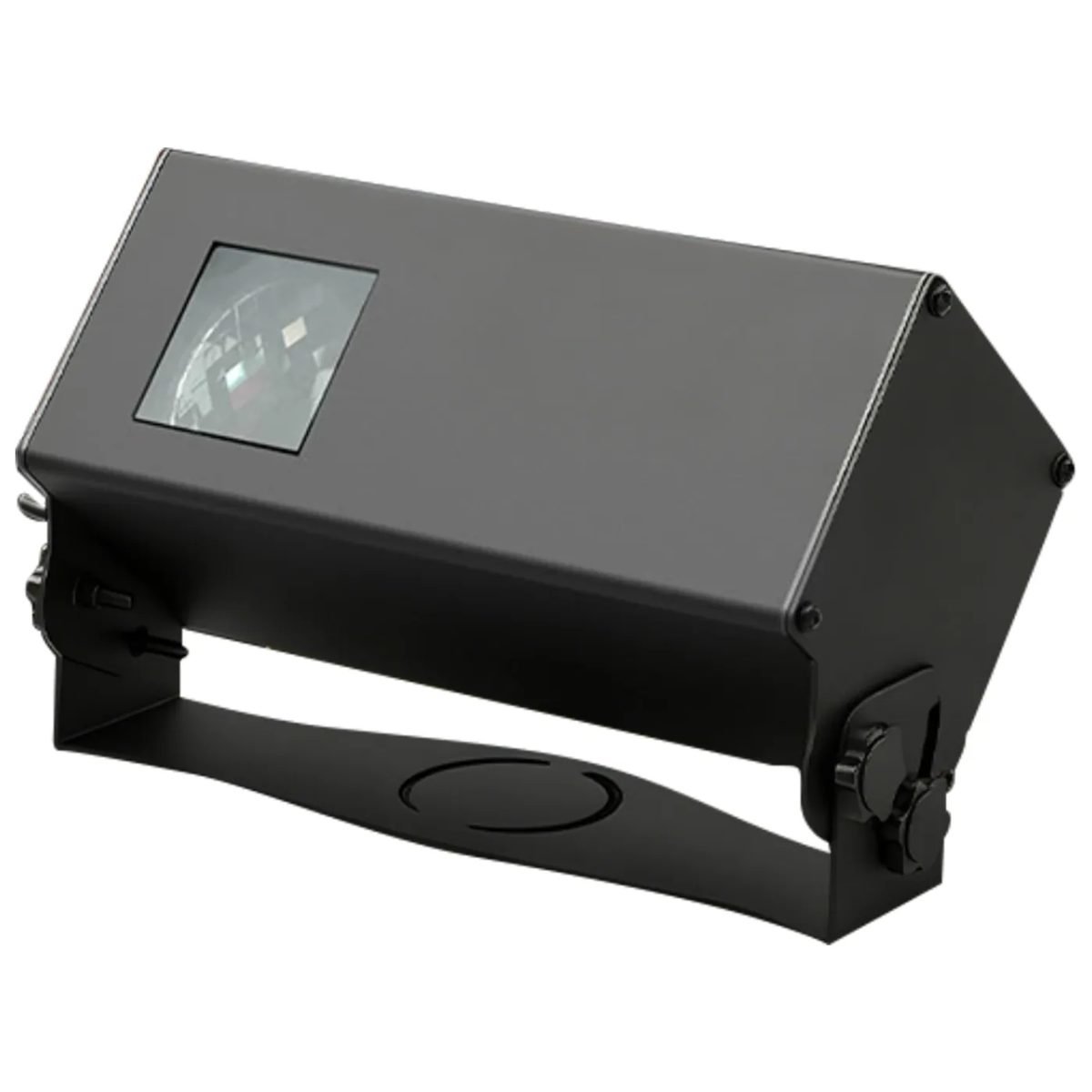
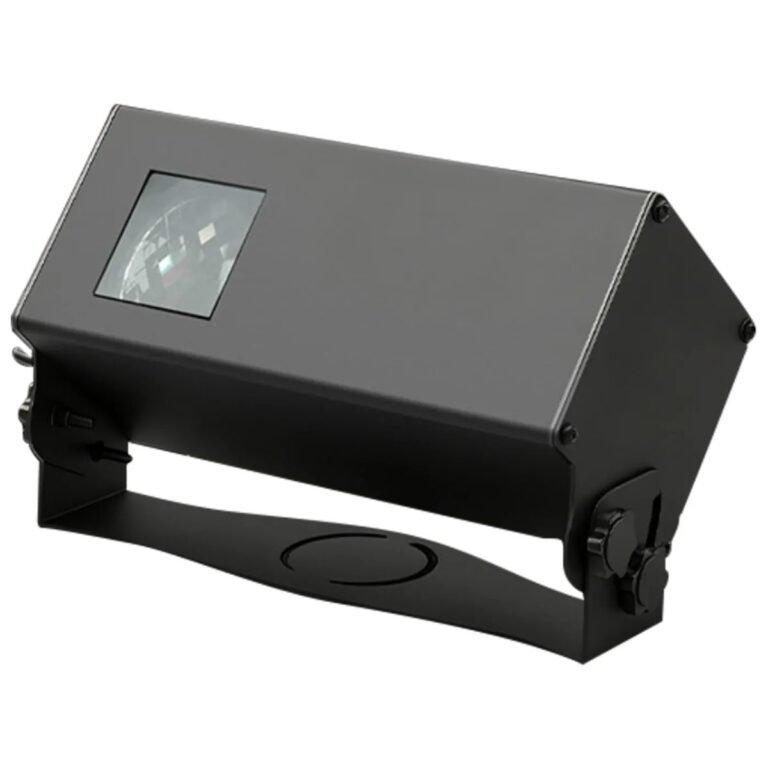
The product view above identifies the BWL-OL-001 housing and its optical window. It does not reveal the internal optical stack, which is precisely the procurement point: a buyer cannot infer the light source, pattern-forming element or delivered effect from an enclosure photo. Those details need product-specific documentation and a matched sample test.
Laser and LED Are Not Interchangeable Labels
The terms laser firefly and LED firefly describe different optical approaches. They should not be treated as quality grades. A softer LED effect can be right for a short indoor decorative scene, while a sharper laser point pattern can be more suitable when the throw distance or competing light makes definition harder to maintain.
| What the buyer compares | Laser-based point effect | LED-based point effect | What still needs testing |
|---|---|---|---|
| Point appearance | Typically sharper and more individually defined | Typically softer and more diffused | Intended distance and viewing position |
| Pattern spread | Set by the optical element and mounting geometry | Set by the optical element and lens system | Usable area, not maximum spread |
| Ambient-light response | Point definition may hold better, depending on output and optics | Softer points can lose contrast sooner | Actual site lighting and surface colour |
| Safety documentation | Requires a laser classification for the product being supplied | A laser class does not apply to a non-laser light source | Model identity and the applicable report |
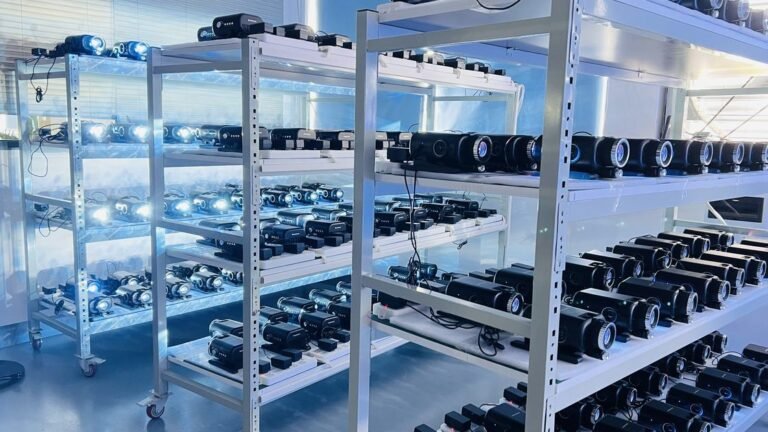
On our test racks, the first useful comparison is not which unit looks brighter from one metre away. I want to know whether the points remain distinguishable at the buyer's mounting distance, on the intended surface, with the normal site lighting switched on. That question forces the optics and the installation into the same conversation.
What Should a Buyer Ask About Laser Class?
For the three firefly products discussed in this article, BWL-OL-001, BWL-OL-002 and BWL-OL-004, our catalog records Class 1 IEC 60825-1. I still do not turn that into a catalog-wide claim. A classification has to stay attached to the product and evidence that support it.
Inside our factory, each laser unit has to pass the Class 1 release requirement in our laser test room before shipment. Each unit also goes through roughly eight hours of aging. Those are production controls, and they answer a different question from a certificate: what happened to the individual unit that will enter the buyer's shipment?
| Ask the supplier | Weak answer | Useful answer |
|---|---|---|
| “What laser class applies?” | “Our lasers are safe.” | A class and standard attached to the product being offered |
| “Which product does the report identify?” | “It covers the series.” | The product identity shown in the report and how it maps to the supplied item |
| “What happens during production?” | “The lab handled it.” | A clear description of the factory verification step |
| “Is the check sampled or unit by unit?” | No process answer | A release rule the supplier can explain and repeat |
The document and the factory process should support each other. One does not replace the other.
Which Three Numbers in a Firefly Projector Listing Mean Nothing in a Contract?
Coverage area, dot count and brightness look comparable because each arrives as a number. When I review them for an RFQ, none can support acceptance until the supplier states how it was produced.
Coverage area, dot count and brightness or wattage are not contract-ready specifications when the test conditions are missing. A buyer cannot reproduce the result, compare two suppliers fairly or enforce a pass-or-fail decision. The numbers describe a listing; they do not yet describe an accepted product.
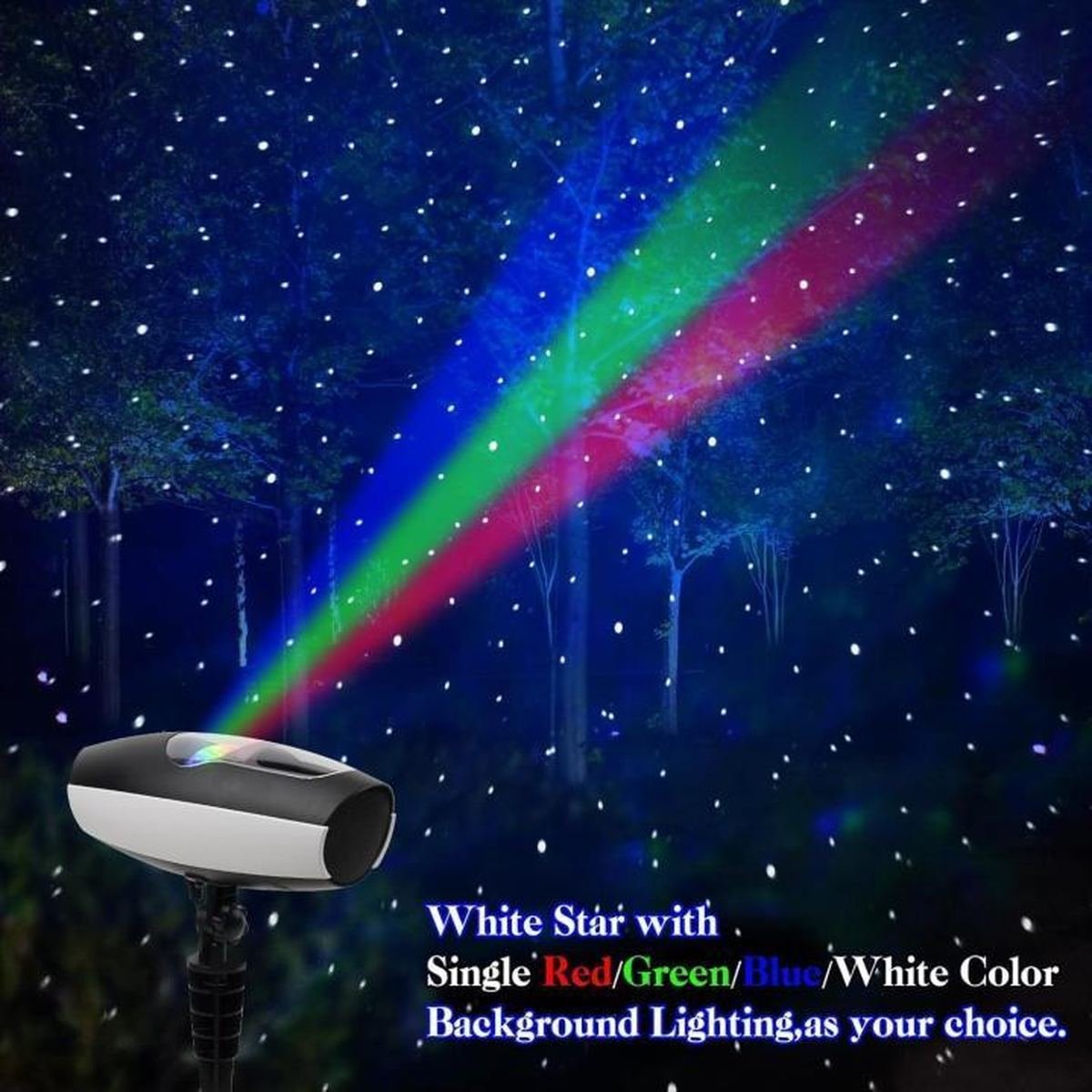
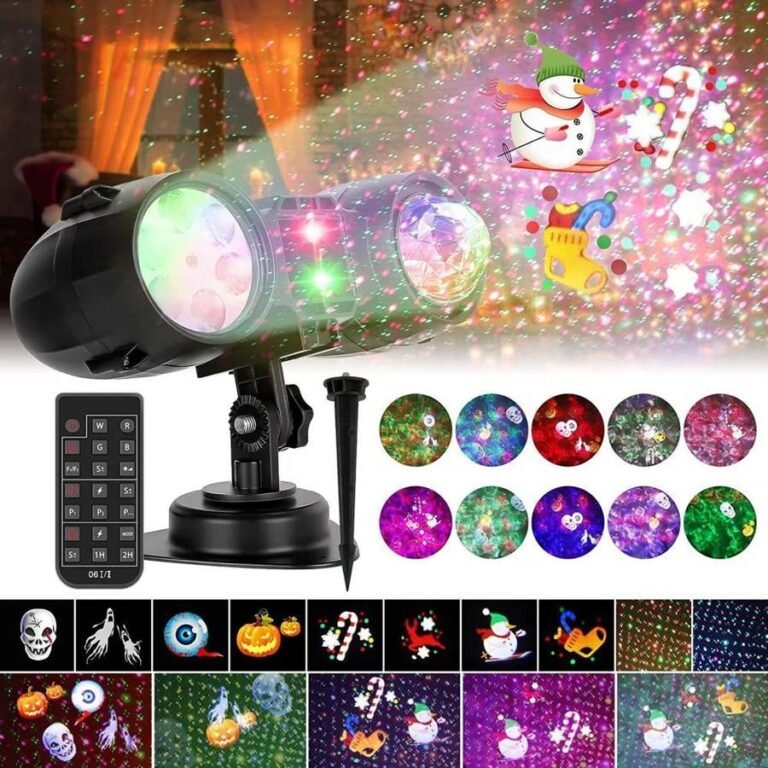
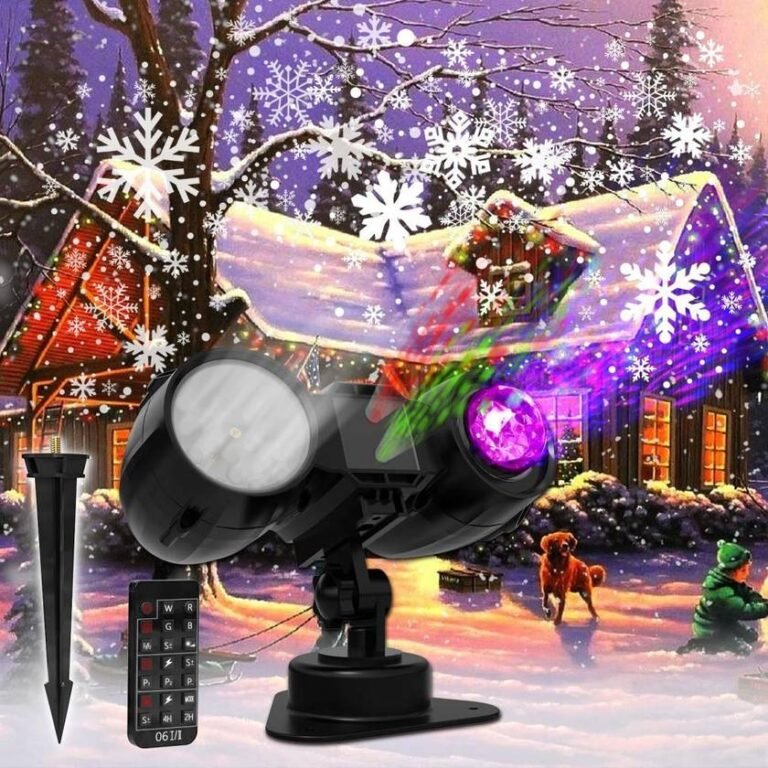
The BWL-OL-002 image does what a listing image is meant to do: it identifies the product and communicates several colour effects in one frame. It still does not record one reproducible test. The background, exposure, throw distance and surface are not defined, so the image can explain the offer without proving an acceptance result.
- Coverage area often begins as maximum optical spread. It tells you how far points can reach, not where they remain dense and bright enough to create the effect your customer expects.
- Dot count usually describes what the optical element can produce. It does not tell you how many points remain visible after distance, surface colour and ambient light reduce contrast.
- Brightness or wattage often mixes input with output. Wattage describes electrical consumption. It does not state how much visible light reaches the target surface after the optics spread it.
The same number can therefore be technically true and commercially useless. A projector may throw points across a wide area, while only part of that area remains usable as decoration. A lens may generate a fixed pattern, while many of those points disappear from the viewer's perception under site lighting. A unit may consume more power without producing a proportionally stronger point effect.
My rule on the factory floor is simple: if two sides cannot repeat the test and reach the same pass-or-fail decision, the number does not belong in an acceptance clause.
When a buyer asks me which projector “covers” a site, I ask for three things first: distance, surface and ambient light. Once those are defined, we can discuss a test. Before that, an area figure is only a listing claim.
How Should Projection Distance and Coverage Area Be Defined?
A wide area figure feels safe because it appears to give the buyer more capacity. In practice, a wider pattern can mean fewer visible points per square metre and a weaker effect at the boundary.
Define firefly projector coverage as the area where the agreed visual result remains acceptable at a stated throw distance, on a stated surface and under a stated ambient light level. Then define how the buyer and supplier will observe or record that boundary. Without those conditions, coverage cannot be reproduced.
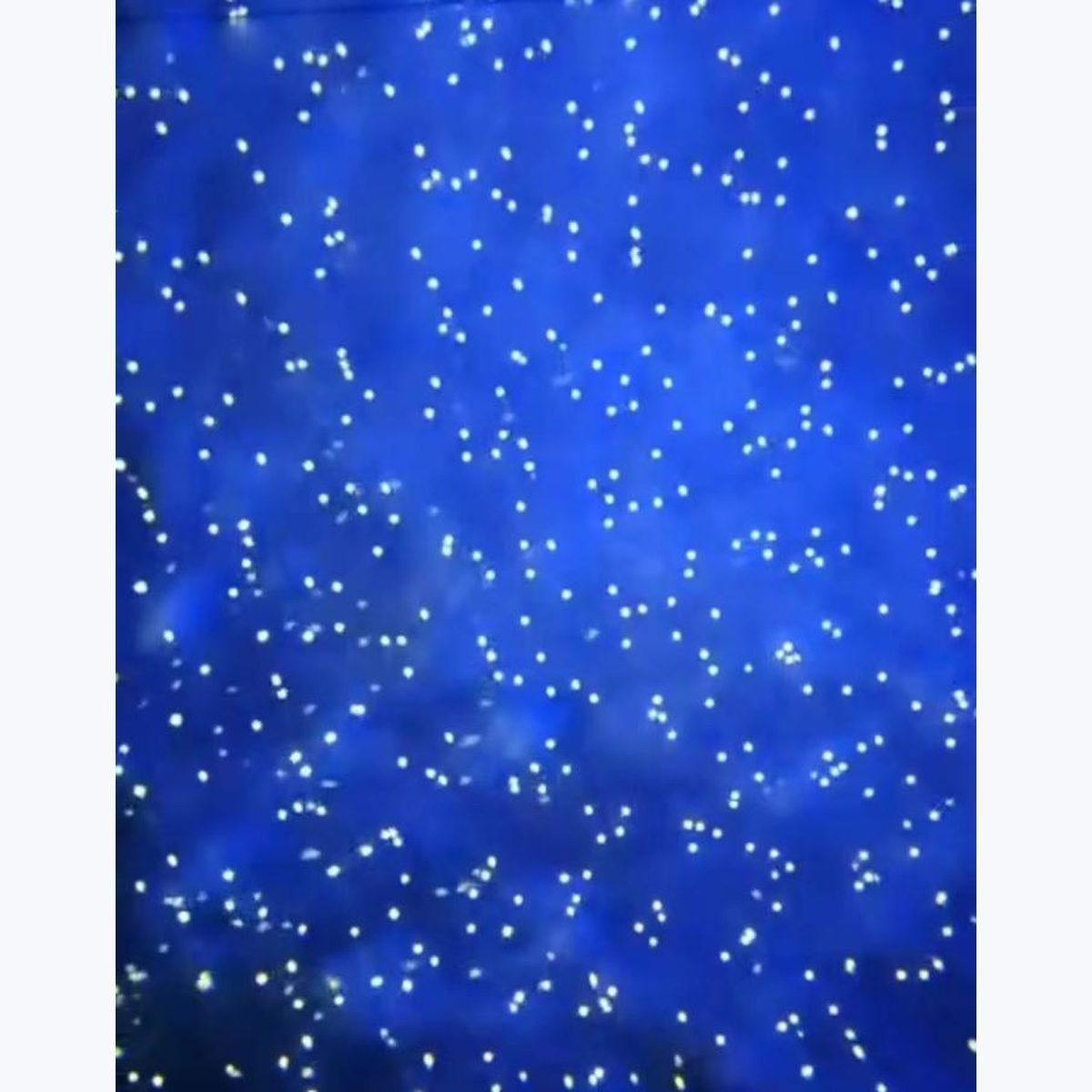
This exact BWL-OL-002 gallery image shows a visible point field, but it does not show where usable coverage ends or state the distance, surface, ambient light and exposure. It is therefore evidence of the intended effect, not a coverage measurement.
Why Distance Changes Both Density and Visibility
For a fixed angular pattern, the projected area grows as the projector moves farther from the surface. The number of points created by the optical element does not grow with it. The same pattern is spread over a larger area, while the light reaching each part of the surface also falls.
With d as the throw distance, these relationships are more useful than a made-up distance chart:
| Quantity | Relationship with distance | Procurement consequence |
|---|---|---|
| Total pattern points | Approximately constant for the optical element | The number on the listing does not adapt to the site |
| Pattern area | Grows with d² for a fixed angular spread | A longer throw creates a larger but thinner field |
| Points per square metre | Falls with 1/d² | Visible density drops quickly as distance increases |
| Spacing between points | Grows with d | The effect changes from a texture to separated points |
| Illuminance at the surface | Falls approximately with 1/d² | Each point becomes harder to distinguish from ambient light |
The practical result is not merely “less bright.” The field becomes sparse and the points lose contrast at the same time. Surface colour then changes how much of that light returns to the viewer. A pale wall, dark foliage and wet paving do not give the same result even when the projector never moves.
What Our Own Catalog Reveals
I ran this test against our own product data before applying it to anyone else's listing. Our current catalog contains 38 product records. Only 8 carry a projection distance or projection area value; the other 30 remain blank because the source records did not provide those fields. We did not copy a neighbouring product's range to make the catalog look complete.
Three firefly models, BWL-OL-001, BWL-OL-002 and BWL-OL-004, record 5–20 m projection distance and 50–300 m² projection area. I checked the origin of those figures. They were extrapolated from outdoor projection measurements, and our data layer reproduces the source values without padding or reinterpretation.
The measurement was real. The conditions did not travel with the number. The source does not preserve which surface was used, what ambient light reached it or where the observer decided the effect stopped being acceptable. A buyer holding 50–300 m² cannot reconstruct the measurement, and neither can I from the published field alone.
That is a description problem, not a product-quality problem. The products still go through the production controls described above. The weakness sits in the handoff from testing to specification: the result survived, while the conditions that gave the result meaning were lost.
A blank field is visible uncertainty. A copied field hides uncertainty. If a supplier's catalog is confidently complete across every product, ask where each number came from and whether the original conditions are still available.
A Composite Buyer Scenario Built Around a Real Spec Problem
Consider a landscape contractor who sends me an RFQ with one line copied from a retail page: “coverage: 6,000 square feet.” The buyer expects that line to protect the project. I cannot sign it, because neither side knows what would count as delivery.
My response is to add three questions. At what throw distance? Onto what colour and material? Under how much ambient light? Once the contractor visits the site and answers them, the original area target usually has to be reconsidered. The useful requirement becomes smaller in wording but stronger in enforcement: a defined visual result, under defined conditions, checked in a defined way.
The point of the scenario is not that the supplier wins an argument. It is that the buyer leaves with a requirement another supplier can also understand and quote against.
A good specification protects both sides. A vague coverage number does not favour the buyer; it creates a disagreement that no one can settle with a tape measure.
Why Is “Number of Dots” Not a Firefly Projector Specification?
Dot count is attractive because it appears to describe the effect directly. What it actually describes is the pattern potential of the optical system, not what an observer will see at the site.
A dot count is not a complete specification because visible dots depend on contrast, distance, surface and ambient light. The useful requirement is a visible pattern outcome under stated conditions, not the theoretical number produced by the optical element.
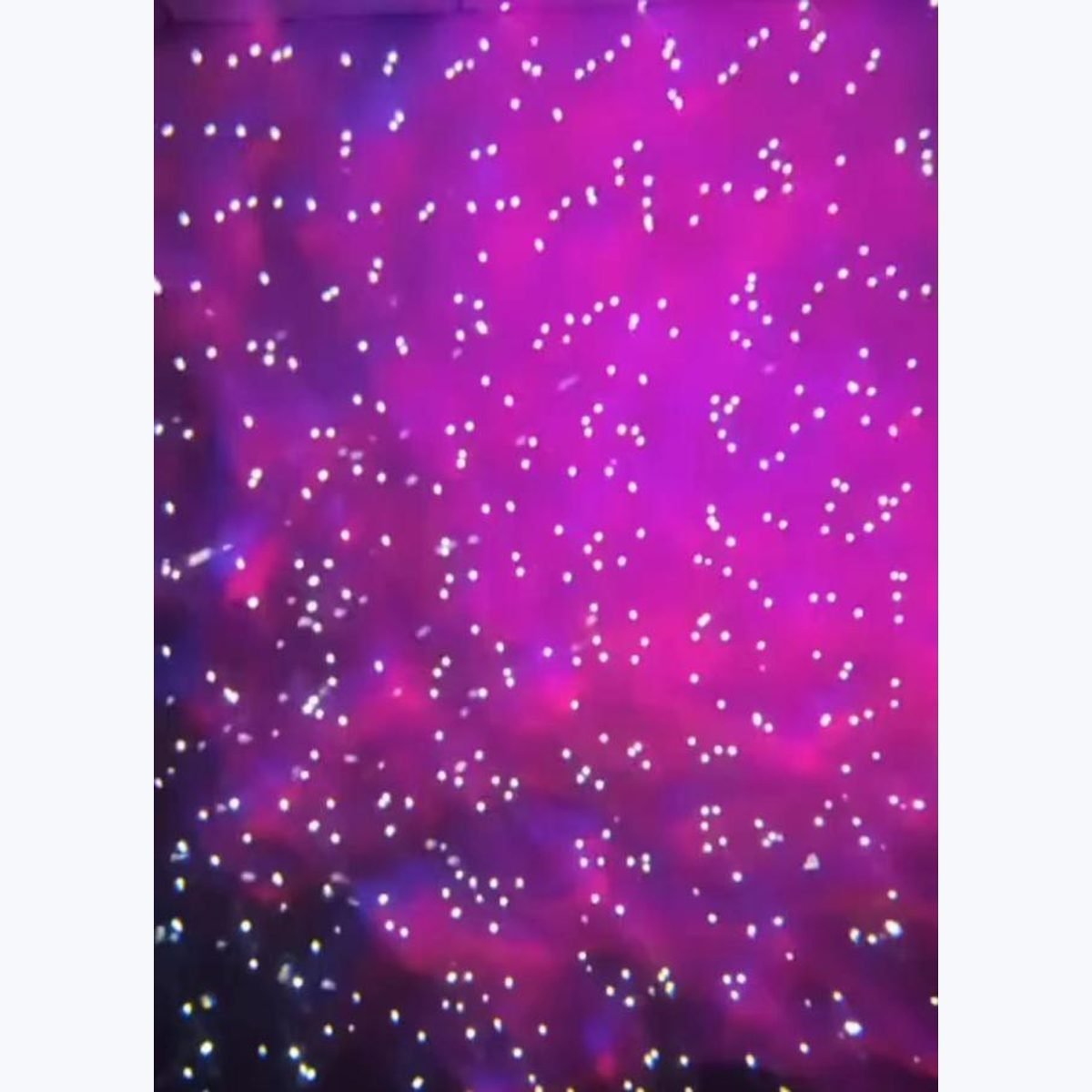
The BWL-OL-002 crop isolates the point pattern against a dark, saturated background. That makes distribution easy to see, but it removes the installation context a buyer needs. A garden, hotel terrace or storefront will add its own surface colours, competing light and viewing geometry.
I separate two questions that listings often combine:
- How many points can the optical system produce? This is a property of the optical element and pattern design.
- How many points can the viewer distinguish? This depends on the light reaching the surface, the background and the viewing position.
Ambient light raises the brightness of the background. Once the contrast between a point and that background becomes too small, the point stops registering even though the projector and optical element are working as designed. Increase the distance and the pattern also spreads, adding more space between neighbouring points.
For wholesalers, private-label brands and landscape channels, the commercial risk appears downstream. A dot count copied from a supplier page becomes a promise on the buyer's own listing. When the installed result looks thinner, the return, review or project complaint belongs to the brand that repeated the number.
The safer workflow is straightforward:
- Request matched footage under more than one ambient-light condition, with the camera position and exposure kept consistent.
- Define the acceptable result in visual terms, such as points remaining individually distinguishable from the agreed viewing position.
- Test the sample at the intended throw distance against the closest available surface.
- Make the approved sample and recorded conditions part of the acceptance reference.
This does not require suppliers to stop publishing dot counts. It requires buyers to stop using the count as a substitute for a site test.
What Does Ambient Light Do to Firefly Projector Coverage?
Ambient light is often treated as a footnote after distance and wattage have already been chosen. In every factory-side comparison I run, it belongs near the top because it changes whether the point pattern can be seen at all.
Ambient light lowers point-to-background contrast. As contrast falls, fewer points remain visible and the usable coverage boundary moves inward, even though the projector, optics and theoretical dot count have not changed. A firefly effect image without an ambient-light condition cannot predict the installed result.

The patio image is a useful marketing scene, but I would not attach an acceptance figure to it. It does not state the exposure, measured ambient light, throw distance or surface reflectivity. The image can show what the effect is meant to feel like; it cannot prove where the effect will remain acceptable at a buyer's site.
Here is how I translate the common listing claims into checks a project buyer can actually perform:
| Listing claim | Hidden assumption | What changes on site | Repeatable check |
|---|---|---|---|
| Coverage area | Dark background and a favourable surface | Usable boundary moves inward | Mark where the agreed point visibility stops under normal site lighting |
| Dot count | Every generated point remains visible | Visible fraction falls as contrast falls | Compare matched images with normal lights off and on |
| Brightness or wattage | Input power predicts delivered effect | No fixed conversion through different optics | Measure the site condition and judge the agreed visual result |
| Effect image | Camera and environment represent the site | Exposure can amplify or suppress the pattern | Request the same unit, position and exposure under stated conditions |
Why “Outdoor” Is Not Enough
Ambient performance and weather protection are separate questions. BWL-OL-001 is recorded as IP65, BWL-OL-002 as IP44 and BWL-OL-004 as IP65. They sit in the same firefly product group, but those IP values do not inherit across the group.
An IP number also needs a product scope. The buyer should know whether the stated protection applies to the housing, lens seal, cable entry, connector or the assembled system being supplied. Without that scope, “outdoor” can hide several different installation limits.
When I compare suppliers, I therefore ask for two kinds of evidence independently: a visual test under the site's light conditions and the ingress information for the exact product. One cannot stand in for the other.
How Do You Write a Firefly Projector Specification a Supplier Can Sign?
A useful RFQ does not need to predict every optical variable. It needs to define the installation, the minimum acceptable result and the method both sides will use to check it.
Write the specification around five conditions: throw distance, surface, ambient light, minimum visual result and acceptance method. Add product-specific laser and ingress requirements where they apply, then give the approved sample precedence over unconditioned catalog claims.
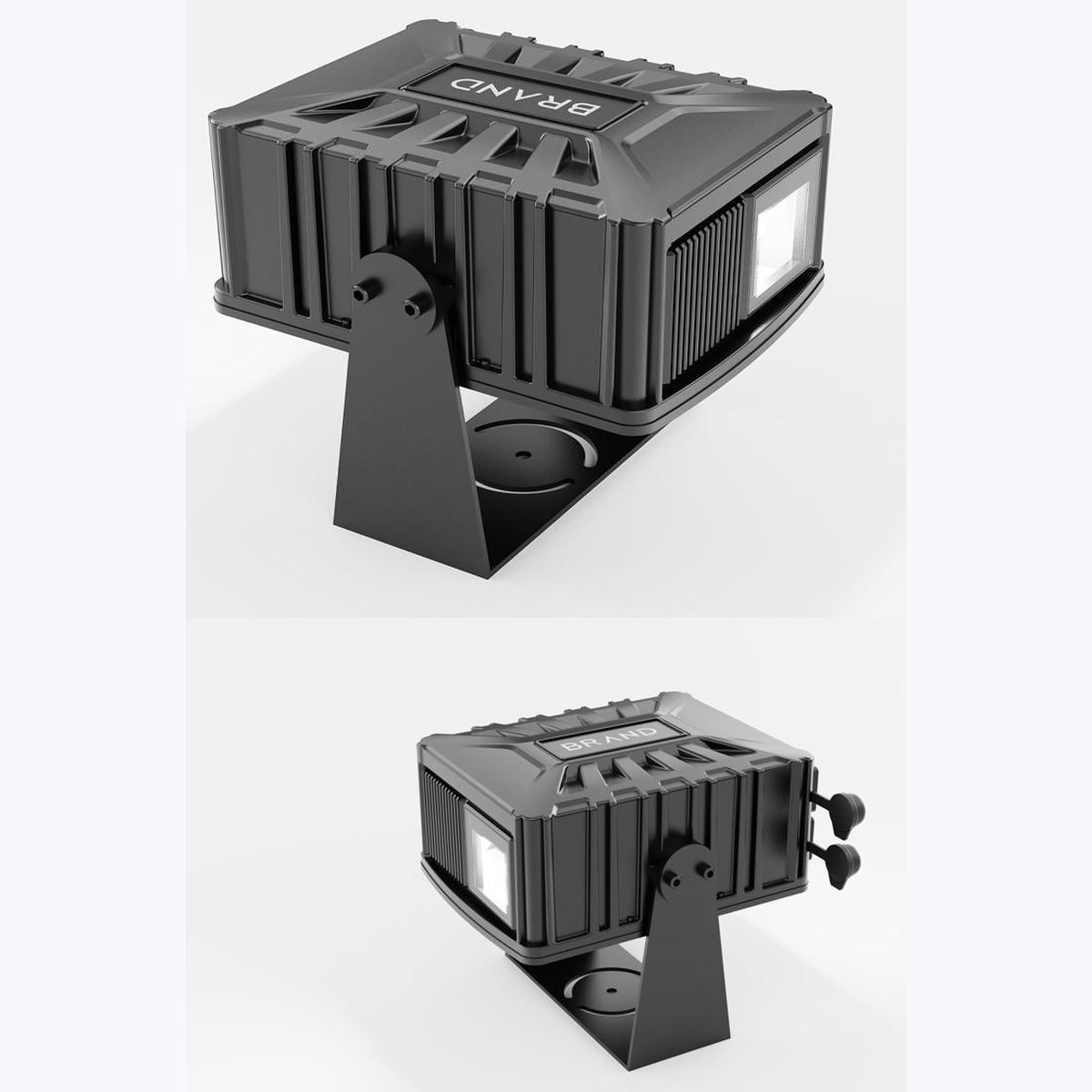
The BWL-OL-004 product view establishes which housing is being discussed. It does not establish laser class, ingress scope or visual performance. Those claims still need product-specific evidence and the agreed test conditions below.
Part A: Define the Five Conditions
| # | Field | What to write | Why it matters |
|---|---|---|---|
| 1 | Throw distance | Actual mounting distance to the target surface, including any allowed tolerance | Sets pattern area, point spacing and surface illuminance |
| 2 | Surface | Colour, material and relevant texture, such as pale render, dark brick or foliage | Changes reflectivity and perceived contrast |
| 3 | Ambient light | Site condition during use, measured at the surface with the projector off | Establishes the background against which points must remain visible |
| 4 | Minimum visual result | What an observer must see from a stated position | Defines the commercial outcome instead of a theoretical input |
| 5 | Acceptance method | Who checks, where, with what record and what counts as pass | Makes the requirement enforceable |
If one of these is unknown during sourcing, mark it as a sample-test input rather than replacing it with a confident guess. The complete Bowlum product catalog follows the same principle: unknown fields remain empty instead of inheriting a neighbouring product's value.
Part B: Clauses You Can Adapt for an RFQ
- Installation condition. Units shall be evaluated at a throw distance of [X] m, projecting onto [surface colour and material], with ambient illuminance at the surface measured at [Y] lux while the projector is off.
- Visual requirement. Under Clause 1, projected points shall remain individually distinguishable to an observer at [viewing position] across an area of not less than [Z] m².
- Verification record. Compliance shall be recorded using matched photographs or video with the camera position and manual exposure fixed, including one frame with the projector off.
- Laser safety. Where the supplied product uses a laser, the supplier shall state the IEC 60825-1 classification and identify the product covered by the supporting evidence. If Class 1 is required, write that requirement explicitly.
- Ingress protection. The supplier shall state the IP rating and the tested product scope for the item being supplied, including relevant cable entry and connector boundaries.
- Sample precedence. An approved sample tested under Clauses 1–3 shall take precedence over any unconditioned figure in a listing, catalog or product page.
- Shipment acceptance. A unit selected from the shipment shall reproduce the approved visual result under the agreed conditions.
Clause 6 is the one I see buyers omit most often. Without it, the sample can look correct and the contract can still point back to a vague catalog number. With it, the physical result and recorded conditions become the shared reference.
Part C: Ask for Documents by the Risk They Control
Do not collect files as a badge wall. Each request should remove a specific interruption from the buyer's sales or installation chain.
| Evidence or record | What it helps the buyer control |
|---|---|
| Product-identified IEC 60825-1 information for a laser model | Laser-safety review and product identity questions |
| IP rating with stated product scope | Installation limits and water-ingress disputes |
| Description of the factory's laser verification step | Whether the release process exists beyond a document |
| Aging-process statement | Whether each unit receives a pre-shipment operating check |
| Approved sample record with conditions | Disputes about visual effect at acceptance |
| Supplier patent position | Design or utility complaints that can interrupt a listing |
Our factory holds more than 200 patents, but the number alone is not the useful part of that discussion. A private-label buyer wants to know whether a design position reduces the chance that a product is challenged after launch. The same rule applies to every document in the table: explain the buyer risk it controls, then connect it to the product being purchased.
What Should Change in Your Next Firefly Projector RFQ?
If I were reviewing the next RFQ on Monday morning, I would change four lines before comparing another supplier:
- Move unconditioned coverage and dot-count figures into the marketing column. They can describe an effect, but they cannot decide acceptance.
- Write distance, surface and ambient light before writing area. Those conditions determine what the area figure can mean.
- Make the approved sample and its recorded conditions the reference. That gives both sides something they can reproduce.
- Ask for product-specific evidence and factory process separately. A report identifies a tested claim; a production check tells you what happens to the shipment.
I would rather leave a field blank than give a buyer a number I cannot reconstruct. Give me the conditions and I can discuss the test. Give me only a square-metre target, and the honest answer is still a question back.
Frequently Asked Questions
Is a firefly projector coverage-area claim reliable?
Only when the claim includes the throw distance, surface, ambient light and acceptance method. A bare area figure may describe maximum spread, but it does not define where the points remain visible enough for the agreed effect.
How far can a firefly projector project?
The usable distance depends on the optical pattern, surface and ambient light. Our catalog records 5–20 m for BWL-OL-001, BWL-OL-002 and BWL-OL-004, but the original measurement conditions were not preserved, so that range must not replace a site test.
What does the dot count on a firefly projector mean?
It describes the pattern potential of the optical element, not the number of points a viewer will distinguish at the site. Visible dot density changes with throw distance, surface colour, ambient light and viewing position.
What laser class should I request for an outdoor firefly projector?
Write the class required by your market and use case, then request IEC 60825-1 information that identifies the product being supplied. BWL-OL-001, BWL-OL-002 and BWL-OL-004 are recorded in our catalog as Class 1 IEC 60825-1; do not extend that statement to an entire catalog.
Does a higher wattage mean a brighter firefly effect?
Not by itself. Wattage describes electrical input, while the visible result also depends on optical efficiency, pattern spread, throw distance, surface and ambient light. Compare the effect under agreed conditions instead of converting wattage into coverage.
Does IP65 mean every firefly projector is suitable for the same outdoor installation?
No. IP ratings differ by product and need a stated scope. BWL-OL-001 and BWL-OL-004 are recorded as IP65, while BWL-OL-002 is IP44, so the products should not inherit one another's ingress claim.
What should a firefly projector RFQ include?
Include throw distance, target surface, ambient light, minimum visual result and acceptance method. Add product-specific laser and ingress requirements, and state that the approved sample under recorded conditions takes precedence over unconditioned listing claims.