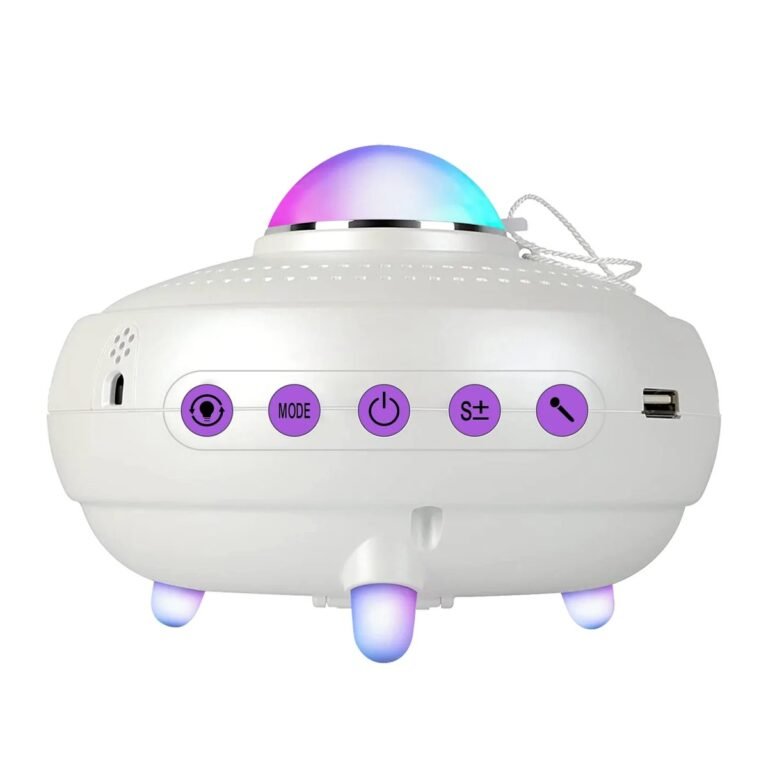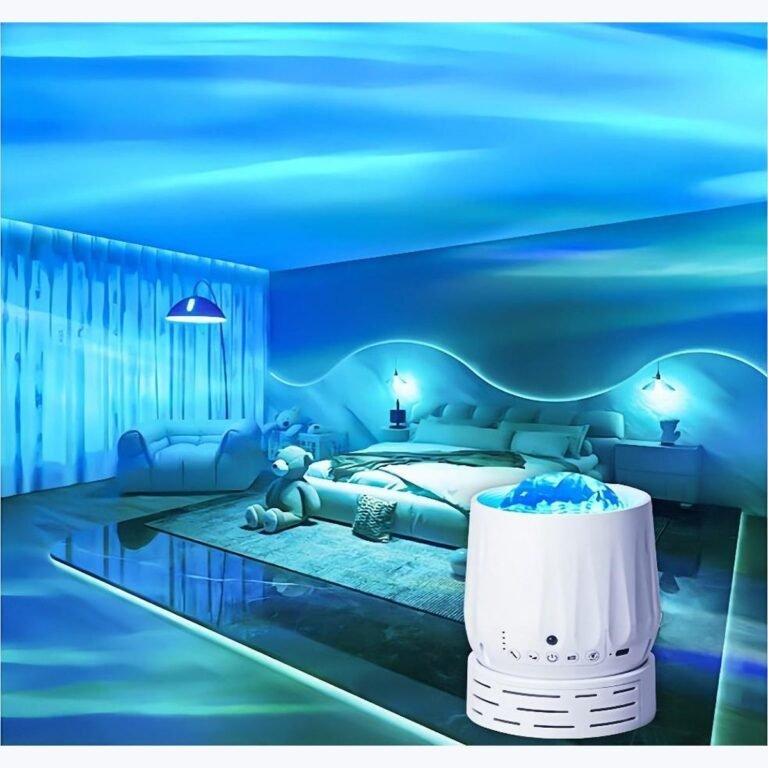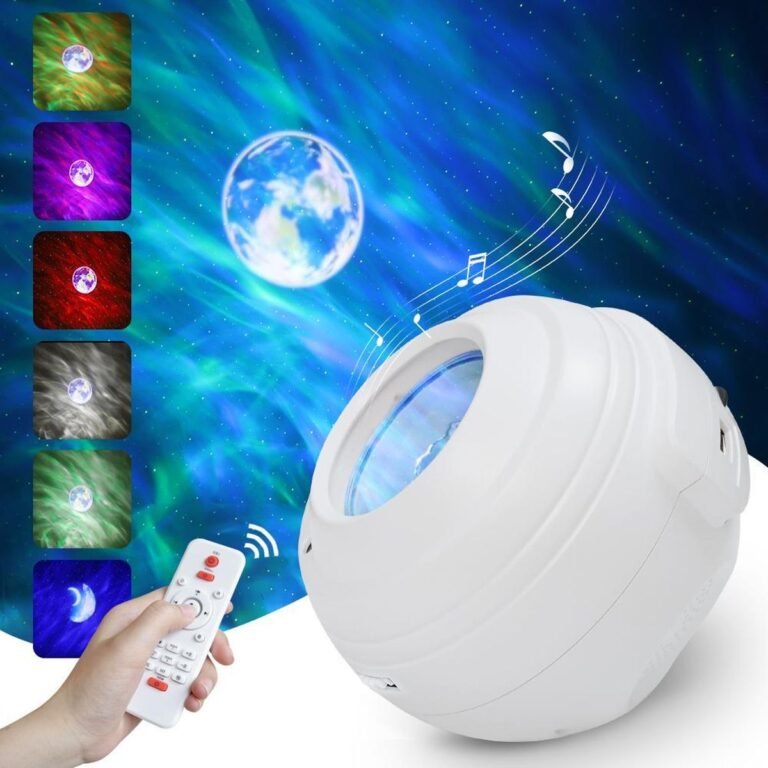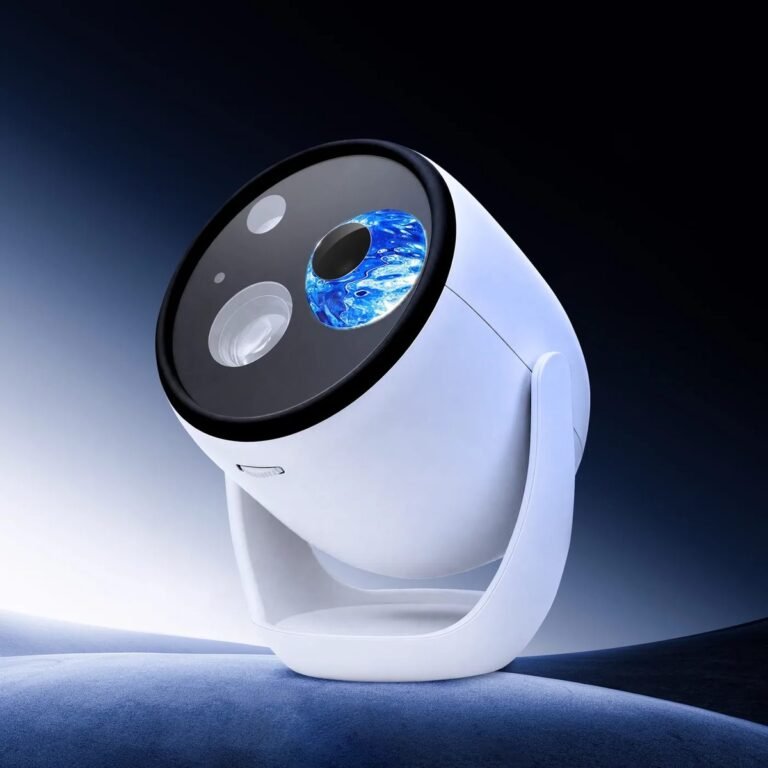

Search for “LED vs laser projector” and most explanations assume you are choosing a video projector. They compare image brightness, resolution and cinema performance. Decorative star projectors are a different optical system. In this category, an LED may create a soft aurora field while a laser creates sharp star points, and both can operate in the same housing. The problem is not that the familiar LED-versus-laser advice is always wrong. The problem is that it answers a different product question.
When I read an RFQ that asks only for the “laser version,” I stop before discussing a model. I ask which visible layer the buyer wants to change, because the word laser does not tell me whether the real target is sharper points, a smoother aurora or different scene content.
For decorative star projectors, LED and laser are not two quality tiers competing to do one job. They often create different layers of the effect: LEDs form broad colour fields or images, while lasers form defined points or patterns. A buyer should specify the visible result and each module's role, not choose a product because “laser” sounds premium.
Below, I will separate video-projector language from decorative-light optics, explain how LED, laser and hybrid designs divide the work, and give you the questions that reveal whether a supplier understands the product beyond its sales label.
Buyers can compare the effect families on the indoor star projector page, then keep site-specific laser and weather questions with the outdoor projector range and exact records in the product catalog.
Why Is Most “LED vs Laser Projector” Advice About the Wrong Product?
The word “projector” connects several devices that share a verb but not a buying logic. A home-cinema projector builds a rectangular image; a decorative projector builds an atmosphere, point field or moving pattern.1
Video-projector comparisons focus on how one light engine forms a complete image.2 Decorative star projectors may use separate optical channels for soft colour, stars, patterns or scenes. Advice about lumens, screen resolution and image uniformity cannot be copied directly into a star-projector RFQ.
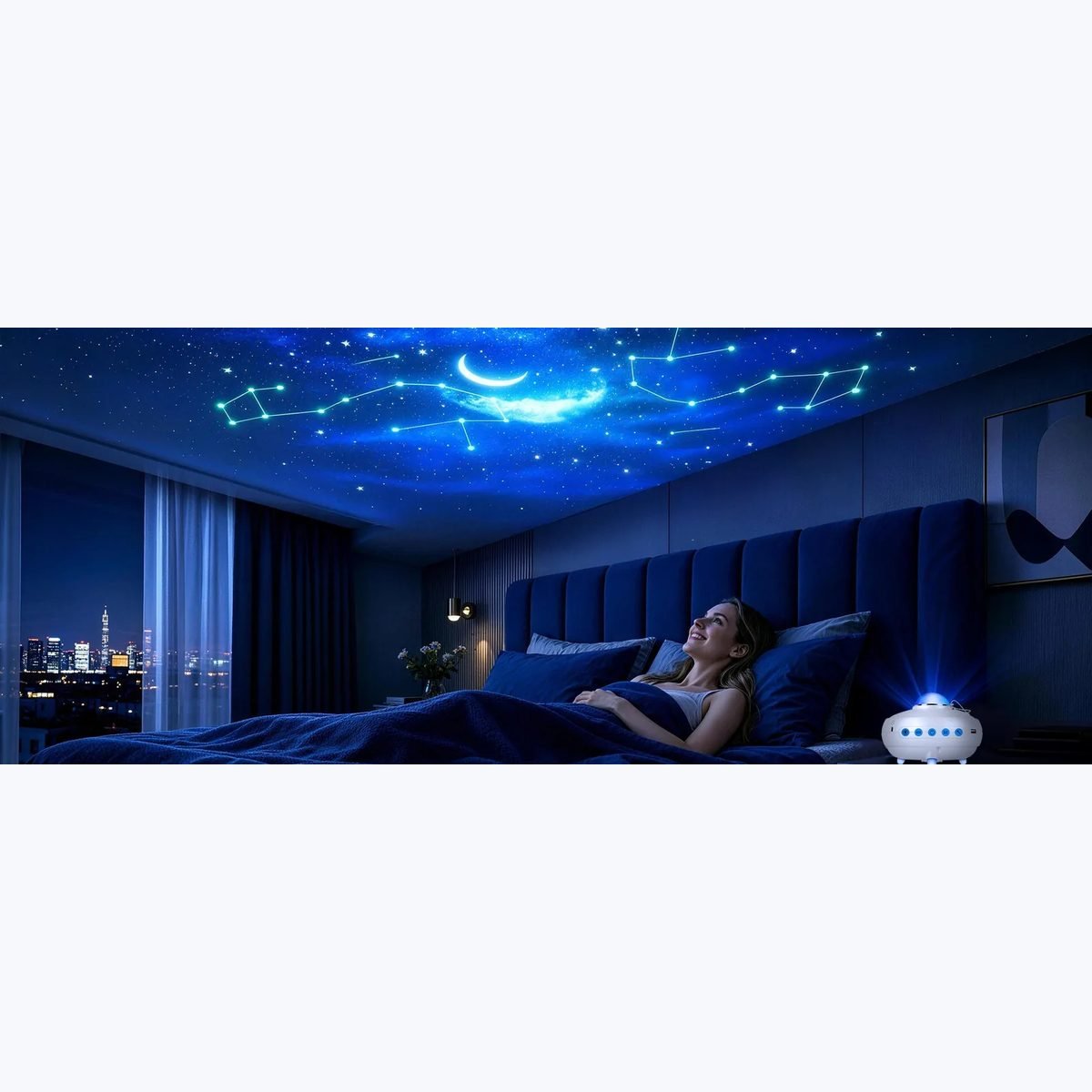
Use the product outcome to tell the categories apart:
| Product | Primary outcome | Main buying language | Wrong shortcut |
|---|---|---|---|
| Video projector | A readable rectangular image | Resolution, screen brightness, contrast, throw ratio | Applying cinema conclusions to decorative effects |
| Decorative star projector | Points, clouds, aurora, patterns or scenes | Effect layers, spread, motion, focus, ambient conditions | Treating “laser” as an overall quality grade |
| Outdoor firefly projector | Defined moving or static points across a site | Distance, surface, ambient light, ingress and installation | Treating maximum area as usable coverage |
| Pattern projection light | Replaceable or built-in visual motifs | Pattern identity, focus, rotation and intended surface | Assuming the light source alone defines the effect |
When a buyer asks me whether laser is “better,” my first question is: better at which visual task? Sharper star points, a smoother colour field, a projected scene, or outdoor visibility? Until that is clear, the component label is not a selection criterion.
The confusion also affects search intent. A buyer researching star projectors can read ten authoritative articles and leave with a technically correct conclusion about video equipment that is commercially useless for decorative lighting. Add “star,” “galaxy,” “decorative” or the exact effect to every research query and RFQ title.
Shared vocabulary does not mean shared engineering. Define the effect before importing a rule from another projector category.
Should You Choose a Fiber Optic Star Ceiling or an LED Star Projector?
Comparison pages list fiber optic star ceilings and LED star projectors side by side because both put stars overhead. That shared result hides the real difference: one is built into the ceiling, while the other casts light onto it.
Choose a fiber optic star ceiling when the stars must be a permanent feature of one room and the project can take installation work in that ceiling. Choose an LED or laser star projector when you need a finished product that moves, ships in a box or repeats across rooms without ceiling work. Fiber ends fix each point in place, while a projector's result depends on distance, surface and room light, so those conditions belong in the specification.
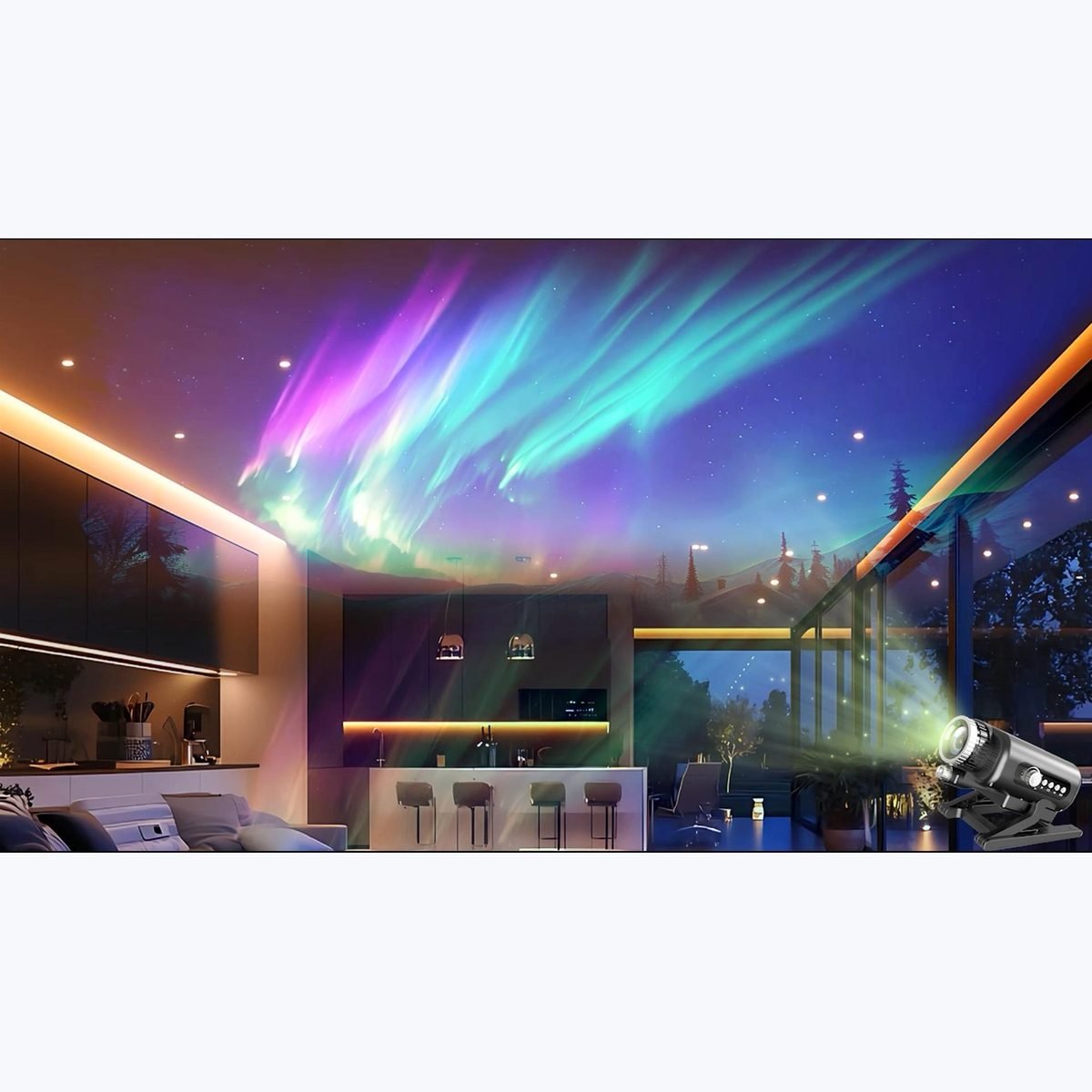
In a fiber optic ceiling, a light engine sends light along optical fibers, and each fiber end becomes a fixed point in a ceiling panel or drilled ceiling. The points stay static unless the kit includes a twinkle or colour wheel. A projector works the other way round: the light comes from a unit in the room, and the ceiling only receives it.
| Decision point | Fiber optic star ceiling | LED or laser star projector |
|---|---|---|
| Installation | Built into a ceiling panel or drilled ceiling | Self-contained unit in the room; no ceiling work |
| Effect | Fixed points at the fiber ends | LED colour fields, patterns or scenes, plus laser points where fitted |
| Relocation | Stays with the ceiling | Moves or is replaced without touching the ceiling |
| What the buyer must specify | Point layout, light-engine location and access, installation responsibility | Effect channels, distance, surface, room light, controls and laser safety evidence where fitted |
We manufacture projectors in our own factory; we do not make or sell fiber optic ceiling kits, so I do not rank fiber kits or promise that a projector will copy one. When a hospitality buyer sends me a photo of the fiber optic ceiling in their feature suite and asks for the same stars in the standard rooms, I ask which part of the photo they are buying: fixed points in those positions, or a starry room that repeats without ceiling work. The brief that comes back separates the two jobs: the suite keeps its installed ceiling, and the projector request names room size, projection distance, ceiling surface, room light and the channels that must run alone.
For importers, brand owners and retailers, the split changes who owns the final effect. Listing a fiber kit means selling an installation that someone else completes. A projector has to deliver its effect straight from the box, so its listing must state the distance, surface and room light behind the photos. Decide which of those two products your channel can support before comparing light sources.
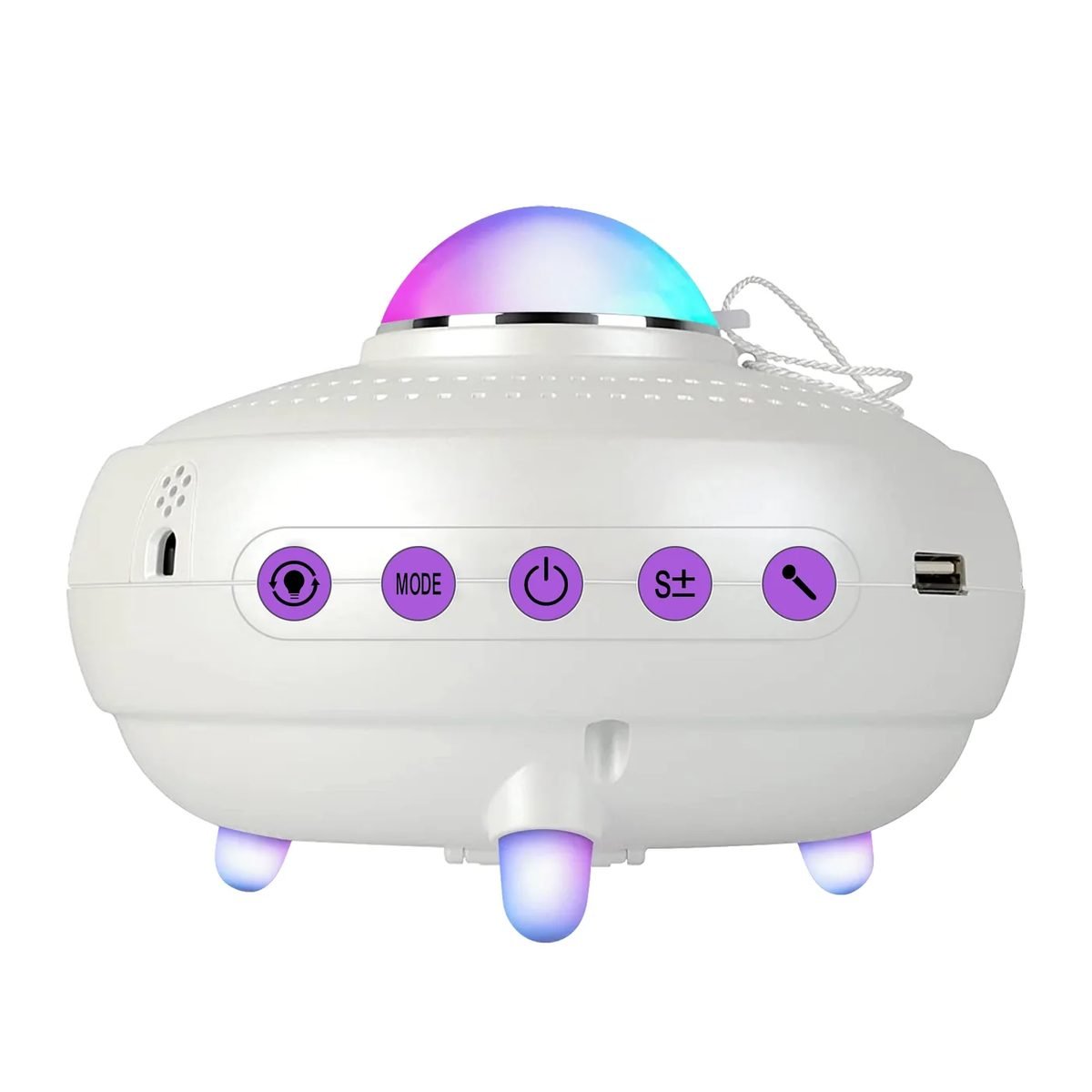
On the projector side, I check the room against the product record before any light-source discussion. BWL-3D-001 lists a 3–5 m projection distance and a 15–35 m² projection area; BWL-3D-002 lists 2–4 m and 11–45 m². I treat those as ranges to test in the buyer's room, not as coverage promises. After that, the question becomes which channel creates each part of the effect, starting with the laser.
What Does the Laser Module Actually Do in a Star Projector?
Laser language attracts attention because it sounds precise and powerful. In decorative products, the module's job is narrower than that sales impression.
A laser channel is typically used when the design needs sharply defined points or a structured pattern.3 The laser, optical element and motion mechanism work together; the module alone does not determine point density, coverage or field appearance.4 Buyers must evaluate the complete optical path under the intended conditions.
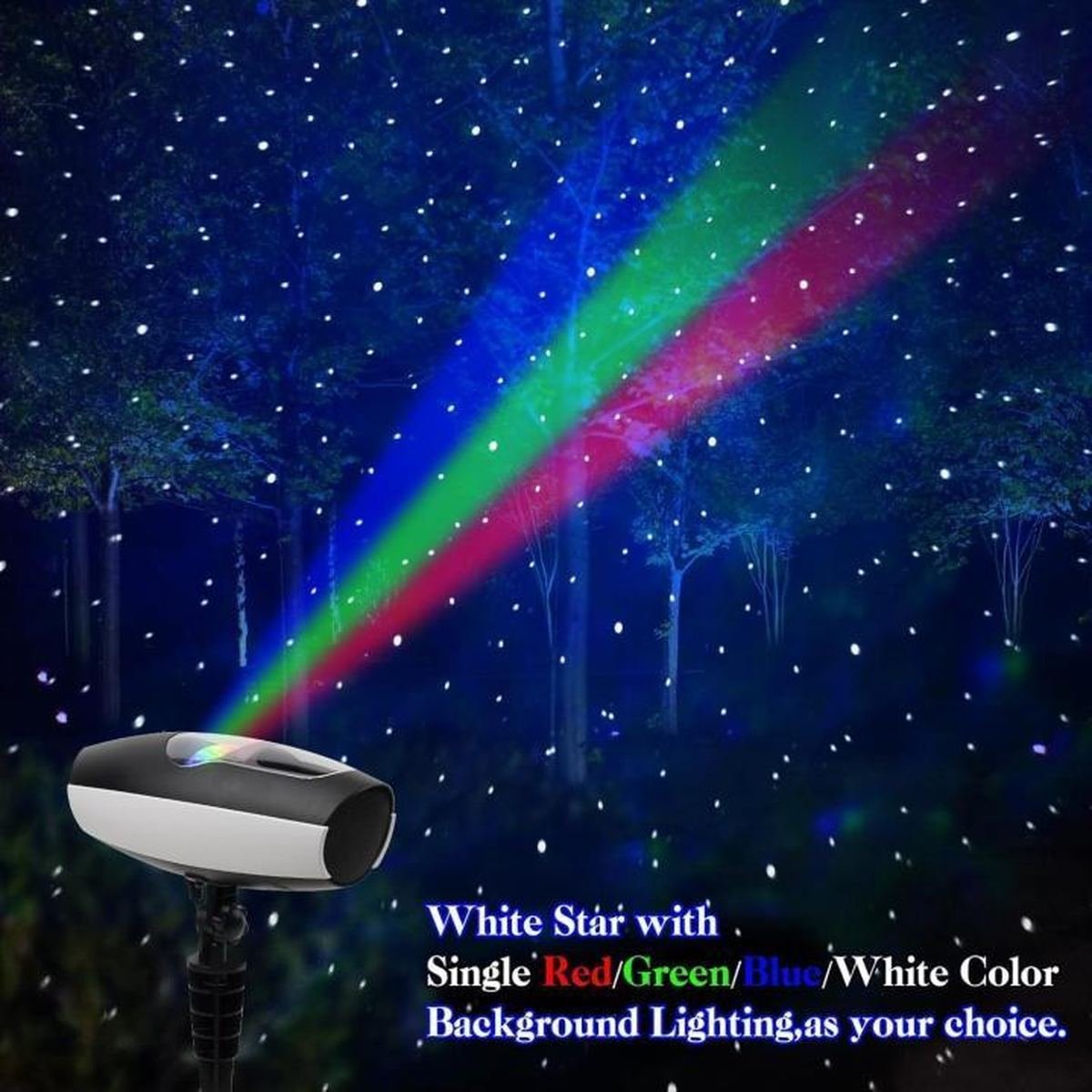
In a point-effect product, three layers matter:
- Source. The laser produces the coherent light used by the channel.
- Pattern-forming optics. A diffraction or other optical element divides or shapes that light.
- Movement and geometry. A motor, rotating element or fixed optical design determines how the pattern changes and spreads.
Two products can both say “laser” and create different effects because the optical element and movement are different. They can also behave differently at the site because distance, target colour and ambient light change visible contrast.5
| Buyer sees | Supplier may describe | What must still be checked |
|---|---|---|
| Sharp individual stars | Laser star field | Point definition at intended distance |
| Moving firefly-like points | Laser firefly effect | Motion modes, spread and site conditions |
| Dense pattern in a dark photo | High dot count | Visible density under normal ambient light |
| Product labelled Class 1 | Laser safety classification | Exact product and supporting basis |
At our factory, laser products have to meet the Class 1 release requirement in our laser test room before shipment. That unit-level control does not make every product optically identical, and it does not replace product-specific documentation. It answers one release question: can this individual unit ship under our factory rule?
When I compare two laser samples, I do not award the label itself any points. I check the field the module creates, the controls attached to it and the product-specific evidence that follows the exact configuration.
For a buyer, the practical specification should name the intended point effect, acceptable motion, viewing distance and safety-document requirement. “Laser version” is not enough to approve a sample or compare two offers.
What Does the LED Module Actually Do in a Decorative Projector?
LED is often misread as the cheaper alternative to laser. In hybrid decorative products, it may be responsible for the most visually dominant part of the scene.
An LED channel commonly creates broad aurora, nebula, colour-wash, pattern or scene content. Its visible result depends on LED selection, lens or film system, focus, colour mixing and motion. An LED specification should therefore describe the effect channel and test result, not only electrical wattage.
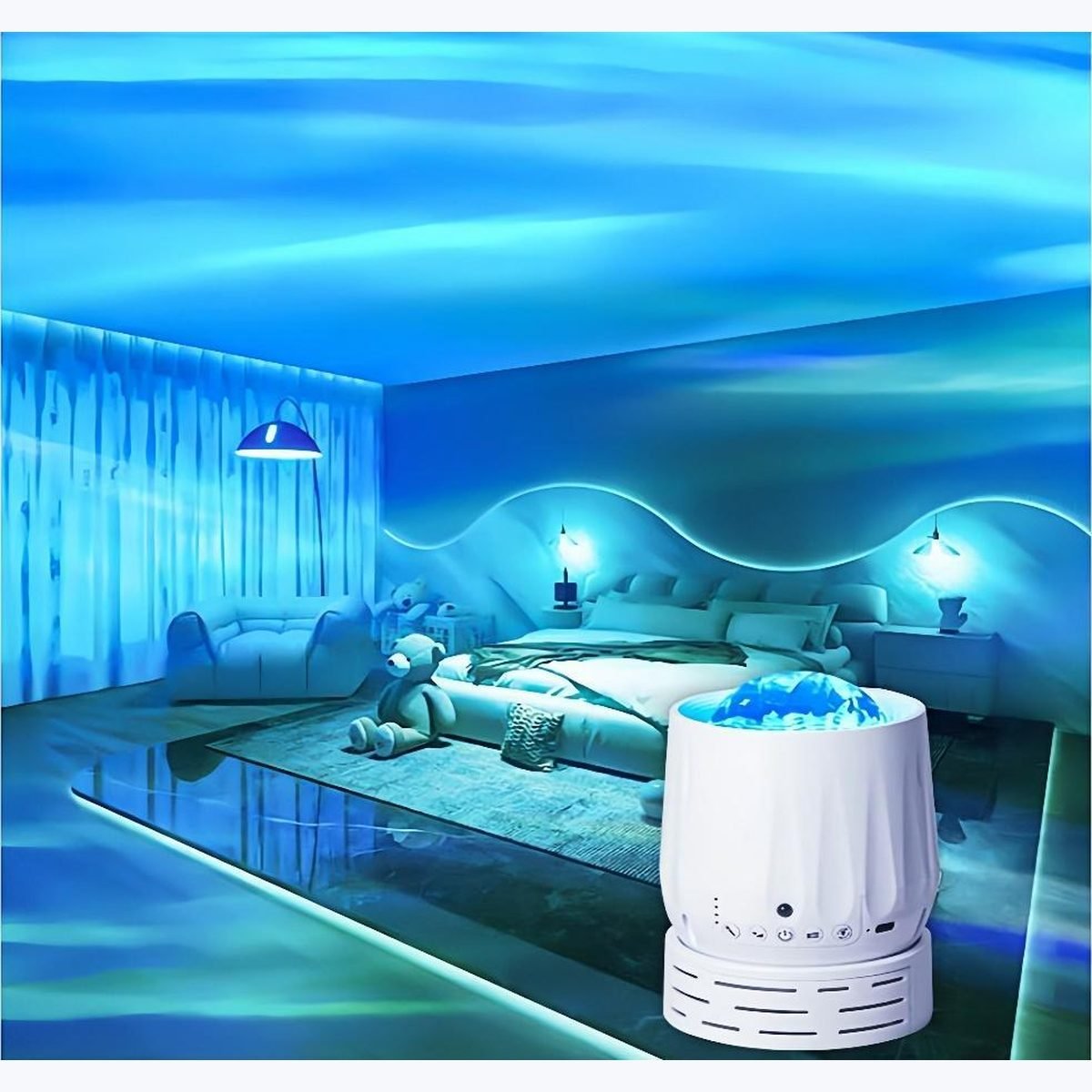
LED channels can support several jobs:
- a soft RGB or RGBW aurora field;
- a broad background colour beneath a point layer;
- an image or scene routed through a lens system;
- a night-light function when the projection cover is closed;
- pattern discs or films used for themed imagery.
The important distinction is between electrical description and optical result.6 A component line may record LED type and power. That does not tell the buyer whether colour mixing is smooth, whether a lens introduces a visible edge, whether the focus holds across the intended surface, or whether two units match closely enough for a retail display.
| LED question | Weak answer | Useful answer |
|---|---|---|
| What does the LED create? | “The aurora.” | Named channel, colours, motion and intended surface |
| How bright is it? | “Higher wattage.” | Matched visual test under the buyer's condition |
| Are colours consistent? | “RGBW.” | Approved sample plus batch comparison method |
| Can content change? | “Customizable.” | Exact layer that can change and what remains fixed |
BWL-SP-001, for example, combines several buyer-visible functions: an aurora channel, zodiac and planet content, and a separate night-light role. Reading only the light-source label would hide the product architecture the buyer actually needs to merchandise.
I watch the broad colour field separately from the point layer. If the buyer's complaint is about blend, focus or scene content, I keep the discussion on the LED and optical path instead of suggesting a laser change that cannot solve it.
This is why I do not recommend asking suppliers for a “laser upgrade” before the intended effect is written. The change can alter only one layer while leaving the buyer's real complaint—weak colour field, poor focus or limited content—untouched.
Why Are Hybrid LED-and-Laser Star Projectors So Common?
Retail pages describe a hybrid as a longer feature list. Engineering uses it to divide incompatible optical jobs between channels that each do one thing well.
Hybrid star projectors are common because sharp points and soft colour fields require different optical behaviour.7 A laser channel can create defined stars while an LED channel creates aurora, nebula or scene content. The buyer should specify how those layers operate together and separately.
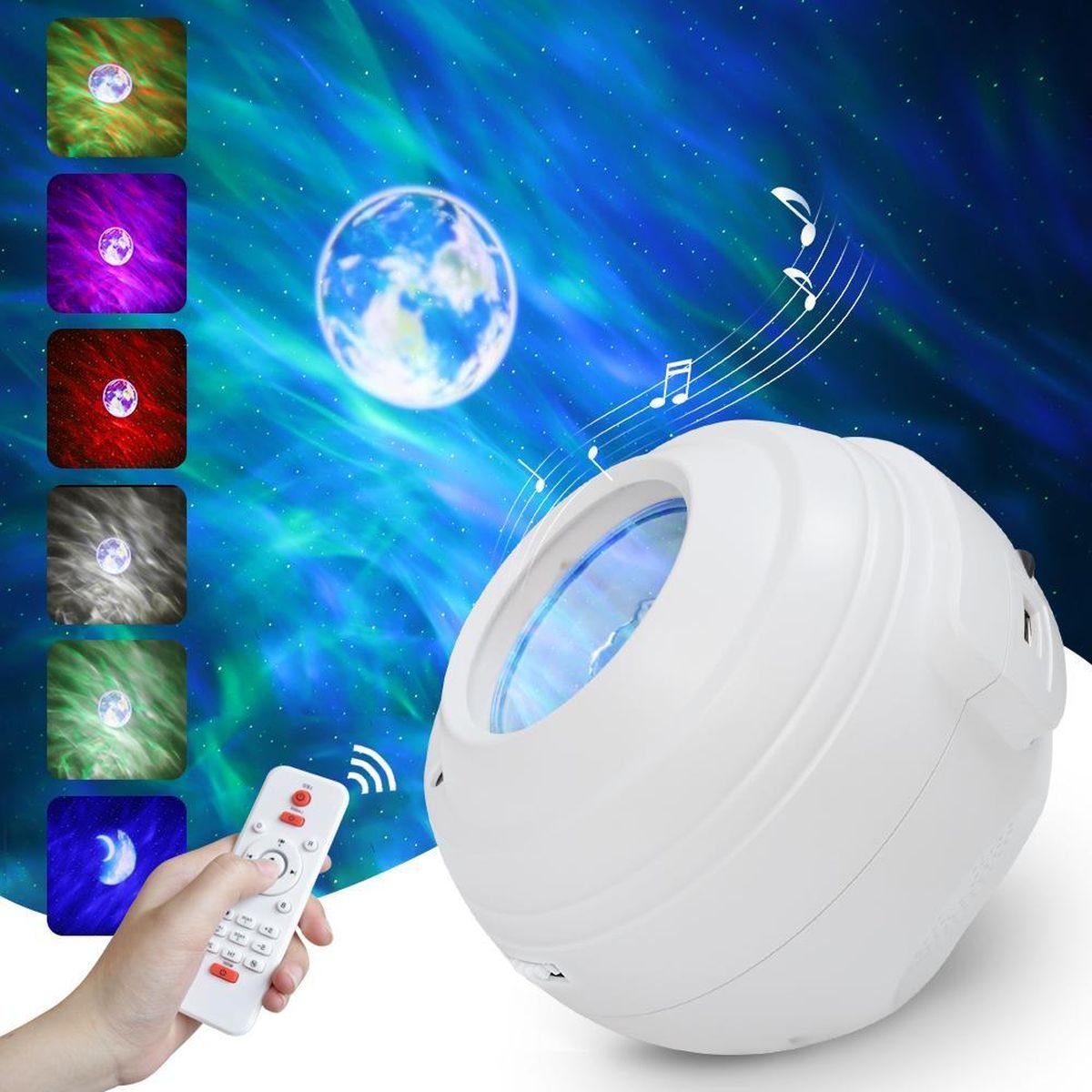
Think of the product as a stack, not a single lamp:
| Layer | Possible source or mechanism | Buyer decision |
|---|---|---|
| Point field | Laser plus pattern optics | Point definition, movement and safety evidence |
| Colour field | RGB or RGBW LED channel | Palette, blend, spread and ambient response |
| Scene content | LED plus lens, film or digital path | Content set, focus and customization boundary |
| Audio response | Microphone or input linked to controls | Which layer reacts and how |
| User control | Buttons, remote or app | Whether channels can be adjusted independently |
The key word is independently. A feature list might say colour, speed, music sync and timing, but the buyer needs to know which optical channel each control affects. Can the point field turn off while the aurora stays on? Can colour and motion be selected separately? Does sound control change brightness, speed or only a preset scene?
I write those questions as channel rows before I approve the description. That is how I keep “hybrid” from becoming a vague promise that every effect can be combined in every mode.
How a Hybrid Spec Prevents a Sample Dispute
A sample can look impressive in a dark room while failing the buyer's product concept.8 The brand may want a calm aurora without stars for sleep use and a point-plus-colour mode for parties. If the channels cannot be separated, the product does not meet the concept even though every advertised effect is present.
Write the sample sheet in channel rows:
| Channel | Required states | Independent control | Approval record |
|---|---|---|---|
| Point effect | On / off / agreed motion modes | Yes / no | Matched video |
| Colour field | Agreed colours and blends | Yes / no | Sample reference |
| Scene content | Listed scenes or patterns | Yes / no | Content inventory |
| Audio response | Named response behaviour | Yes / no | Test clip |
This format exposes a product that is feature-rich but operationally inflexible. It also prevents the word “hybrid” from becoming a promise that every possible combination is available.
Which Three Questions Reveal Whether a Supplier Understands Its Own Optics?
Technical buyers sometimes ask for a component brand or wavelength first. Those details can matter, but they do not prove the supplier understands how the finished effect is created.
Ask which module creates each visible layer, which conditions change that layer, and how the factory tests the approved result. A supplier who can connect source, optics, controls and acceptance understands the finished product. A supplier who repeats “LED plus laser” is only reading the feature line.
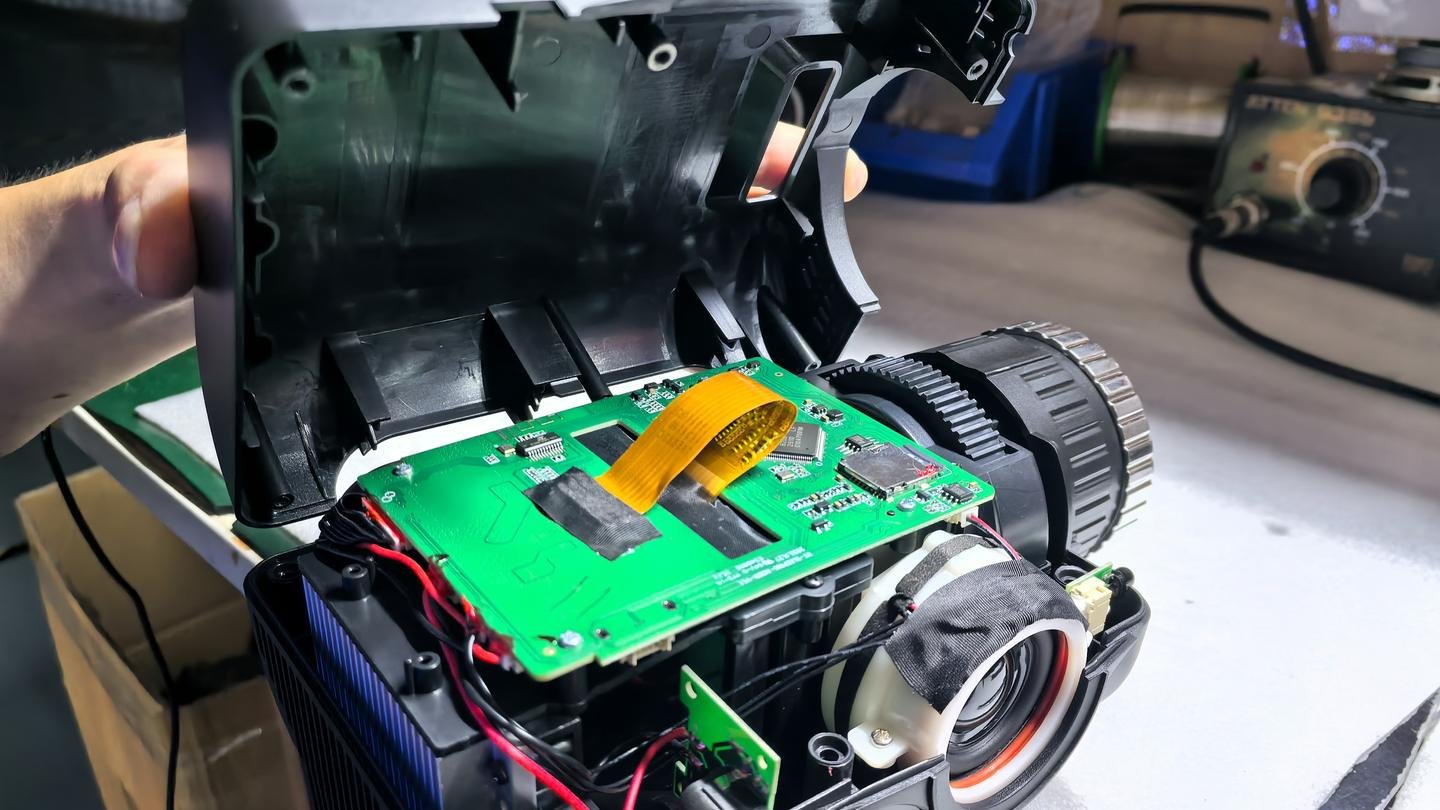
Question 1: Which Module Creates Which Part of the Effect?
Ask the supplier to point at an effect image and label the layers. A useful answer might separate stars, background colour, scene image, motion and audio response. If every effect is attributed to “the laser,” the explanation is incomplete.
Question 2: What Changes When Distance or Ambient Light Changes?
The point field may become sparser and lose contrast. The colour field may look less saturated.9 Focus may shift. A supplier should explain which variable affects which channel rather than promise a universal maximum area.
Question 3: How Is the Approved Result Reproduced?
Ask for the same unit, distance, surface, ambient condition and camera setting. Product images are useful for merchandising, but acceptance needs a repeatable setup.
| Ask this | Weak answer | Strong answer |
|---|---|---|
| What creates the stars? | “Laser technology.” | Source plus pattern-forming and motion mechanism |
| What creates the aurora? | “RGB effect.” | LED channel, lens path, colours and controls |
| Which mode is independent? | “Many combinations.” | A channel-by-channel control table |
| How do you compare samples? | “We test brightness.” | Defined setup and agreed visible result |
I use these three questions in this order because each answer narrows the next one. First I identify the visible layer, then I identify the condition that changes it, and only then do I ask the factory to reproduce the approved result.
The supplier does not need to reveal confidential construction details. It does need to explain enough of the optical path to make the buyer's acceptance test possible.
A Spec-Sheet Review That Changed the Buyer's Questions
A buyer places two decorative-projector sheets side by side and asks me why one is described as “laser” while another leaves several optical fields open. I do not call the second product lower grade. I ask the buyer to circle the visible effect that matters and then map each sheet back to the exact product and channel.
I check whether the laser field, LED field, controls and safety basis are product-specific. Where our source supports a value, I show it. Where it does not, I leave the field open and name the sample or document needed to close it. I do not borrow a wavelength, class or distance from a similar housing to make our table look more complete.
By the end of the review, the buyer's question has changed from “Which sheet looks more complete?” to “Which light source creates each effect, and how will we approve it?” That is the reusable outcome: compare optical roles and acceptance evidence instead of counting how many cells are filled.
A blank that names the next proof is more useful than a complete row assembled from a neighbouring product.
What Should Stay Blank on a Star Projector Spec Sheet?
Buyers dislike incomplete tables because blanks make comparison slower. Filled guesses make comparison faster and wrong.
Leave a field blank when the exact model lacks a source, test condition or approved configuration. Mark what is known, what must be confirmed and who owns the next action. Do not inherit a laser, LED, distance or safety value from a similar housing.
Our 38-product catalog contains real gaps. Projection distance and area appear only where source material provides them. Laser and LED descriptions differ by model. Some products have detailed optical text; others do not. We preserve those differences because a complete-looking table would require inventing relationships that the source never stated.
When I see an open field, I record what would close it rather than smoothing it away. That lets the buyer distinguish a known option, an unselected configuration and a genuinely unsupported claim.
Use three statuses:
- Confirmed for this model. The field has a traceable source and approved wording.
- Available as an option; configuration not fixed. The capability exists, but the buyer must select and approve it.
- Unknown or pending. The source does not support a value yet.
Turn the Channel Map Into a Golden-Sample Record
Once the buyer has separated the optical channels, attach that map to the approved sample. A short video should begin with the product label, show power-on, then isolate each available layer before showing the approved combinations. Keep the projector position, receiving surface and room light unchanged.10 The recording is not a laboratory measurement; it is a shared visual reference for the configuration both sides accepted.
Record the result in a compact table:
| Sample field | What to preserve |
|---|---|
| Product identity | Public SKU, selected variant and date |
| Point channel | On/off state, movement modes and visible pattern |
| Colour channel | Approved colours, blends and independent controls |
| Scene channel | Included content and focus behaviour |
| Test condition | Distance, surface, ambient light and camera position |
| Control state | Button, remote or app path used for each result |
Repeat the same sequence with a production-intent unit after the components and packaging are fixed. If a later configuration changes the optical module, control board or firmware, do not assume the earlier video still approves the new combination. The record is useful because it is narrow: one product, one configuration and one reproducible viewing setup.
Give the same record to receiving staff. They do not need to understand every optical component; they need to reproduce the approved channel sequence on a unit selected from the shipment and identify a visible difference. That closes the loop from engineering language to an operational check without turning a subjective effect into a made-up measurement.
Risk enters when “available in the family” becomes “included in this SKU.” App control, laser effects, Bluetooth, scenes and adapters can all behave this way.
The Limit of Light-Source Comparisons
Even a perfect channel map does not predict field performance by itself. Assembly tolerances, lens alignment, surface, ambient light, camera exposure and user controls shape the result.11 This article can improve an RFQ; it cannot replace a matched sample test.
A buyer also needs to treat safety and market evidence as product-specific work. Our factory applies a Class 1 release requirement to laser units, but buyers should still request the evidence and configuration relevant to the product and destination. Process strength is not permission to write a category-wide certificate claim.
This is where I would draw the line: use component and optical knowledge to design the test, then let the approved visible result decide whether the product fits the channel.
Conclusion
LED versus laser is the wrong purchasing contest for decorative star projectors. The useful question is which channel creates each part of the effect, how those channels interact, and whether the supplier can reproduce the approved result. Write the optical layers into the spec sheet, keep unknown fields visible, and require product-specific safety evidence where it applies. Once you do that, “hybrid” stops being a marketing adjective and becomes an architecture you can test.
My decision rule is to approve the visible channel and its reproduction method, never the prestige of the component label.
Frequently Asked Questions
Is a laser star projector always better than an LED star projector?
No. Laser and LED channels often perform different visual jobs. Choose the optical effect, control and test result your channel needs instead of treating laser as a universal upgrade.
What is the difference between a fiber optic star ceiling and an LED star projector?
A fiber optic star ceiling is a fixed installation: a light engine feeds optical fibers whose ends form points in the ceiling, static unless the kit adds a twinkle or colour wheel. An LED star projector sits in the room and casts colour fields, scenes or, with a laser channel, defined points onto a surface, so distance, surface and room light change the result. Bowlum manufactures projectors, not fiber optic kits.
What does the laser do in a decorative star projector?
It commonly creates sharply defined points or structured patterns through additional optics. The finished field still depends on the pattern element, movement, distance, surface and ambient light.
What does the LED do in a galaxy projector?
An LED channel commonly creates broad aurora, nebula, colour-wash, scene or night-light effects. Wattage alone does not describe the visible result.
Why do star projectors use both LED and laser?
A hybrid design lets different channels handle different optical tasks, such as sharp stars and a soft colour field. Buyers should check whether those channels can be controlled independently.
How should I compare two hybrid star projector samples?
Use the same distance, surface, ambient light and camera position. Record each channel separately, then approve the combinations and controls your product concept requires.
Should an empty laser field be copied from a similar model?
No. Keep it pending until the exact product has a traceable source or configuration. Similar housings do not prove identical optical or safety specifications.
What is the best first question to ask a star projector supplier?
Ask which module creates each visible part of the effect. The answer should connect source, optics, controls and the method used to reproduce the approved sample.
"Projector", https://en.wikipedia.org/wiki/Projector. An educational optics reference distinguishes image-forming projection systems from devices that cast patterned or diffuse illumination, supporting the article's separation of cinema-projector and decorative-lighting use cases. Evidence role: definition; source type: education. Supports: An optics or educational source should distinguish projectors designed to form images from systems designed to cast light, patterns or atmospheric effects.. Scope note: The distinction is conceptual and does not classify every commercial decorative projector or hybrid device. ↩
"Holography", https://en.wikipedia.org/wiki/Holography. Technical accounts of video-projector architecture describe the illumination source as part of an optical engine that forms and projects a complete image through imaging and projection components. Evidence role: mechanism; source type: research. Supports: A technical source should explain how a projector's illumination system, imaging element and projection optics combine to form a complete image.. Scope note: The account supports the general architecture of video projectors, not the performance of any particular consumer model. ↩
"Diffraction grating", https://en.wikipedia.org/wiki/Diffraction_grating. Optics literature explains that the directional and coherent properties of laser light enable defined beams and patterned outputs when combined with diffractive, scanning or other pattern-forming elements. Evidence role: mechanism; source type: paper. Supports: Optics literature should explain laser coherence, collimation and diffraction or scanning methods used to create defined points and structured patterns.. Scope note: These properties enable defined patterns but do not by themselves establish point density, uniformity or the appearance of a finished decorative product. ↩
"1 Scanned Laser Displays for Head Mounted Displays", http://www.cs.unc.edu/techreports/92-029.pdf. Research on laser projection systems treats the projected field as the product of the laser source, beam-shaping or pattern-forming optics, and the system's scanning or geometric configuration rather than of the source module in isolation. Evidence role: mechanism; source type: paper. Supports: A research source should show that beam source characteristics, optical pattern generation and scanning or movement jointly determine the projected field.. Scope note: Evidence from scanning or display systems may not reproduce the exact architecture of a decorative star projector. ↩
"Lighting and Reflections - Video Displays, Work, and Vision", https://www.ncbi.nlm.nih.gov/books/NBK216496/. Studies of projected-light visibility indicate that perceived contrast varies with background illumination, surface reflectance and viewing geometry, including the distance and angle between the projector and observer. Evidence role: mechanism; source type: research. Supports: Research should document how background luminance, surface reflectance and viewing geometry influence the contrast and visibility of projected light.. Scope note: Such studies may use screens or controlled targets rather than ceilings, walls or outdoor surfaces used by decorative projectors. ↩
"LED Efficacy: What America Stands to Gain", https://www.energy.gov/sites/prod/files/2016/10/f33/efficacy-fs_oct2017.pdf. Lighting guidance distinguishes electrical power from luminous output and distribution, indicating that wattage alone cannot specify the optical appearance or delivered illumination of an LED system. Evidence role: general_support; source type: government. Supports: A government or standards source should distinguish electrical power from luminous flux, efficacy, beam distribution and perceived or delivered illumination.. Scope note: General lighting metrics do not fully capture the colour blending, focus or motion characteristics of decorative projection effects. ↩
"Ultra-Low-Noise Brillouin Hybrid Synthetic Laser for Sub- ...", https://arxiv.org/html/2605.26708v1. Research on multi-source optical systems shows that narrow, directional laser output and broad, colour-mixed LED illumination have different beam-shaping and distribution requirements, providing a technical basis for separating those channels. Evidence role: mechanism; source type: paper. Supports: A technical source should explain why collimated or patterned laser output and diffuse, colour-mixed LED illumination are handled by different optical paths.. Scope note: The evidence supports the architectural rationale but does not establish that hybrid designs are common across the entire decorative-projector market. ↩
"Enhancing legibility in educational settings: Optimizing projection ...", https://pmc.ncbi.nlm.nih.gov/articles/PMC10957382/. Lighting-evaluation guidance emphasizes that perceived visibility and appearance depend on the viewing environment, so a result observed in a dark room cannot by itself establish performance in a brighter intended setting. Evidence role: general_support; source type: institution. Supports: A lighting or measurement institution should support controlling ambient conditions and evaluating illumination in conditions representative of intended use.. Scope note: The guidance supports controlled and representative evaluation but does not determine the buyer's aesthetic or commercial acceptance criteria. ↩
"The Effect of Ambient Illumination and Text Color on Visual ...", https://pmc.ncbi.nlm.nih.gov/articles/PMC11175232/. Research on projected-light perception indicates that distance and background illumination alter the apparent visibility and contrast of discrete light features and can affect perceived colourfulness of projected fields. Evidence role: mechanism; source type: research. Supports: Research should support the effects of projection geometry and ambient luminance on point visibility, apparent density and perceived colour.. Scope note: Perceived density and saturation are observer- and surface-dependent outcomes, so the findings do not define universal thresholds for decorative projectors. ↩
"An Introduction to the Quasi-Experimental Design ... - PMC", https://pmc.ncbi.nlm.nih.gov/articles/PMC11741180/. Photometric and experimental-measurement guidance treats source geometry, target conditions and ambient illumination as controlled variables needed for meaningful comparisons between observations. Evidence role: general_support; source type: government. Supports: A measurement standard or government laboratory guide should support controlling geometry, target conditions and ambient illumination when comparing optical outputs.. Scope note: A controlled visual reference is not equivalent to a calibrated laboratory measurement and may not quantify small performance differences. ↩
"Active Alignments of Lens Systems with Reinforcement ...", https://arxiv.org/html/2503.02075v1. Optical-engineering and imaging studies show that alignment tolerances and observation conditions can alter measured or recorded appearance, while control settings affect the operating state being evaluated. Evidence role: mechanism; source type: paper. Supports: Optical-engineering and imaging literature should document the effects of alignment tolerances, projection surfaces, illumination conditions and camera exposure on observed output.. Scope note: The cited mechanisms may explain variation without establishing which factor dominates in a specific decorative projector. ↩