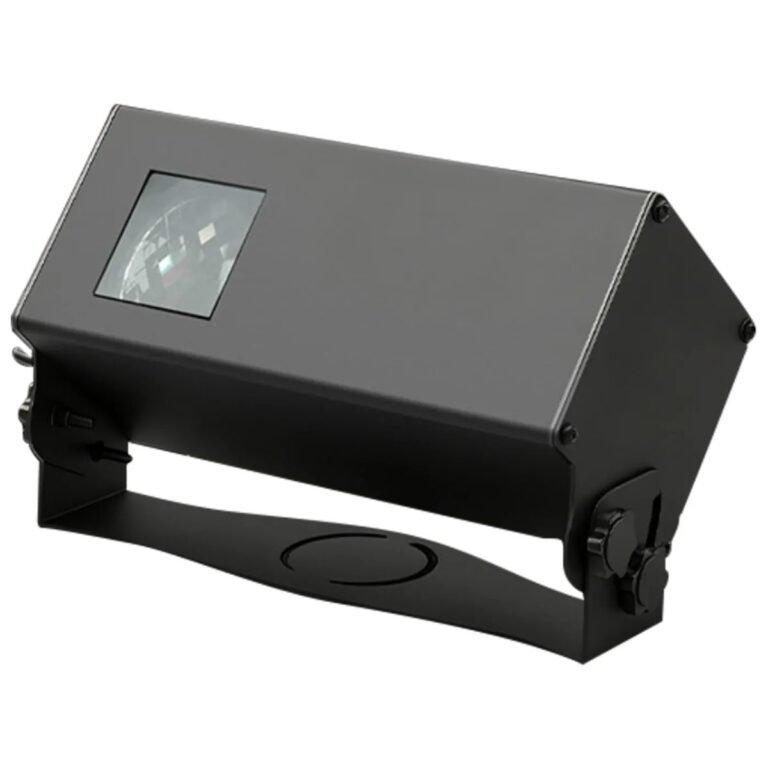

Professional installers buy through distributors, specialist wholesalers, importers and factories1, but those channels do not solve the same problem. A local distributor can break cartons, replenish quickly and carry many categories2. A trader can assemble products from several factories3. A factory can expose the production boundary and develop a controlled version at the right scale. The problem is not that one middleman is good and another is bad. The problem is asking one channel to perform a job its economics were never built to perform.
When someone asks me where professionals buy Christmas lights, my first question is not “Which product?” It is “What must this source do after the first delivery?” A single installer who needs mixed items and weekly replenishment often needs a strong distributor. A US wholesaler serving many installers, a large decorating contractor or a municipal program may be able to use a factory relationship. Bowlum manufactures decorative projectors; we do not supply light strings or provide installation services. Our factory programs start at 1,000 units, and we do not sell single units.
Professionals should choose a source by order scale, assortment, replenishment, customization and evidence depth. Go factory-direct when demand can support a production run and the value comes from controlled product decisions; use a distributor when small quantities, mixed categories and fast local replacement matter more.
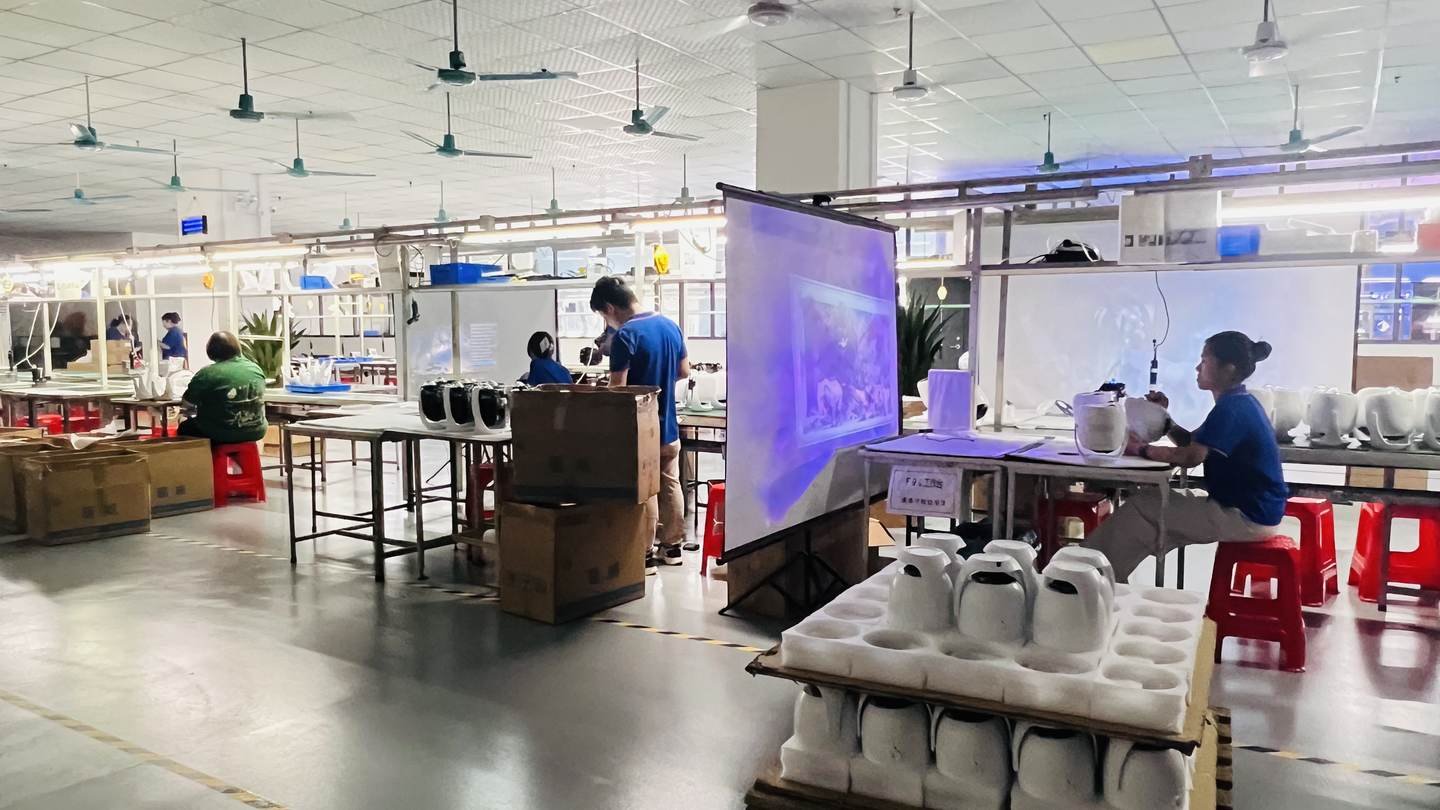
Below, I compare the three common source types, explain our 1,000-unit qualification line, and show the one change that moves a project from about 35 days to about 95 days. If your program needs product development, the OEM and ODM boundary is the more important page; if it needs ready decorative projection, start with the outdoor projector range.
What Is the Real Difference Between a Distributor, a Trader and a Factory?
These words are often reduced to price layers. That hides the more important difference: each channel owns a different part of the supply problem and can make a different kind of promise.
A distributor owns local inventory and service, a trader coordinates products across sources, and a factory owns production for the products it makes. Compare who controls stock, specification, change approval and after-delivery response; do not compare only the number of companies between you and the line.

Three Channels, Three Jobs
| Source | Strongest use | Structural limit |
|---|---|---|
| Local distributor | Mixed cartons, local stock, short replenishment and broad accessories | Usually does not own the product design or factory change process |
| Trader or sourcing company | Multi-factory coordination, category bundling and buyer-side administration | Product evidence and change authority still sit with underlying factories |
| Direct factory | Production-scale repeat orders, exact BOM control, color programs and new development | Requires a production-sized commitment and cannot behave like a local break-pack warehouse |
I do not tell a small installer to eliminate the distributor merely because I work inside a factory. If that installer needs several types of strings, clips, controllers, extension products and a small number of projectors, a distributor’s assortment is real value. Buying one category direct while rebuilding the rest of the supply chain can create more work than it removes.
The factory becomes useful when the buyer wants repeatability at a scale the line can plan4: a US distributor aggregating demand from installers, a large contractor repeating a standard package, or a property group coordinating multiple sites. Then direct access can shorten the evidence chain. A change request reaches production and R&D without being translated through several commercial layers.
Compare Ownership, Not Labels
Ask who can sign each decision. Who owns local stock? Who can approve a housing color? Who controls the optical design? Who can issue the packing record? Who can show the production test? A seller can be responsive and still lack authority over one of those answers.
The honest channel explains that boundary early. A factory should not pretend to offer local single-unit replacement if it does not. A distributor should not turn a factory marketing sentence into an engineering guarantee. A buyer should keep both channels when the program needs both functions.
When Is Going Direct to a Christmas Lights Factory the Wrong Choice?
Factory-direct sounds efficient because it removes a layer5. It can also remove services the buyer was quietly relying on: small-order aggregation, domestic inventory, mixed-category picking, credit terms, local returns and seasonal replenishment6.
Do not go factory-direct for a small, uncertain or highly mixed requirement that depends on immediate local replenishment. A direct factory relationship makes sense when the buyer can commit to a production run, define the product boundary and carry the inventory and planning responsibilities that a distributor normally absorbs.

The Four Warning Signs
Factory-direct is usually the wrong first move when:
- the buyer wants one or two pieces for immediate installation;
- the requirement mixes projectors, strings, clips and other categories from many manufacturers;
- the buyer has not decided which model or sales promise will be repeated;
- the seasonal plan depends on small domestic top-ups after work has begun.
At Bowlum, 1,000 units is the starting scale for a standard factory program. That is not a target for a single residential installer. It fits a distributor, a large decoration contractor, a branded channel program or an aggregated project portfolio. Saying this early saves the buyer from spending weeks on a sourcing path that cannot serve the real order pattern.
An Inquiry That Belonged With a Distributor
An installer asked for factory-direct supply after seeing outdoor projectors used on a commercial property. The initial request sounded like a sourcing opportunity, but the operational need was a handful of units, several string-light accessories and the ability to replace an item locally during the season. The product interest was real; the channel fit was not.
I separated the current job from the future program. For the current installation, I told the buyer to keep a distributor in the plan because mixed local stock and fast replacement were the critical services. For a future aggregated projector program, I asked the buyer to record which effects, weather exposures and control modes repeated across sites. That would create a specification a factory could quote and reproduce at production scale.
The buyer did not leave with a factory order. The useful outcome was a two-lane sourcing map: local distribution for project execution now, factory qualification for a repeatable program later. That same distinction is available to any installer deciding whether “direct” actually means “better.”
The right source is the one whose operating model matches the buyer’s next problem, not the one with the fewest names between order and production.
What Does a 1,000-Unit MOQ Actually Mean at a Projector Factory?
MOQ is often presented as a negotiation number. In production, it connects material allocation, line setup, packaging, inspection, planning time and the cost of managing one configuration through the factory.
A 1,000-unit MOQ means the buyer is reserving a production program, not taking pieces from a retail shelf7. It works when one defined configuration can move through material preparation, assembly, testing and packing as a controlled batch.

Why the Definition Comes Before the Quantity
BWL-OL-004, for example, has an app family version and a DMX512 professional version. Calling both “the same projector” may be convenient at the family level, but a purchase order must identify the version being built and tested. Quantity cannot stabilize a batch if the configuration remains ambiguous.
Before I treat 1,000 units as a real program, I look for a model or controlled development brief, destination electrical configuration, packaging decision, control method and acceptance plan8. The buyer should also know where the inventory will live and how it will be released into the market. A large number without a channel plan is not stronger than a small number; it is simply a larger exposure.
MOQ Is Also a Qualification Tool
| Buyer pattern | Factory fit | Better immediate path |
|---|---|---|
| Single-site installer needing a few units | Poor | Local specialist distributor |
| Distributor aggregating installer demand | Strong when the SKU and season plan are defined | Factory program plus local stock |
| Large contractor repeating one package | Potentially strong | Validate project portfolio and configuration |
| Brand testing an unproven visual trend | Conditional | Sample, listing plan and inventory gate before depth |
I use the MOQ to expose questions the product page cannot answer: Is demand concentrated enough? Can the buyer hold the inventory? Is one version repeatable? Who approves a change after the sample? If those answers are weak, reducing the number does not repair the program.
Why Can One Change Move a Factory Project From About 35 Days to About 95 Days?
Buyers often divide customization into “small” and “large” by how different the finished product looks. Our production boundary is sharper: the first question is whether the requested change is only the enclosure color.
Only changing the enclosure color stays on the existing-product path: no new mold, no certification restart9, about 1,000 units and about 35 days. Any other change to appearance, structure, optics or electronics becomes a new-product path with tooling, renewed certification work10, 2,000 units or more and about 95 days.

One Question Decides Four Consequences
I ask, “Is the only product change the enclosure color?” If the answer is yes, the project remains connected to the existing structure and evidence path. If the answer includes a changed shape, bracket, optical pattern, circuit, interface or internal arrangement, we treat it as a new product.
That one answer changes four things together:
| Change boundary | Tooling | Certification path | MOQ and production timing |
|---|---|---|---|
| Enclosure color only | No new mold | Existing path remains applicable | About 1,000 units; about 35 days |
| Any other product change | New tooling required | Certification work restarts for the new product | 2,000 units or more; about 95 days |
There is no reliable middle zone called “just a small structural change.” A small visible change can alter tooling, optical alignment, electrical behavior, assembly or evidence scope. Calling it small does not make those systems disappear.
Separate Production Time From Freight Time
The 35-day and 95-day figures describe the factory project paths. They are not a delivered-date promise to a US warehouse. Freight booking, route, customs and domestic receiving belong in a separate schedule11. I will not turn a production lead time into a season-arrival guarantee without those inputs.
This separation helps holiday buyers plan backward honestly. Lock the product boundary, then confirm production, then add the actual logistics plan. Combining all three into one optimistic date is how seasonal risk gets hidden.
Who Owns the Deposit, Tooling and Certification Responsibilities in a Direct Program?
Commercial discussions often fail after both sides agree on the product because they never wrote down who funds, owns and can reuse the assets created during development.
Our direct-development boundary is explicit: the deposit is 30%; tooling costs are borne by the buyer; the tooling belongs entirely to that buyer; and a non-color product change requires certification work again as a new product. Cost categories may be named, but monetary amounts remain in the commercial quotation.

Write the Ownership Matrix Before Development
The buyer should see separate lines for tooling, circuit development, optical development, certification work, packaging and other agreed project tasks. Naming a cost category is not the same as publishing its amount. The quotation can carry the money; the development agreement should carry the responsibility and ownership.
Tooling ownership matters beyond the first order. If the buyer funds the mold and owns it, the agreement should define identification, storage, maintenance, authorized use and the conditions for transfer or retirement. “Buyer-owned” should be operational, not ceremonial.
For certification, the selected market and exact product change need to be clear. A color-only path does not restart certification. Any other product change does. I do not tell a buyer that a change can borrow a neighboring model’s evidence simply because the exterior still looks familiar.
Approval Gates Prevent Commercial Drift
I use written gates: development brief, structure freeze, sample approval, evidence plan, packaging approval and production release. Each gate names who can approve a change and what happens to timing if it is reopened. That is more useful than promising “flexibility,” because it shows where flexibility has a consequence.
Direct sourcing works when ownership and change control become clearer than they were through a middle layer—not merely when the commercial chain becomes shorter.
What Documents Should You Request From a Christmas Lights Factory?
A document request should be designed around the buyer’s decision. Asking for “all certificates” or “the catalog” produces folders, not traceability.
Request seven controlled items12: exact product specification, sample identity, packing sheet, QC and release plan, model-scoped market evidence, control-interface documentation, and an approved change record. Accept explicit gaps; reject silent substitutions from related models.

The Seven-Item File
- Exact product specification — public SKU, version, electrical configuration and agreed options.
- Sample identity record — how the approved sample connects to the production configuration.
- Packing sheet — pieces, dimensions and weight meanings for the exact sellable unit.
- QC and release plan — checks, aging, laser release where relevant and acceptance ownership.
- Market evidence matrix — product/component, model, destination and claim scope separated.
- Control-interface documentation — app, remote or DMX material sufficient for the buyer’s integration.
- Change record — approved changes, owners and the last configuration released to production.
Our factory can explain the production and development process, but not every public SKU record is equally complete. Some holiday projectors do not yet have a complete model-level public certification package. Some packing rows are blank. The two DMX projector records identify the professional variants, but our current catalog does not state DMX channel count or addressing method. I would rather show those gaps than send a neighboring file as if it closed them.
BWL-OL-003 and BWL-OL-004 are the two public product families behind that DMX example. Both belong in the article relationship because the sourcing decision is about choosing and documenting an exact factory configuration, not about treating a professional-version label as a complete interface specification.
“Not Available Yet” Can Be a Useful Answer
The buyer should classify a gap. Does it block the market? Does it require a document from the factory? Does it require a sample integration? Is it irrelevant to this purchase? The answer decides the action.
A factory that cannot provide a requested item may still be the right source if it identifies the gap and commits to the correct closure path. A factory that hides the gap inside a general document folder creates a traceability problem even when the product itself is capable.
Which Buyers Are Not a Fit for Bowlum Factory-Direct Supply?
Qualification is part of service. If the order pattern does not fit the factory, delaying that answer wastes the installer’s season and our production team’s time.
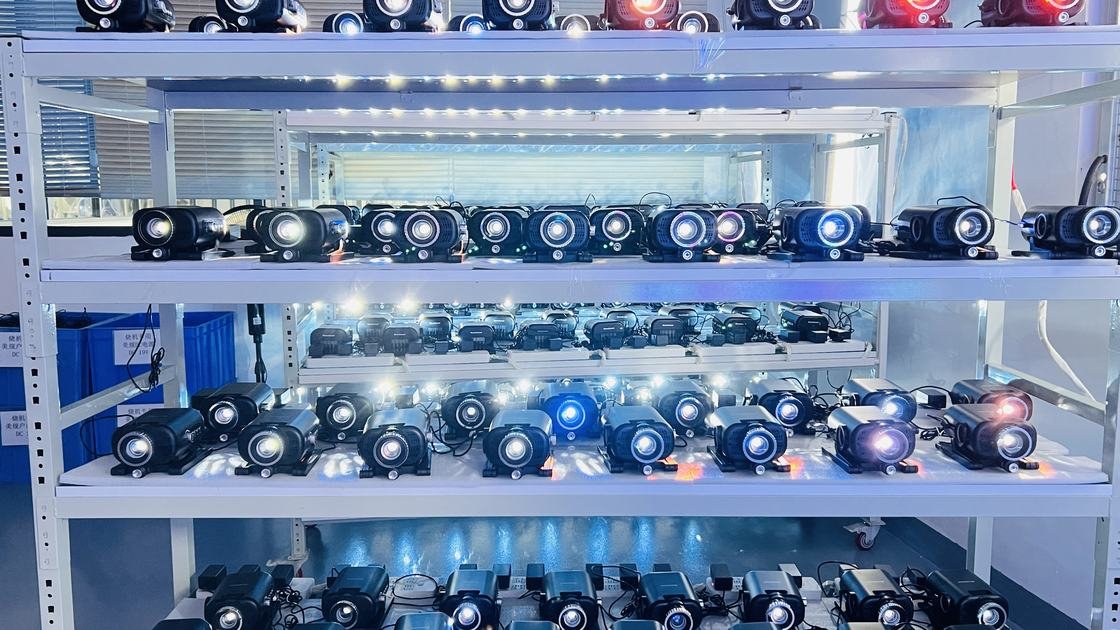
Bowlum factory-direct supply is not for single-unit purchases, small mixed orders or buyers who need local emergency replenishment. It is designed for distributors, large contractors, brands and multi-site programs that can support at least 1,000 units of a defined projector configuration.
A Practical Qualification Checklist
Before a direct conversation becomes a project, I ask whether the buyer can answer five questions:
- Is the demand aggregated enough for a 1,000-unit program?
- Is the required product or development boundary defined?
- Can the buyer plan inventory rather than depend on piece-by-piece replenishment?
- Is there an owner for product, evidence, packaging and logistics approval?
- Does the buyer need a factory function, or mainly a distributor function?
If the last answer is “distributor,” that is not a failed lead. It is the correct sourcing decision. The buyer can still evaluate our projectors through a channel that carries stock, and a future factory program can begin once repeated demand is visible.
If the factory function is real, the next step is not a generic price request. It is a defined product, volume, market, control and change brief. That brief is what allows our production, R&D and QC teams to give the buyer an answer they can actually use.
Conclusion
Professionals do not buy Christmas lights from one universally best channel. They assemble a supply system. Distributors solve assortment, local stock and replenishment. Traders solve coordination. Factories solve production control, repeatability and development at the right scale. A mature buyer may use all three.
For Bowlum, the qualification line is clear: decorative projectors, 1,000 units or more, no single-unit sales, and a product or development brief that can enter production. I will recommend a distributor when the immediate job needs one. When a buyer is ready for a factory program, I will ask the color-only question first, because it exposes the real tooling, certification, MOQ and schedule path before anyone builds a commercial promise on the wrong assumption.
Frequently Asked Questions
Where do professional Christmas light installers buy their lights?
They commonly use specialist distributors, wholesalers, importers and factories. The right source depends on required assortment, order scale, local replenishment, customization and evidence depth.
When should an installer buy directly from a factory?
Factory-direct becomes practical when demand can support a production run and the buyer needs repeatable product control or development. Small mixed requirements and urgent local top-ups usually fit a distributor better.
What is Bowlum’s minimum factory order?
Standard factory programs start at 1,000 units. Bowlum does not sell single units; the model is designed for distributors, large contractors, brands and aggregated multi-site programs.
How long does a color-only projector customization take?
The business-attested path is about 35 days at about 1,000 units when the only product change is enclosure color. Production time is separate from freight, customs and domestic receiving.
What changes make a projector an ODM project?
Any change beyond enclosure color—appearance, structure, optics or electronics—moves the project to a new-product path. That requires tooling, renewed certification work, 2,000 units or more and about 95 days.
Who owns the mold in a Bowlum ODM project?
The buyer pays the tooling cost and owns the mold entirely. The project agreement should also define identification, storage, maintenance and authorized use.
Does Bowlum supply Christmas light strings or installation?
No. Bowlum manufactures decorative projectors and does not provide installation services. Buyers needing strings, clips and local project support should keep an appropriate distributor or contractor in the supply plan.
"Operations & Supply Chain Management: Principles and ...", https://arxiv.org/html/2503.05749v2. An industry supply-chain analysis describes professional buyers as obtaining lighting products through distributors, wholesalers, importers, and manufacturers, supporting the article’s general channel classification. Evidence role: general_support; source type: research. Supports: An independent industry or supply-chain source describing the multiple procurement channels used for professional lighting and electrical products.. Scope note: Such sources may describe commercial lighting broadly rather than Christmas-lighting installers specifically. ↩
"A practical approach to replenishment optimization with ... - PMC", https://pmc.ncbi.nlm.nih.gov/articles/PMC12722329/. Supply-chain literature identifies inventory holding, assortment aggregation, and break-bulk fulfillment as standard distributor functions, providing general support for the operational advantages described. Evidence role: mechanism; source type: education. Supports: A supply-chain source explaining that distributors aggregate products, hold inventory and break bulk for downstream buyers.. Scope note: The source supports the distribution mechanism in general and does not establish that every local distributor offers rapid replenishment. ↩
"Automating Supply Chain Disruption Monitoring via an ...", https://arxiv.org/html/2601.09680v1. Research on sourcing intermediaries describes their role in coordinating procurement across multiple manufacturers, which supports the article’s characterization of traders as multi-factory coordinators. Evidence role: definition; source type: institution. Supports: An institutional or academic source defining sourcing intermediaries and their coordination of suppliers or manufacturers.. Scope note: Terminology differs across markets; a trader, agent, importer, or sourcing company may perform overlapping but not identical functions. ↩
"Capacity Planning in a General Supply Chain with Multiple ...", https://mitsloan.mit.edu/shared/ods/documents?PublicationDocumentID=5505. Operations research links repeatable product specifications and sufficiently large production volumes with more predictable batch planning and manufacturing efficiency, supporting the article’s distinction between factory programs and ad hoc purchasing. Evidence role: mechanism; source type: paper. Supports: Research explaining how production scale, repeatable specifications and planned batch manufacturing affect direct procurement decisions.. Scope note: The evidence concerns manufacturing and procurement generally and does not determine the appropriate volume for a particular projector factory. ↩
"On-chain Peak Shaving", https://arxiv.org/html/2604.19956v1. Studies of disintermediation find that removing intermediaries can reduce some transaction layers while shifting inventory, logistics, coordination, and service responsibilities to the buyer. Evidence role: mechanism; source type: paper. Supports: Research comparing intermediary-based and direct procurement models, including transaction costs and transferred responsibilities.. Scope note: The finding is contextual and does not prove that factory-direct purchasing is cheaper or more efficient for every buyer. ↩
"International Distribution - PMC - NIH", https://pmc.ncbi.nlm.nih.gov/articles/PMC7176197/. Distribution research describes wholesalers and distributors as potentially providing order consolidation, inventory availability, financing terms, and downstream service functions beyond simple resale. Evidence role: general_support; source type: research. Supports: A neutral distribution or wholesale source documenting services such as order consolidation, inventory holding, credit and returns handling.. Scope note: These services are not universal and depend on the distributor’s contract, market and operating model. ↩
"Smaller Batches, Bigger Gains? Investigating the Impact of ...", https://arxiv.org/html/2406.02294v1. Inventory and production research shows that minimum order quantities commonly arise from fixed setup costs, batch economics, supplier purchasing constraints, and the need to plan production runs. Evidence role: mechanism; source type: paper. Supports: Operations research explaining why manufacturers set minimum order quantities to manage setup costs, purchasing batches, production efficiency and inventory.. Scope note: The research supports the economic rationale for MOQs but cannot validate Bowlum’s particular 1,000-unit threshold. ↩
"Production Readiness Review (PRR) | Adaptive Acquisition ...", https://aaf.dau.edu/aaf/mca/prr/. Quality-management guidance emphasizes documented product requirements, configuration control, verification, and defined acceptance criteria before production release, supporting the article’s qualification checklist. Evidence role: expert_consensus; source type: institution. Supports: Quality-management standards or guidance requiring defined product requirements, controlled changes and verification or acceptance before release.. Scope note: A quality standard establishes general process principles, not the specific documents or approval sequence required for this product. ↩
"General Use Products: Certification and Testing | CPSC.gov", https://www.cpsc.gov/Business--Manufacturing/Testing-Certification/General-Use-Products-Certification-and-Testing. Conformity-assessment guidance generally distinguishes changes affecting a product’s safety or technical characteristics from changes that do not, allowing an unchanged technical design to remain within an existing assessment framework in some cases. Evidence role: general_support; source type: government. Supports: Regulatory guidance explaining when a product modification requires reassessment and when an unchanged technical design may retain existing conformity documentation.. Scope note: The source cannot establish that color-only changes never require reassessment; the result depends on jurisdiction, materials, labeling, heat behavior, and the applicable certification scheme. ↩
"Guidance on Federal Conformity Assessment Activities", https://www.federalregister.gov/documents/2020/09/29/2020-18745/guidance-on-federal-conformity-assessment-activities. Product-safety guidance indicates that changes to construction, electrical characteristics, or other safety-relevant design features may require updated technical documentation, testing, or conformity assessment. Evidence role: mechanism; source type: government. Supports: Official product-safety guidance showing that material design changes may require technical-file review, testing or reassessment.. Scope note: The evidence does not prove that every non-color change requires a completely new certification process or new tooling. ↩
"Colombia - Import Requirements and Documentation", https://www.trade.gov/country-commercial-guides/colombia-import-requirements-and-documentation. International trade guidance treats production, transportation, import customs clearance, and inland delivery as separate stages of an import supply chain, supporting the article’s separation of factory time from delivered lead time. Evidence role: mechanism; source type: government. Supports: Trade or customs guidance describing manufacturing, export transport, import clearance and domestic delivery as distinct logistics stages.. Scope note: Actual duration depends on route, carrier, customs requirements, documentation, seasonality and receiving conditions. ↩
"Compliance Evidence in the Automotive Supply Chain", https://arxiv.org/html/2607.04924v1. Quality-management and product-conformity frameworks support maintaining controlled specifications, product identification, inspection records, applicable evidence, and documented change history for manufactured products. Evidence role: general_support; source type: institution. Supports: Quality and conformity frameworks requiring controlled specifications, records, traceability, verification evidence and change management.. Scope note: The frameworks support the documentation principles but do not prescribe exactly these seven items or guarantee that the records supplied are accurate. ↩