
When someone asks whether a Christmas light business is profitable, I first ask to see the cost sheet. Most sheets stop at equipment, labor, and a selling price. They do not show what happens when a unit must be replaced during the busiest week of the season, when inventory arrives too late to install, or when a buyer has imported more stock than the local team can use. Those missing lines are where seasonal profit often disappears. The problem is not that distributors or factories are adding unnecessary margin. The problem is that each layer is being paid to carry a different part of the risk, while a simple purchase-price comparison hides who carries what.
A profitable Christmas light installation business is built on risk placement, not on the lowest unit cost.1 Factory-direct buying can remove a distributor's margin, but it also transfers inventory, timing, import, and replacement responsibilities to you.2 The useful calculation is total seasonal cost per working installation, including the repeat visits that consume your scarcest weeks.

Below, I walk through the margin stack from factory to installer, the risks hidden inside each layer, a practical way to count repeat-visit cost, and the two tests I use before recommending factory-direct purchasing. This is written for importers and distributors as much as installers: the installer may be the person searching the question, but the upstream buyer decides whether the product and service system can support that installer through the season.
Where Does the Margin Sit in a Commercial Holiday Lighting Supply Chain?
It is tempting to look at a chain with several companies in it and assume that every middle layer is simply marking up the same box. When I map the chain with a buyer, I label the responsibility beside each participant before discussing any price.
Margin sits where responsibility sits. A factory converts materials, labor, tooling, testing, and capacity into finished goods; an importer carries production and inbound risk; a distributor converts bulk inventory into local availability and replacement service; an installer converts equipment into a working display. Removing a layer removes its margin only if another participant accepts its responsibilities.
What Each Layer Is Actually Selling
| Supply-chain layer | What it does | Risk it absorbs for the next buyer |
|---|---|---|
| Factory | Builds, assembles, tests, packs, and schedules production | Manufacturing execution and factory-side quality control |
| Importer | Places a bulk order, arranges inbound logistics, clears goods, and finances inventory | Long planning window, import administration, and demand forecast |
| Distributor | Holds stock near the market, breaks bulk, supports dealers, and manages replacements | Local availability, smaller order size, and rapid service response |
| Installer | Designs, installs, maintains, removes, and stores the display | Site execution, labor scheduling, and the end customer's experience |
These roles sometimes sit inside the same company. A large distributor may also be the importer. A brand may own the specification while another company imports. An installation business may gradually become a regional distributor. The labels matter less than the duties. If no one has clearly accepted a duty, the risk has not disappeared; it is merely unassigned.
I use local replacement stock as the simplest example. A distributor with inventory can often replace a failed unit from a nearby warehouse. A factory cannot create that same response from across an ocean during the middle of a seasonal job. The factory can investigate the cause, trace a production record, and support the next shipment, but local response still has to live somewhere in the chain.
Every layer earns margin by absorbing a risk that the next buyer does not want to carry.
That is why comparing a distributor's local price with a factory quotation as if they were the same offer is not a clean comparison. One offer includes a response system. The other gives you the opportunity—and the obligation—to build that system yourself.
What Risks Move to You When You Buy Factory Direct?
Buyers often describe factory-direct purchasing as “cutting out the middleman.” I describe it as changing jobs. I ask who will own the cash commitment, the calendar, the import work, and the field replacement plan after the distributor is removed.
Four responsibilities move upstream when you buy direct: bulk inventory, production and transit planning, import execution, and local after-sales coverage. Factory-direct sourcing works when your organization already has people, working capital, lead time, and replacement stock for those duties. It fails when the savings are real but the operating system is imaginary.
Inventory Risk
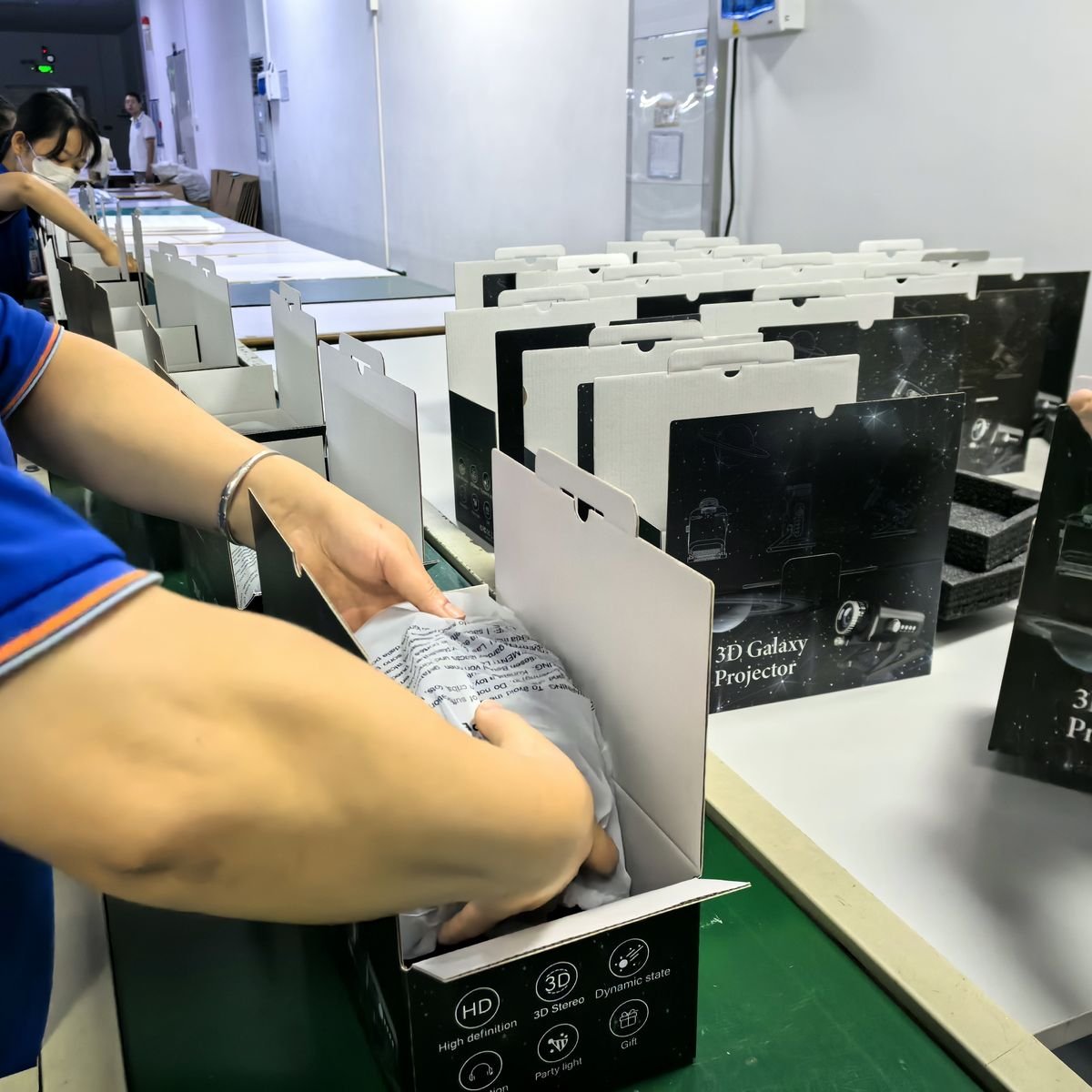
Bowlum's basic factory MOQ is normally 1,000 pieces, with model-specific variation possible. That number is not a recommended order for every installer. It is a manufacturing starting point. The buyer still has to decide whether those units can move through a real sales or installation network.
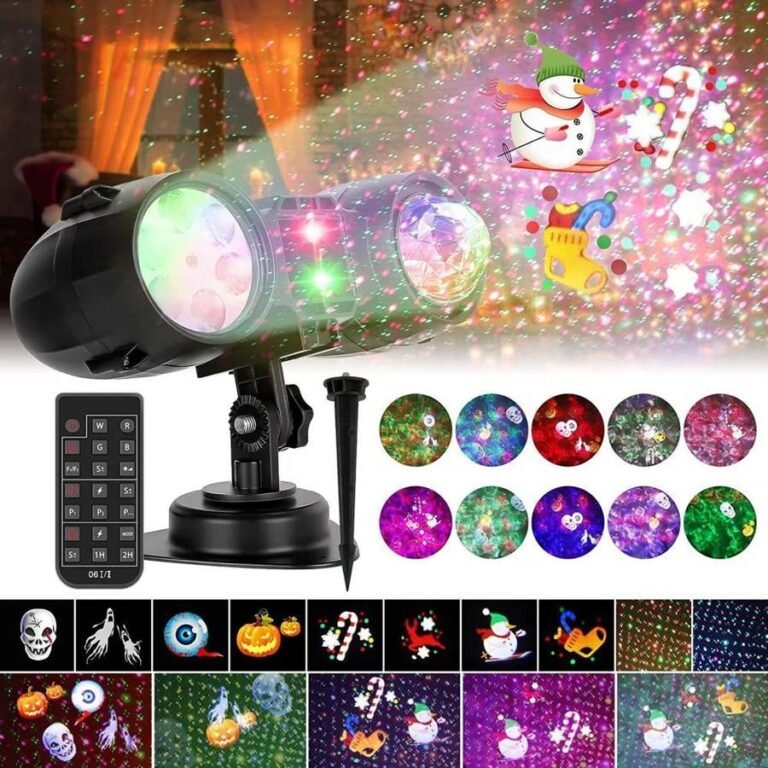
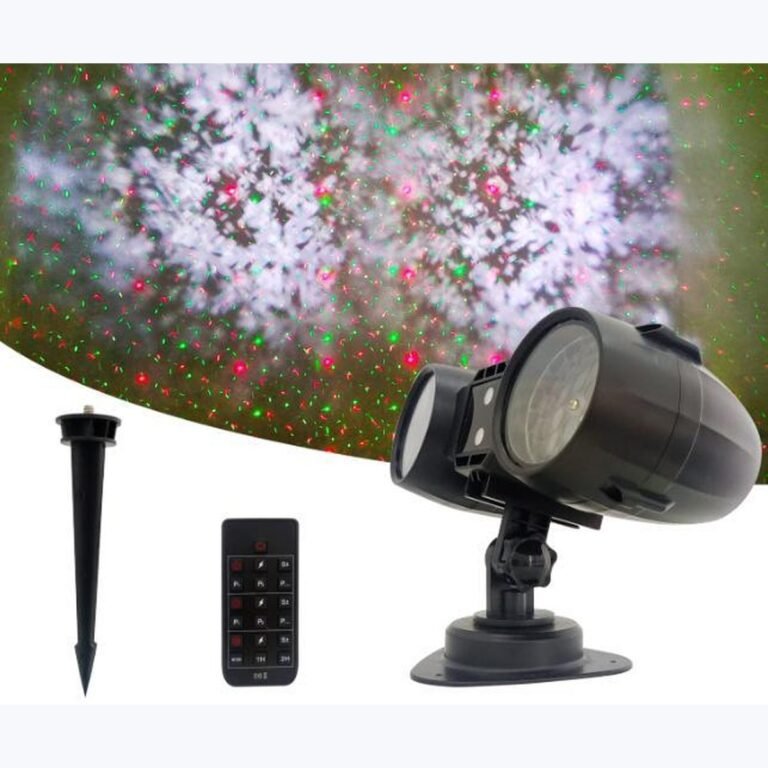
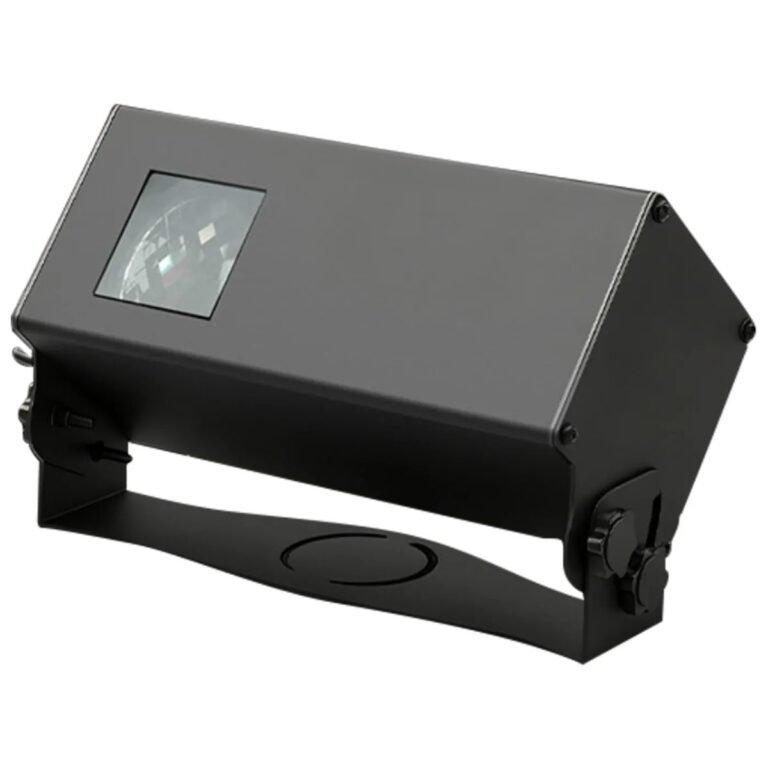
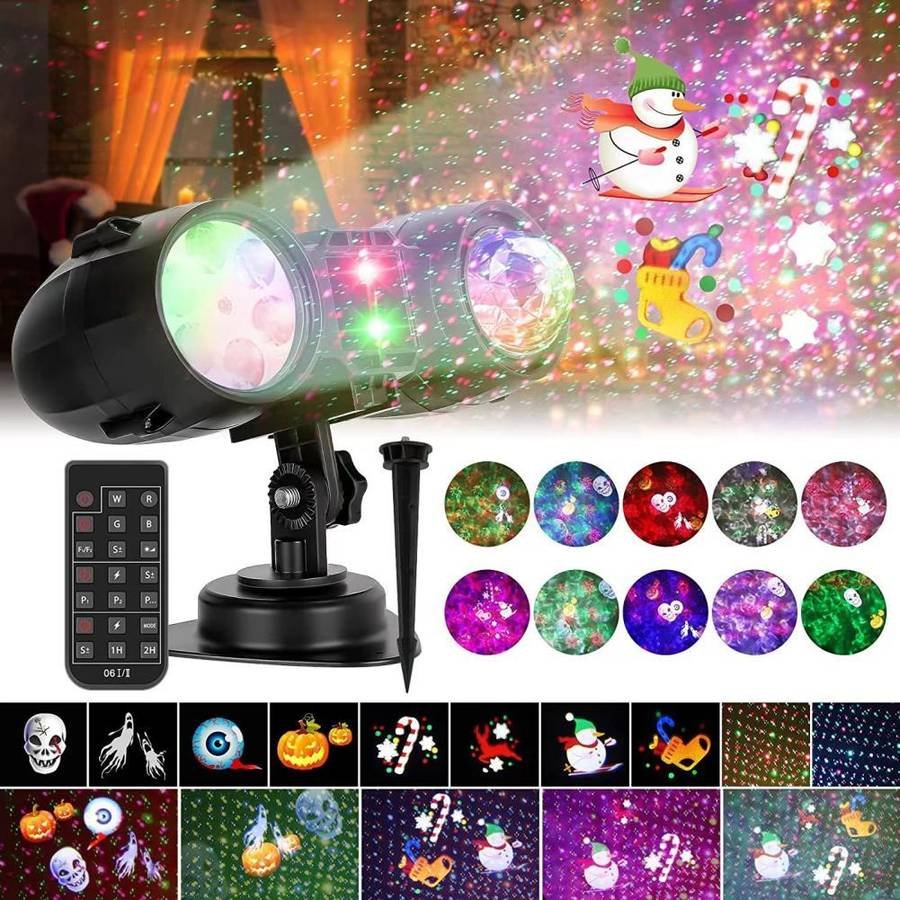
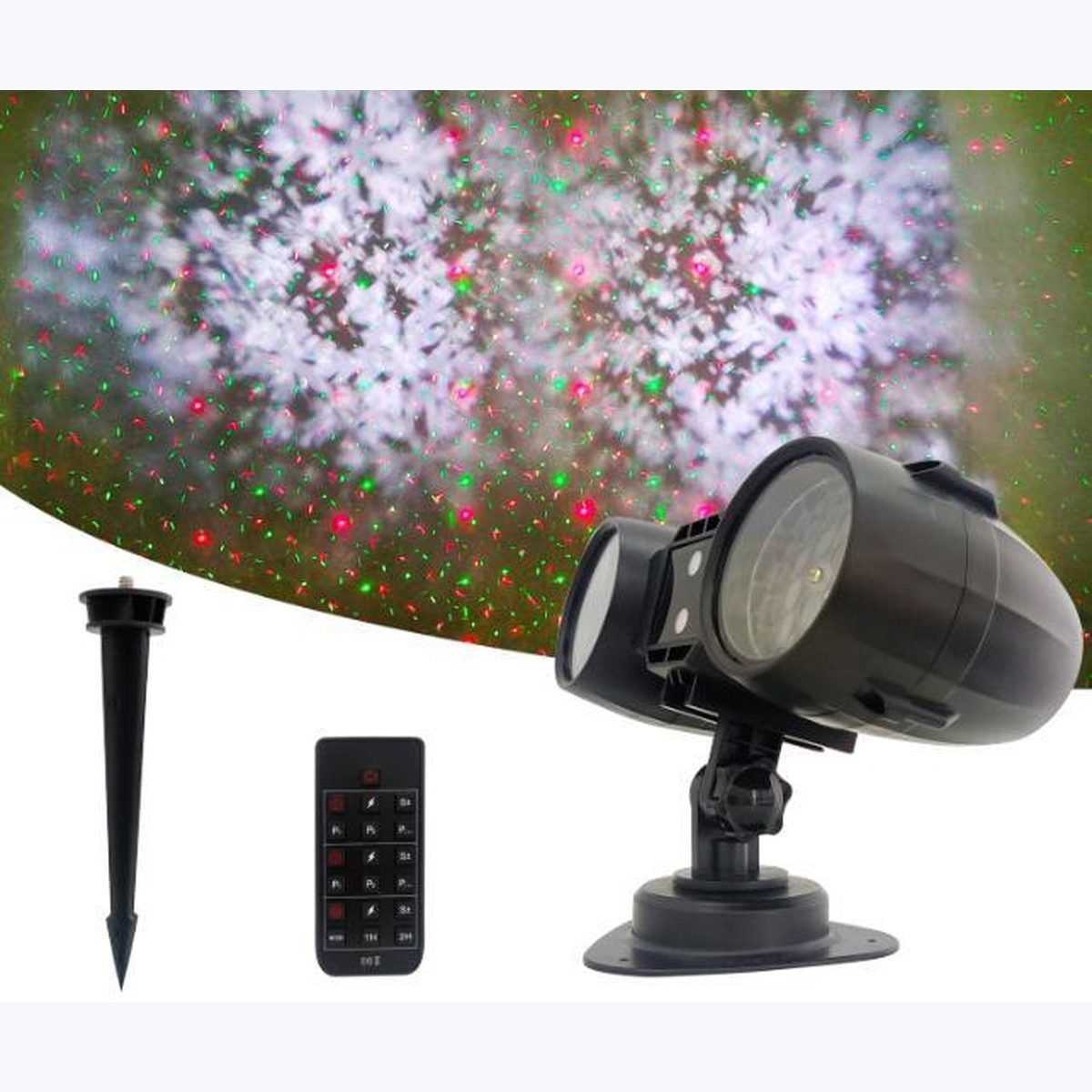
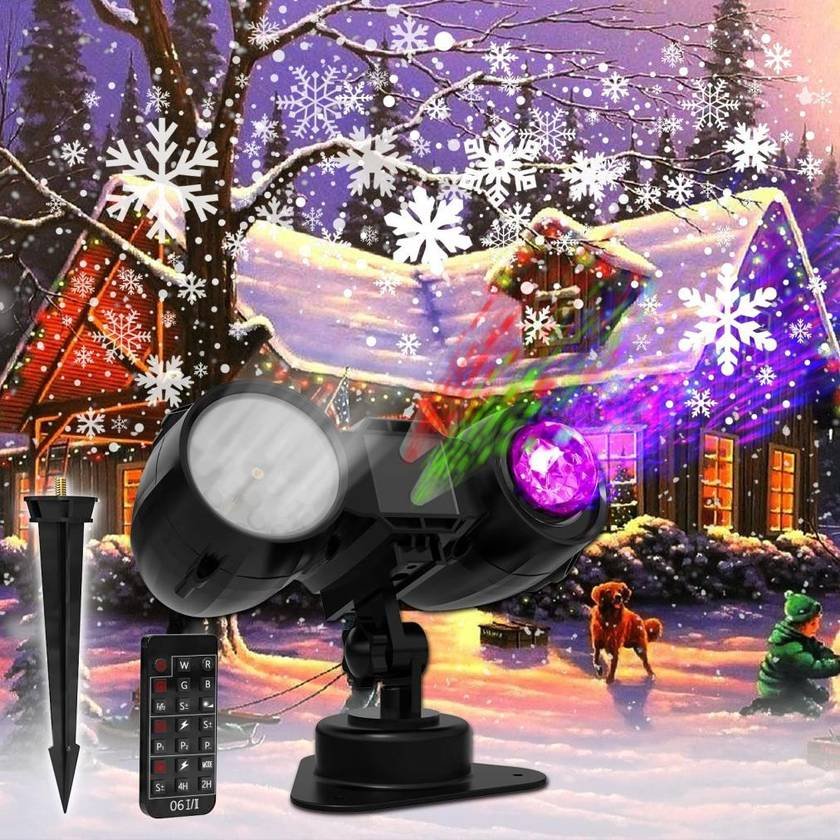
Seasonal inventory has an unforgiving clock.3 A projection selected for a narrow holiday theme may have fewer uses after the season than a general outdoor effect. Even within our holiday line, the buying role differs: BWL-HP-006 visibly carries a Christmas-specific pattern, while products such as BWL-HP-002 and BWL-HP-004 present different mixed or snow-oriented effects. I do not treat those images as proof of commercial demand. I use them to show why a buyer must plan inventory by sell-through path, not merely by product category.
Timing Risk
Our standard factory lead time is 35 days. I state that carefully: it is the factory production lead time we can confirm, not a promise for ocean freight, customs, domestic delivery, or a guaranteed arrival date. A buyer must add every downstream step and leave time to inspect the shipment before installations begin.
Seasonal businesses do not have a normal tolerance for delay. Stock that arrives after the main installation window may be physically perfect and commercially late.4 I therefore ask buyers to work backward from the date on which goods must be in their own warehouse—not from the date of the first customer booking.
Import and Service Risk
Factory-direct buyers also take responsibility for import documents, freight coordination, receipt, allocation, and local spares. The one-year factory warranty remains relevant, but a warranty and an immediate replacement are not the same service. A warranty defines responsibility over time. A local spare defines what your crew can do tomorrow morning.5
This is where many apparently attractive comparisons break. The distributor's stock, smaller release quantities, familiar billing, and local response are not free, but they are operational assets. If you remove the distributor, put a named owner and a budget line beside every one of those assets.
Why Is Purchase Price the Wrong Starting Point for Profitability?
Purchase price is easy to compare because it appears on a document. Lost installation capacity, repeat travel, storage, and unused seasonal stock are harder to see, so they are often omitted. I reverse that order and start with the events that can interrupt revenue.
Purchase price is only one input in a Christmas light business profitability model.6 The larger decision is whether each installed unit can stay in service without consuming another crew visit, another scheduling slot, or replacement stock during the peak window. The right comparison is cost per working installation across the season, not cost per box at the moment of purchase.
Build a Cost Ledger Around Events
I do not ask a small installer to invent a complex financial model. I ask for a ledger with the events that create work. If the team cannot attach an amount yet, it can still record the owner, time, and operational consequence.
| Cost line | What triggers it | Question to put in the model |
|---|---|---|
| Product acquisition | A unit is purchased | Does the comparison include the same accessories, documentation, and packing scope? |
| Inbound allocation | Stock is moved from port or central warehouse | Who receives, checks, stores, and distributes it? |
| Installation labor | A crew travels and installs | How many crew-hours does the chosen system require? |
| Repeat visit | A display needs adjustment or replacement | Which person, vehicle, and peak-season slot are consumed? |
| Spare inventory | Immediate field recovery is required | Where are compatible replacements held and who can release them? |
| Unsold stock | Demand finishes before inventory | Can the product serve another theme, channel, or season? |
| Removal and storage | Seasonal display comes down | Who labels, tests, stores, and retrieves reusable equipment? |
The point is not to make every cost look large. The point is to stop pretending that a cost is zero because it is not printed on a supplier quotation.
For importers and distributors, the same ledger changes shape but not logic. Their critical events include forecast error, inbound delay, dealer support, replacement stock, and the cost of carrying slow seasonal inventory. The installer sees a truck roll; the distributor sees a service request and a stock release. Both are paying for the same interruption at different points in the chain.
How Should You Calculate the Cost of a Repeat Visit?
A repeat visit is often treated as a small warranty issue. I treat it as a capacity event.7 During a quiet month, a short visit may be manageable. During the narrow installation peak, the same visit can displace new work and force the team to reshuffle several customers.
Calculate a repeat visit as crew time plus travel plus replacement handling plus the opportunity cost of the installation slot it consumes. Do not attach a defect percentage unless you have your own verified record. Use your actual service log: number of visits, reason, crew involved, time used, part replaced, and whether the visit displaced scheduled work.
A First-Season Example That Changed the Math
An installer in the Northeast came to me after her first season because the profit on paper did not match the money left in the business. She had selected equipment mainly by purchase price. The units were not all catastrophic failures; that was not the useful diagnosis. The problem was that several displays required repeat attention across three peak weekends, and each visit pulled the same small crew away from new work.
I asked her to stop grouping every return to site under “service” and separate the reasons: setup correction, power issue, product replacement, customer change, and weather-related repositioning. Then I asked her to record travel and crew time beside each one. I did not invent a defect rate from that small set. I showed her that even non-product causes belonged in the operating model because the business still paid for the visit.
The next decision was not “buy the most expensive product.” It was to choose a supply arrangement with compatible spares, clearer installation instructions, and a product mix that her team already understood. She also reserved service capacity instead of scheduling every available hour as a new installation.
Margin is not what remains after you buy the product; it is what remains after the product survives the season inside your operating system.
Use Your Own Denominator
There is no honest universal number for repeat-visit cost.8 A two-person crew in a dense service area has a different denominator from a regional operator covering long distances. One business stores equipment for clients; another removes it and returns it to the owner. One serves houses; another works with commercial properties that have approval and access windows.
I recommend one season of consistent event logging before using the result to change a buying strategy. That record will tell you more about profitability than a generic article promising an industry margin percentage.
When Should an Installer Stop Buying From a Distributor and Import Direct?
This is the question behind many factory inquiries. I do not use ambition as the qualification test. I use proven annual demand and the planning window, because both can be checked before anyone takes on a factory order.
An installer should consider factory-direct importing only when proven annual usage can absorb a normal factory MOQ with a sensible service reserve9, and when the company can order early enough to complete production, inbound logistics, receipt, and inspection before the season. If either condition is missing, a distributor is usually the more professional supply route.

The Inquiry I Advised Against
An eight-person installation company in Texas asked whether it should stop buying through its regional distributor and place a factory order. I asked for the previous season's actual unit usage, not the next season's sales target. The proven volume did not reach our normal 1,000-piece starting point, and the team depended on local replacement support during its busiest weeks.
I told the owner not to buy from us yet. Continuing through the distributor was not a failure to “go direct.” It was the correct division of labor. The distributor could pool demand from many installers, hold several product types, and respond locally.10 The installer could keep its cash and attention on crews, customers, and job quality.
The owner left with two future thresholds to watch: actual annual consumption and the date by which the company could confidently freeze a product plan. When those become stable, importing can be reconsidered with evidence instead of optimism.
Factory-direct is a scale decision, not a badge of sophistication.
A Practical Qualification Table
| Question | Distributor route is stronger when… | Factory-direct may fit when… |
|---|---|---|
| Demand | Annual usage is uncertain or below normal factory scale | Historical usage supports the MOQ plus a planned service reserve |
| Timing | Jobs are booked close to installation dates | Product selection and demand can be fixed far in advance |
| Product mix | The buyer needs small quantities across many models | The buyer can concentrate volume in a controlled range |
| Import capability | No one owns freight, customs, receiving, and allocation | Named people and processes already cover each step |
| Service response | Local next-day replacement is operationally important | The buyer holds and manages compatible local spares |
| Customization | Standard market-ready products are sufficient | Brand, packaging, color, or new-product work justifies factory involvement |
For buyers that do qualify, factory-direct sourcing opens real options. Bowlum's OEM and ODM process separates color-only changes from changes that require new tooling and renewed certification work. Those paths should be planned as product-development decisions, not treated as a last-minute way to decorate a standard order.
What Should You Ask a Holiday Lighting Supplier Before You Order?
A good supplier question should reveal who owns a risk and what evidence exists. I prefer operational questions over broad promises such as “quality is good” or “delivery is guaranteed.”
Ask suppliers to define the product scope, factory lead time, testing process, packing data, spare strategy, warranty boundary, and response path for a field issue. Strong answers name the model, condition, owner, and next action. Weak answers repeat adjectives or merge factory production, freight, and local service into one vague promise.

Six Questions I Would Put in Writing
- What exactly is included with this model? Confirm the unit, power supply, controller, mounting parts, cable, packaging, and any optional accessories.
- What does the stated lead time cover? Separate factory production from freight, customs, and domestic delivery.11 Our confirmed standard factory lead time is 35 days; downstream timing belongs in a separate plan.
- What is tested on every unit? Ask for the process, not a general quality claim. At Bowlum, every unit receives approximately eight hours of aging testing. For any product-specific certification or laser statement, check the exact model rather than accepting a range-wide slogan.12
- What packing data can you provide before the order? Carton dimensions, pieces per carton, and gross weight affect receiving and logistics. Our guide to star projector packing math shows why carton structure deserves its own comparison.
- What should the buyer hold locally as service stock? The answer should match the product configuration and the buyer's response promise. A spare plan is not the same as a warranty.
- What happens after a field issue is reported? Ask who receives evidence, how the batch is traced, what the buyer should record, and what can be done immediately versus in a later shipment.
I also recommend reading a supplier's public explanations before accepting private promises. A factory that can explain test boundaries, missing data, and what it does not control is giving you more useful evidence than a factory that describes every outcome as guaranteed. Our broader factory-verification guide provides a second checklist for that review.
Any supplier who refuses to separate product scope, factory timing, import timing, and local service is asking you to accept a blended promise that no single party can fully control. That is the risk signal—not the fact that the chain has more than one participant.
Conclusion
The question “Is a Christmas light business profitable?” sounds like a request for a margin percentage. It is really a question about whether the business has placed seasonal risk with the organizations best equipped to carry it. Distributors are valuable when local stock, smaller releases, and rapid replacement matter. Factory-direct sourcing becomes valuable when proven volume, early planning, import capability, and service inventory are already real. I will not recommend direct buying from our factory simply because the quotation looks lower on one line. I recommend it when the buyer can name the owner of every responsibility that moves upstream. Before changing suppliers, take last season's actual usage and service log, rebuild the cost per working installation, and let that evidence decide which layer you truly need.
Frequently Asked Questions
Is a Christmas light installation business profitable?
It can be profitable when pricing and capacity planning include equipment, installation labor, repeat visits, local spares, removal, storage, and unsold seasonal stock. A unit purchase price alone cannot show profitability because it omits the events that consume peak-season crew time.
Is buying Christmas projectors direct from a factory always cheaper?
Not in total operating terms. Factory-direct buying may reduce one layer of margin, but the buyer then carries bulk inventory, long planning, import administration, receiving, and local replacement responsibilities. Compare the complete service system, not only the quotation.
What is Bowlum's minimum order quantity for a factory order?
Bowlum's basic factory MOQ is normally 1,000 pieces, with possible variation by model or project. That is a manufacturing threshold, not a recommendation that every installer should import; proven annual usage and service-stock needs should support the quantity.
Does Bowlum's 35-day lead time include shipping and customs?
No. The confirmed 35-day figure is the standard factory production lead time. Ocean freight, customs, domestic transport, receipt, and inspection need their own allowances and should not be presented as if the factory controls them.
How do I calculate the cost of a repeat service visit?
Add crew time, travel, replacement handling, administrative time, and the value of any installation slot displaced by the visit. Use your own service log and do not assume a generic defect rate or universal truck-roll cost.
When should an installer keep buying from a distributor?
Stay with a distributor when annual demand is uncertain, the factory MOQ is too large, jobs are booked close to the season, or local replacement speed matters. The distributor is performing useful inventory and service work in those conditions.
What should I verify before importing holiday projectors?
Verify exact product scope, model-specific facts, factory lead time, packing data, testing process, import ownership, local spare strategy, warranty boundary, and the response path for a field issue. Put each responsibility beside a named organization or person.
"Total cost of ownership", https://en.wikipedia.org/wiki/Total_cost_of_ownership. Research on total cost of ownership and supply-chain risk management supports assessing procurement decisions through the full range of operating costs and responsibilities, although it does not establish profitability for Christmas-light installation businesses specifically. Evidence role: general_support; source type: research. Supports: Supply-chain and procurement research can support evaluating purchases through total ownership costs and risk exposure rather than acquisition price alone.. Scope note: The evidence is general procurement research and does not directly measure seasonal lighting businesses. ↩
"Supply chain management", https://en.wikipedia.org/wiki/Supply_chain_management. Supply-chain studies describe disintermediation as a change in the allocation of logistics, inventory, coordination, and service activities, supporting the mechanism described here without proving that factory-direct purchasing will be cheaper in a particular case. Evidence role: mechanism; source type: paper. Supports: Supply-chain literature can explain how removing an intermediary reallocates inventory, coordination, logistics, and customer-service functions among remaining participants.. Scope note: The mechanism is context-dependent and does not determine the outcome for a specific importer. ↩
"Bridging Forecast Accuracy and Inventory KPIs", https://arxiv.org/html/2601.21844v2. Inventory-management research identifies seasonal demand and forecast uncertainty as factors that increase stockout and excess-inventory exposure, supporting the article's warning about timing while not quantifying the effect for holiday projectors. Evidence role: mechanism; source type: research. Supports: Inventory research can support the relationship between seasonal demand, forecast error, markdown or residual-value risk, and the timing of replenishment.. Scope note: Much of the literature concerns retail or perishable goods rather than durable seasonal equipment. ↩
"Business Metric-Aware Forecasting for Inventory ...", https://arxiv.org/pdf/2308.13118. Research on time-sensitive inventory shows that delivery after a constrained demand window can create lost-sales or residual-value costs even when the goods remain usable, which is contextually consistent with the installation-season example. Evidence role: mechanism; source type: paper. Supports: Operations research can support the idea that late delivery causes lost sales or reduced usefulness when demand is concentrated in a fixed time window.. Scope note: The source should be treated as support for the timing mechanism, not as a direct estimate of holiday-light losses. ↩
"Warranties - FTC Consumer Advice", https://consumer.ftc.gov/articles/warranties. Government warranty guidance generally treats a warranty as a defined obligation to repair, replace, or remedy a product, supporting the distinction between contractual coverage and immediate local stock without proving a particular supplier's response time. Evidence role: definition; source type: government. Supports: Government consumer-protection guidance can define warranty obligations as remedies or coverage terms, distinguishing them from the physical availability of replacement stock.. Scope note: Warranty rules vary by jurisdiction and may not describe commercial installation-service arrangements. ↩
"A Costing Framework for Fusion Power Plants Citation", https://arxiv.org/html/2601.21724v2. Life-cycle costing guidance supports evaluating an asset through acquisition and subsequent operating, maintenance, replacement, and disposal costs rather than purchase price alone, although the specific cost categories must be adapted to the business model. Evidence role: general_support; source type: institution. Supports: Life-cycle costing and total-cost-of-ownership frameworks support including acquisition, operation, maintenance, replacement, and disposal costs in economic comparisons.. Scope note: The framework does not supply the article's missing cost values or establish a universal profitability threshold. ↩
"Contents", https://arxiv.org/html/2607.28290v2. Service-operations research models technician time, travel, and appointment slots as capacity-constrained resources, supporting the treatment of repeat visits as capacity events rather than merely warranty transactions. Evidence role: mechanism; source type: research. Supports: Service-operations research can support treating technician time, travel capacity, and scheduling slots as constrained resources whose use affects other jobs.. Scope note: The operational effect depends on crew size, geography, scheduling flexibility, and demand intensity. ↩
"Travel Time Prediction from Sparse Open Data1footnote ...", https://arxiv.org/html/2602.15069v1. Field-service research indicates that visit costs and service productivity depend on travel distance, labor resources, routing, and appointment constraints, supporting the article's rejection of a single universal repeat-visit cost. Evidence role: general_support; source type: paper. Supports: Field-service and service-logistics studies can support the dependence of visit cost on travel, labor, routing, appointment constraints, and resource utilization.. Scope note: Published service models may use assumptions that differ from seasonal residential or commercial lighting work. ↩
"Operations research models and methods for safety stock ...", https://pmc.ncbi.nlm.nih.gov/articles/PMC7550265/. Inventory-management theory supports sizing orders and service reserves in relation to expected demand, replenishment constraints, and service-level objectives, providing a framework for the proposed MOQ qualification test. Evidence role: mechanism; source type: education. Supports: Inventory-management literature can support linking order quantities and service reserves to forecast demand, replenishment constraints, and desired service levels.. Scope note: The source will not determine what constitutes a sensible reserve without the buyer's failure history and service requirements. ↩
"Wholesaling", https://en.wikipedia.org/wiki/Wholesaling. Descriptions of wholesale distribution identify bulk purchasing, inventory holding, assortment, and downstream supply as core intermediary functions, supporting the distributor role described here without demonstrating that every distributor provides next-day replacement service. Evidence role: definition; source type: encyclopedia. Supports: Authoritative descriptions of wholesalers and distributors can support their roles in buying in bulk, holding inventory, breaking bulk, and supplying downstream customers.. Scope note: Actual service speed and product range depend on the distributor's location, inventory policy, and contracts. ↩
"Know Your Incoterms", https://www.trade.gov/know-your-incoterms. International trade and logistics guidance distinguishes manufacturing time from transport, customs-clearance, and inland-delivery stages, supporting the article's separation of factory lead time from end-to-end arrival time. Evidence role: definition; source type: institution. Supports: International trade guidance can distinguish production activities from transport, customs, and delivery stages and identify which parties control each stage.. Scope note: The exact timing and responsibility depend on the shipment route, trade terms, port conditions, and customs procedures. ↩
"15 USC 2063: Product certification and labeling", https://uscode.house.gov/view.xhtml?req=(title:15%20section:2063%20edition:prelim). Regulatory guidance commonly requires conformity and safety documentation to identify the products or models to which it applies, supporting model-specific verification of certification and laser claims rather than reliance on range-wide descriptions. Evidence role: expert_consensus; source type: government. Supports: Regulatory guidance can support verifying conformity documents, safety classifications, and declarations against the specific product or model covered by the documentation.. Scope note: Applicable requirements vary by jurisdiction, product category, and intended use, so the source may not cover every market in which the equipment is sold. ↩