
A decorative projector can look professional and still be controlled like a home appliance. That is not automatically a problem. A remote may be exactly right for one independent zone; an app may be right for a small group; DMX512 may be right when a contractor needs the projector to enter a larger lighting system. The problem is not choosing the simplest control. The problem is buying a “DMX version” before anyone has defined what the controller, show file, addressing plan and handoff are expected to do.
When I review a professional-control inquiry, I do not start by counting effects. I ask who owns the control system, whether projectors must change together, which cues come from the wider show, and what document the integrator needs before commissioning. Bowlum has two outdoor projector families with DMX512 professional versions—BWL-OL-003 and BWL-OL-004—but our current catalog does not state their channel count or addressing method. I leave those fields blank until the exact technical document is supplied.
A decorative projector needs DMX512 when it must behave as one controlled fixture inside a coordinated lighting system. If the project only needs local on/off, effect selection or a simple timer, a remote or app may be enough; DMX is justified by integration and handoff, not by the word “professional.”
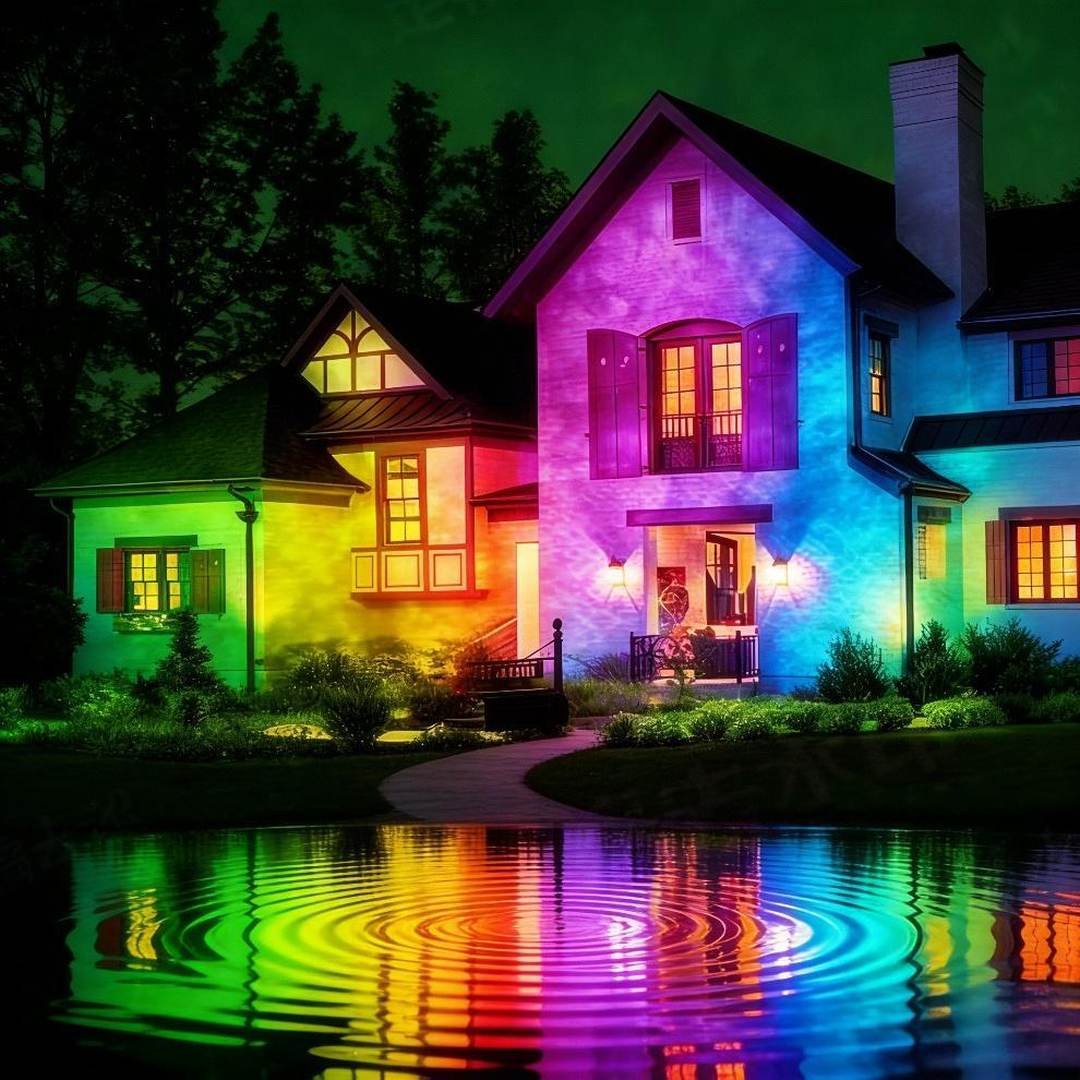
This article is a protocol-selection guide, not a claim about verified search volume. It explains the integration boundary professional buyers can reuse with any supplier. The current DMX-capable families sit inside our outdoor projector range, while development beyond an existing version follows the OEM and ODM boundary.
How Do Remote, App and DMX512 Control Differ on Holiday Projectors?
The three controls are sometimes presented as basic, smart and professional. That ranking is misleading. Each one has a different owner, operating range and handoff burden.
A remote controls one nearby fixture or small local zone; an app adds local software control and scheduling1; DMX512 exposes fixture functions to a separate professional controller2. Choose by system boundary, operator and commissioning plan—not by assuming the most complex interface is always better.3

Control Ownership Changes With the Interface
| Control path | Normal owner | Strongest fit | Main buying question |
|---|---|---|---|
| Remote | Local operator | One fixture or a small independent area | Can the operator reach and identify the correct unit? |
| App | Local site staff or small-zone operator | Scheduling and effect control for a limited deployment | Who owns the phone, account, software and handoff? |
| DMX512 | Lighting programmer or integrator | Coordinated cues across fixtures and systems | What exact functions, addressing and interface documents are available? |
I ask buyers to name the person who will operate the system after installation. A project can specify DMX during design and still leave a facility team with no programmer, no show file and no documented default state. In that case, the “professional” interface has created an operating dependency the owner did not intend.
The opposite mismatch also happens. A contractor may choose several app-controlled units, then discover that every zone must change on one event cue. If the product was never selected for external control, no amount of commissioning effort can turn a local app into a defined system interface.
Simplicity Is a Valid Engineering Choice
A remote is not inferior when the fixture is independent and the operator can verify it. An app is not automatically scalable because several products share the same phone screen.4 DMX is not automatically complete because a product name contains the protocol.
I choose the least complex control that satisfies the operating brief and can be handed to the next owner. That decision reduces points of failure while keeping integration capability where the project genuinely needs it.
Why Would One Decorative Projector Need DMX512 at All?
The effect comes from one fixture, so buyers may assume local control is enough. The need for DMX appears when the effect must relate to other fixtures, time cues or operator commands.
Use DMX512 when multiple projectors must change together5, when a show controller must call a repeatable state, or when the projector must join an existing professional lighting network. The protocol is valuable because it creates a defined external control boundary.6
Three System-Level Reasons
Synchronization. Two fixtures can be individually adjustable without being synchronized. A coordinated facade may require effect changes to occur on the same cue, not whenever separate apps happen to respond.
Central cueing. A property may want projection to enter with architectural wash lights, music or an event sequence. The show controller needs a stable way to request a state and return to a known state.
Handoff. Integrators need a repeatable commissioning file and the operator needs a predictable control point. A documented external interface can make the projector serviceable within the wider system7 instead of depending on one installer’s phone.
A Control Integration Example
An event contractor selected several decorative projectors for an entrance sequence, then added “DMX required” near the end of the sample discussion. The request did not name the controller, required functions, network layout or default behavior after power recovery. Both sides recognized the protocol name, but neither had defined the integration.
I paused the assumption and asked the contractor to separate four needs: synchronized start, effect selection, intensity or speed control if supported, and the behavior required when the wider controller was unavailable. I also asked for the controller and addressing plan that would be used during commissioning. Those questions exposed which functions were essential and which were only expected because other fixtures had them.
The next step became an integration sample with a document checklist, not a bulk promise. The contractor could test the exact supported functions and decide whether the projector belonged in the show. Another buyer can reuse that outcome: turn “DMX required” into a list of commands, states and handoff evidence before approving the version.
A protocol name is not an integration specification; the useful specification is the set of external commands and states the project can test.
What Changes Between the App and DMX Versions of the Same Projector Family?
Shared housing can make two versions look interchangeable. The control path may still change the internal configuration, documentation, sample plan and production identity.
Treat app and DMX versions as separate controlled configurations even when they share a product family. Name the version on the sample, quotation, purchase order, packing and acceptance plan, and do not assume one version’s interface behavior exists in the other.
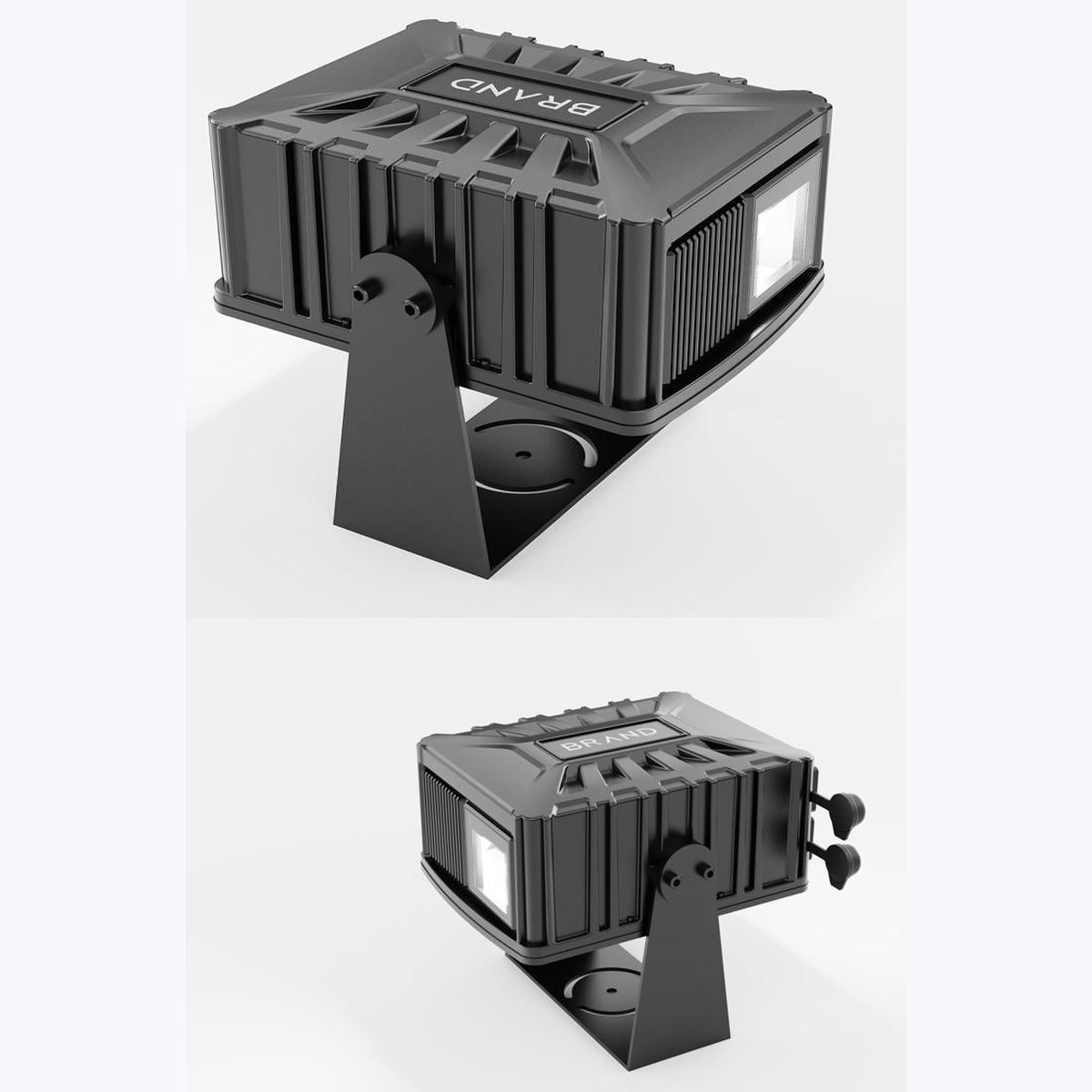
Two Bowlum Families With Professional Versions
BWL-OL-003 is recorded as an outdoor smart water-ripple projection family with app and DMX512 professional versions. Its catalog record lists IP65, a one-piece die-cast aluminum housing, scheduled timing, more than 1,000 color selections, a recommended projection distance of about 4.9 m and a coverage range of 50–200 m². The source labels 40W as rated output power; I do not rewrite it as input power.
BWL-OL-004 is recorded as a 7-color app family version and DMX512 professional version. Its record lists IP65, a one-piece die-cast aluminum body, 12V/2000mA, a 5 m cable, a 5–20 m projection-distance range and 50–300 m² coverage. It also has a complete six-piece carton row.
Those product facts identify the families. They do not fill the missing protocol fields. The current catalog does not state DMX channel count, channel function, addressing method, connector arrangement, termination guidance or compatibility details. I will not infer them from another stage-lighting product.
Version Identity Must Survive Every Handoff
| Handoff | What should name the version | Failure if it does not |
|---|---|---|
| Sample | Label and sample record | Buyer tests an app unit while expecting DMX production |
| Quotation | Exact version and options | Commercial line hides a different control BOM |
| Purchase order | Controlled product identity | Factory cannot tie acceptance to one configuration |
| Packing | Version identifier | Warehouse cannot separate variants |
| Commissioning | Interface document and test result | Integrator receives a fixture without a known control map |
I use one version name across those records. If marketing calls it “pro,” production calls it “DMX,” and the sample label calls it only by the family, the buyer has three identities for one decision. That is where avoidable disputes begin.
What Is the Commercial Value of Scheduling and Central Control?
Scheduling is often sold as an energy-saving feature. Without a measured operating baseline, that can become an unsupported savings claim. The stronger value is operational: a known on/off window, fewer manual actions and a repeatable site state.
Scheduling creates value when it gives the property a documented operating window and default state.8 DMX adds value when those states must be called by a central system; an app timer can be enough when the zone is independent and the handoff is simple.
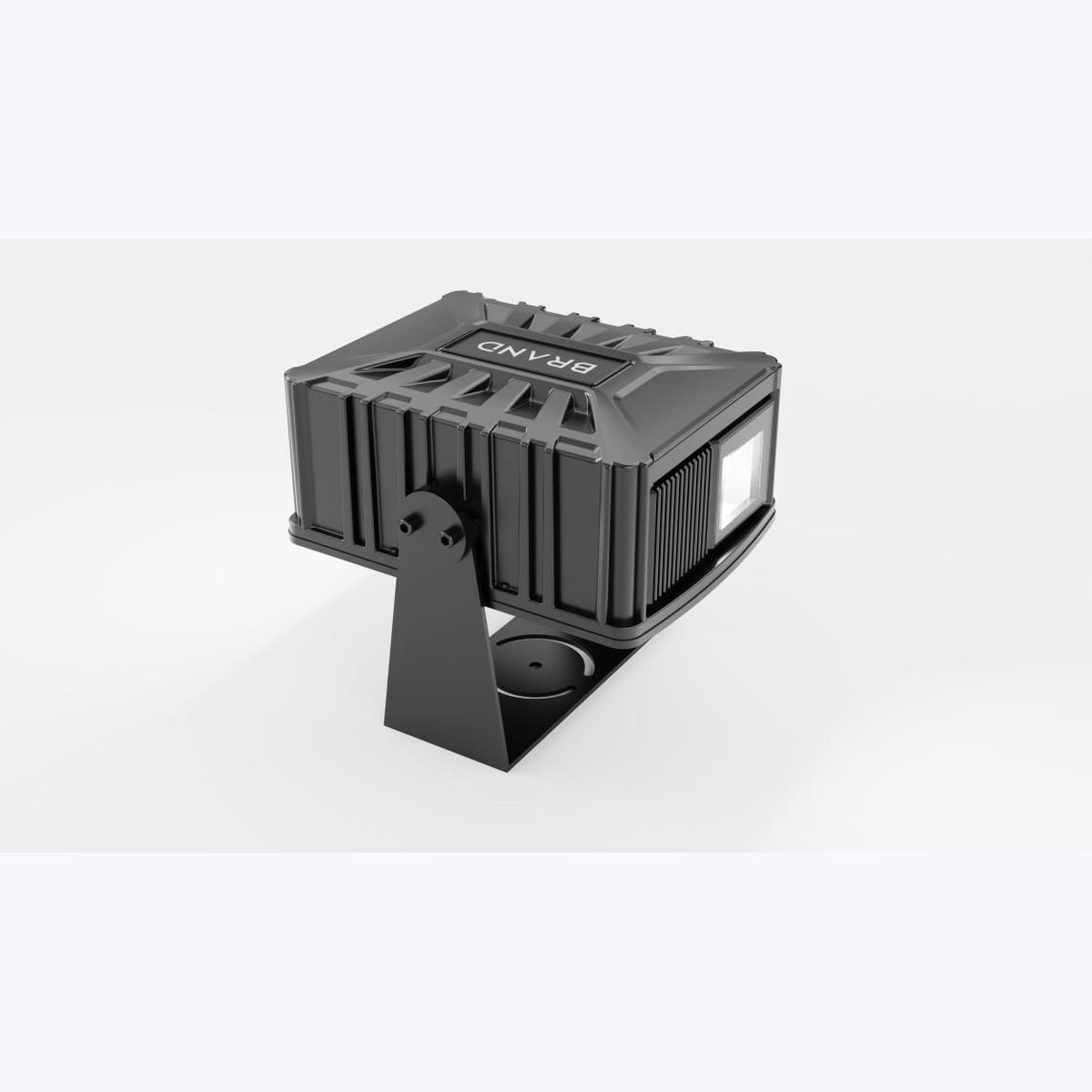
Describe the State Before Choosing the Interface
I ask the buyer to write a small state table: off, normal evening, event cue, maintenance and power-recovery behavior. Each row says who calls the state, what the projector should do and how the operator confirms it. This table is clearer than asking whether the unit has a timer.
An independent garden zone may need one scheduled start and stop. An entrance linked to a building event may need centrally called cues. A temporary display may need the installer to restore a known state after every power cycle. The correct interface follows from those states.
Avoid Unsupported Savings Arithmetic
Central control can reduce manual visits or prevent fixtures from operating outside the intended window9, but the value depends on site labor, existing controls and operating practice. We do not have verified US facility-labor data for a universal savings number, so I do not publish one.
The buyer can calculate value from their own inputs: number of zones, manual actions, operating windows, event changes and cost of a missed state. The factory’s job is to define what the fixture can accept and how it behaves; the integrator’s job is to design the system; the owner’s job is to value the operational change.
Which DMX Documents Must Exist Before a Buyer Approves the Sample?
A sample can light and respond to a basic command while still be impossible to commission cleanly.10 The missing element is often documentation, not hardware.
Before approving a DMX projector, require the exact channel/function map, addressing method, physical connection details, supported control behavior, default and power-recovery states11, and a version identifier. If any item is missing, keep it as an open acceptance condition.
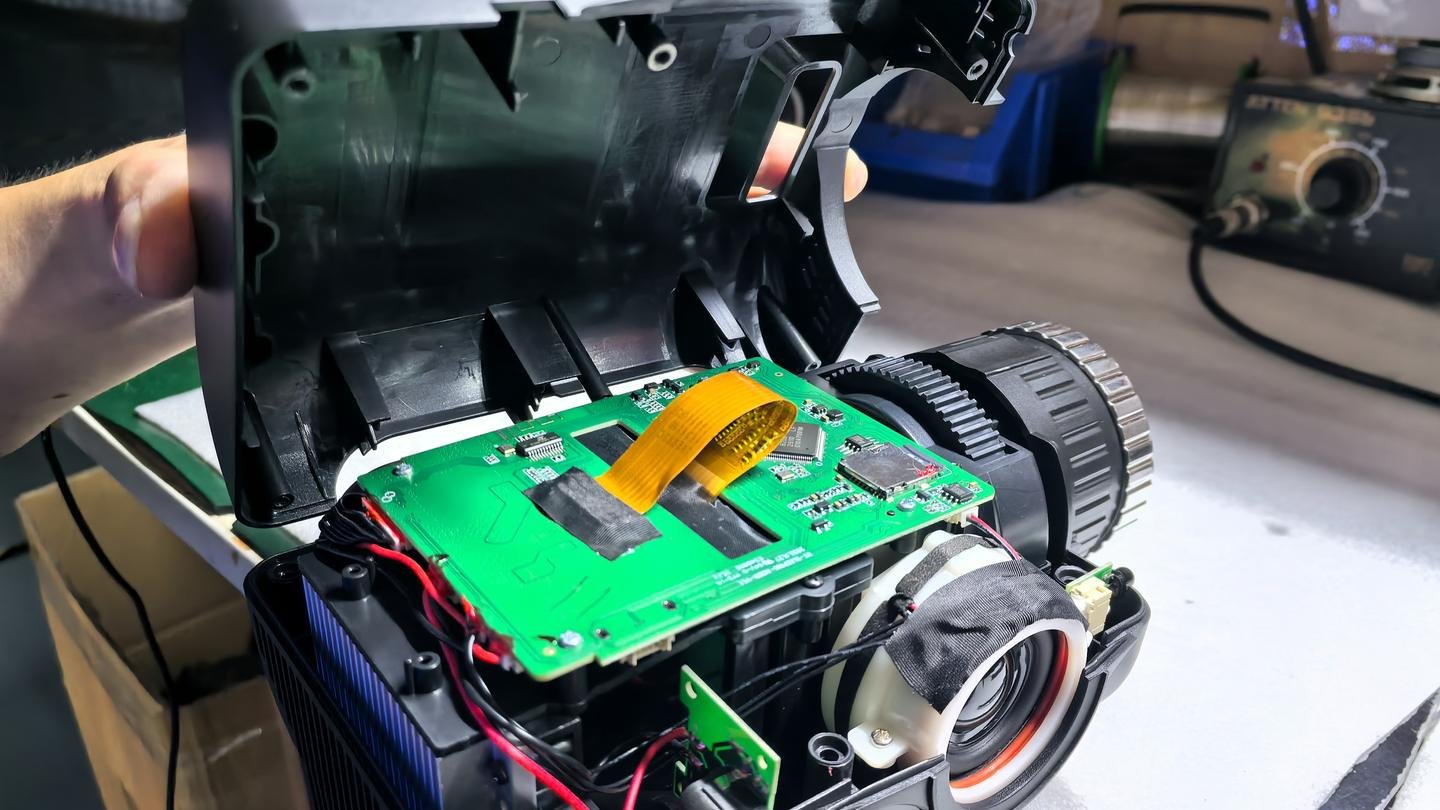
The Minimum Interface Packet
- Version identity — exact product and control configuration.
- Function map — each supported external control function and valid behavior.
- Addressing method — how the integrator assigns and verifies the fixture.
- Physical interface — connector and wiring details for the exact version.
- Default behavior — state at power-up, signal loss and recovery.
- Sample test record — controller used, functions tested and result.
Our current source records do not close items two through five for BWL-OL-003 and BWL-OL-004. That is an honest documentation gap. The products are real DMX professional variants, but the catalog is not yet an integration manual. A buyer should request the missing packet for the selected version before treating the interface as approved.
How I Run the Bench Check
I start with the labeled sample and photograph that identity beside the controller used for the check. The integrator then follows the supplied addressing procedure without relying on an undocumented factory shortcut. We call each required state, remove and restore the control signal, cycle power, and record the result that the site operator should expect. If a required function cannot be named in the interface packet, it is not silently accepted because the effect looked correct once.
I also ask someone who did not build the sample to repeat the setup from the document. That handoff test is deliberately simple: it shows whether the knowledge lives in the packet or only in one technician’s memory. A professional fixture should not require the commissioning team to reverse-engineer its normal behavior on site.
The final record connects four identities: product version, interface document revision, controller environment and test result. If any of them changes after approval, the buyer can decide whether the change needs a focused retest or a complete sample review. This is the control equivalent of keeping a product specification attached to the exact SKU.
Write the RFQ Around the System
The RFQ should state controller environment, number of projectors, zone behavior, required cues, installation topology, operator and handoff deliverables. It should also say which behavior is essential and which is optional. That prevents a general “DMX supported” reply from being mistaken for complete compatibility.
If the buyer wants a new interface, changed electronics or a control behavior outside the existing version, the request crosses into the new-product path. That is not a small control tweak. Under our factory boundary, any non-color change requires tooling and renewed certification work as a new product, with 2,000 units or more and about 95 days.
What Can Go Wrong When DMX Is Specified Too Late?
Late protocol decisions do not stay inside commissioning. They can change the product version, sample, wiring, mounting access, documentation, schedule and the person responsible for operating the site.
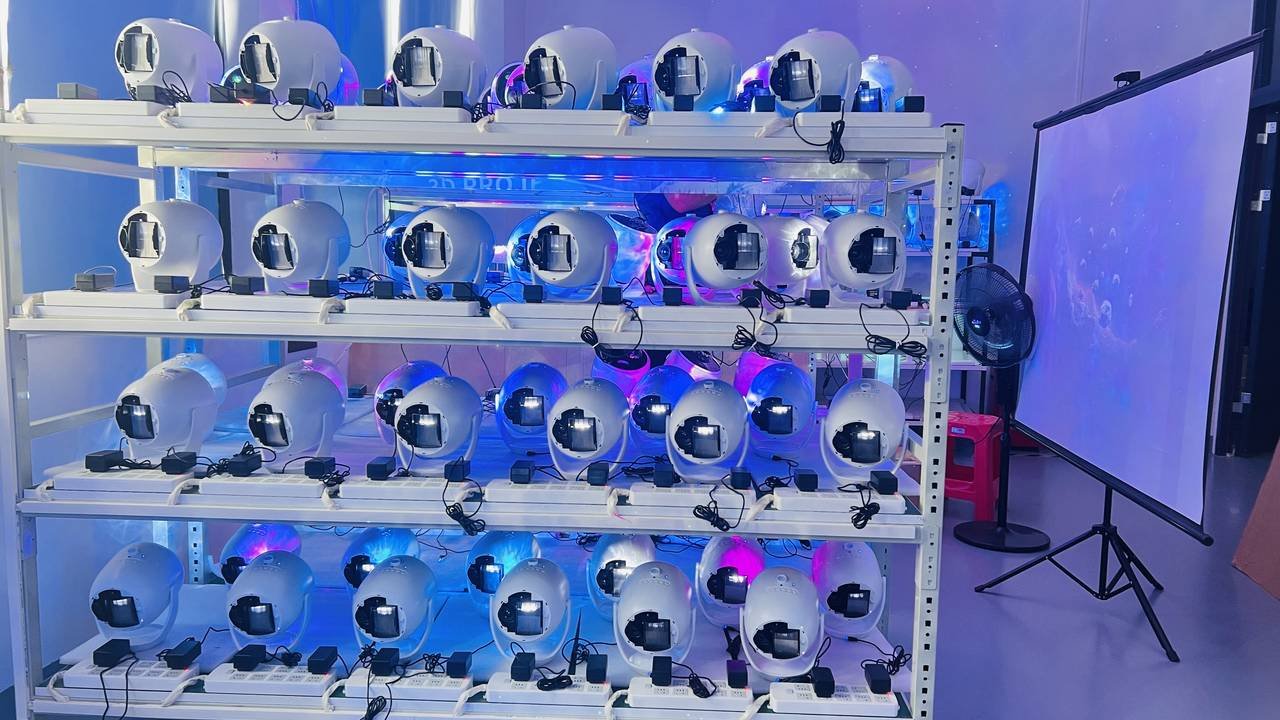
Specifying DMX after product and installation decisions are frozen can create a version mismatch, missing control documentation, incompatible site assumptions and an unplanned development path.12 Close the control boundary before sample approval, not after production is scheduled.
Four Late-Stage Failure Modes
The wrong sample. The buyer approves optical effect and housing on an app version, then expects the DMX version to be identical without testing its actual configuration.
The missing handoff. The fixture responds during a factory demonstration, but the installer receives no channel map or addressing instructions.
The installation trap. Mounting and cable routes are fixed before the physical control interface is confirmed.
The schedule reset. A requested electronic change is described as minor even though it moves the project into a new-product path.
I stop production release if the accepted control behavior cannot be named and reproduced. The correction is a bench integration test using the intended controller or a representative environment. Record the exact sample, address procedure, commands, default states and result. If the buyer cannot run that test yet, the interface remains open.
This is not defensive paperwork. It is the bridge between a fixture that works in isolation and a system the contractor can commission again. Any supplier who cannot provide that bridge is asking the integrator to discover product behavior on the installation schedule.
Approve the control behavior, document and handoff together; approving only the illuminated effect leaves the professional version unfinished.
Conclusion
DMX512 belongs on a holiday projector when the product must enter a controlled system: synchronized units, central cues, repeatable states and a professional handoff. It does not belong merely because the project is large or the product is described as commercial. A remote or app can be the more professional choice when it satisfies the operating brief with fewer dependencies.
My decision rule is to ask for the state table and interface packet before I approve the version. For BWL-OL-003 and BWL-OL-004, I can confirm the DMX professional variants and their product-level records; I cannot yet confirm the missing channel and addressing details from the catalog, so I leave them open for the exact technical document and sample test. That boundary is more useful to an integrator than a confident guess.
Frequently Asked Questions
What is DMX512 used for in holiday lighting?
It lets a professional controller call defined fixture states as part of a coordinated lighting system. It is useful for synchronization, central cues and repeatable handoff between integrator and operator.
Does every commercial holiday projector need DMX?
No. A remote or app can be sufficient for an independent fixture or small zone. DMX is justified when the projector must integrate with an external professional control system.
What is the difference between app and DMX projector versions?
An app version uses local software control, while a DMX version exposes supported functions to a separate controller. Treat them as different controlled configurations and test the selected version.
How many DMX channels do Bowlum projectors use?
The current catalog does not state the channel count for BWL-OL-003 or BWL-OL-004. Buyers should keep that field open until the exact channel/function map is supplied for the selected version.
What documents should come with a DMX projector sample?
Request version identity, function map, addressing method, physical-interface details, default and recovery states, and a sample test record using the intended controller environment.
Can DMX scheduling prove a labor or energy saving?
Not by itself. The value depends on site operating windows, existing controls, manual actions and local costs. Use the buyer’s own baseline rather than a universal savings claim.
When should DMX be specified in a factory project?
Close the control boundary before sample approval and production scheduling. A late electronic or interface change can move the project into a new-product path.
"Developing Flexible, Networked Lighting Control Systems to ...", https://www.energy.ca.gov/sites/default/files/2023-03/CEC-500-2023-005.pdf. Research on connected lighting systems distinguishes direct handheld operation from software-mediated control, including scheduling and configuration functions provided through mobile applications. Evidence role: general_support; source type: research. Supports: Research on residential and architectural lighting controls should support the distinction between direct handheld control and software-mediated control with scheduling features.. Scope note: The cited distinction describes common control patterns and does not prove the capabilities or operating range of every remote or app-controlled projector. ↩
"DMX512", https://en.wikipedia.org/wiki/DMX512. A technical reference on DMX512 describes the protocol as a digital control system for transmitting control data from a controller to lighting fixtures, supporting its characterization as an external fixture-control interface. Evidence role: definition; source type: encyclopedia. Supports: A recognized technical reference should define DMX512 as a digital control protocol used by controllers to transmit control data to lighting devices.. Scope note: This general protocol definition does not establish the functions, channel count, or implementation of any particular projector. ↩
"Industry Usability Reporting | NIST", https://www.nist.gov/itl/tted/industry-usability-reporting. Systems-engineering and human-factors guidance generally treats operator needs, defined requirements, and maintainability as design inputs, supporting selection of a control interface according to operational context rather than complexity alone. Evidence role: expert_consensus; source type: research. Supports: Systems-engineering and human-factors literature should support matching control interfaces to user roles, operational requirements, and system boundaries.. Scope note: Such guidance supports the decision principle but does not prescribe remote, app, or DMX512 for a particular installation. ↩
"Mobile Applications for Patient-centered Care Coordination", https://pmc.ncbi.nlm.nih.gov/articles/PMC4587034/. Human-factors studies of multi-device interfaces indicate that aggregating devices in a single application does not by itself resolve identification, coordination, workload, or access-management problems. Evidence role: general_support; source type: research. Supports: Human-factors research should support the distinction between displaying multiple devices in one application and providing reliable, scalable multi-device control.. Scope note: Findings from smart-home or general mobile interfaces may not transfer directly to commercial decorative-lighting deployments. ↩
"Outdoor Decorative Projector Manufacturer - Bowlum", https://bowlum.com/outdoor-laser-projectors/. Technical documentation on DMX512 explains that addressed fixtures can receive common control data from a lighting controller, providing the mechanism for coordinated changes across multiple fixtures. Evidence role: mechanism; source type: institution. Supports: A neutral lighting-technology institution should explain how a shared DMX control stream permits coordinated control of multiple addressed fixtures.. Scope note: Common control data does not guarantee perfectly simultaneous visible output because fixture processing, network conditions, and device behavior can introduce differences. ↩
"Practical HPCQC Integration with QDMI: A Real-Hardware ...", https://arxiv.org/html/2604.19869v1. Systems-integration research identifies standardized interfaces as a means of defining subsystem responsibilities and enabling communication across independently developed components, which is consistent with describing DMX512 as an external control boundary. Evidence role: mechanism; source type: paper. Supports: Systems-integration literature should explain how standardized interfaces separate component responsibilities and enable communication between independently developed subsystems.. Scope note: Interface standardization alone does not ensure interoperability when implementations, documentation, connectors, or supported functions differ. ↩
"Characterization of a Handoff Documentation Tool Through ...", https://pmc.ncbi.nlm.nih.gov/articles/PMC4419926/. Configuration-management guidance treats controlled interface descriptions and version records as aids to repeatable operation, maintenance, and transfer of system knowledge. Evidence role: general_support; source type: government. Supports: Government or engineering guidance should support the role of configuration records and interface documentation in repeatable maintenance and system handoff.. Scope note: This supports the documentation principle generally and does not demonstrate serviceability for a specific projector model. ↩
"About Building Controls - Department of Energy", https://www.energy.gov/cmei/buildings/about-building-controls. Building-automation literature describes schedules and defined operating modes as mechanisms for repeatable operation and management of control-system states. Evidence role: general_support; source type: research. Supports: Building-automation research should support the use of schedules and defined operating states to structure recurring system operation.. Scope note: Operational value depends on correct schedules, commissioning, occupancy patterns, and local procedures; the evidence does not establish universal savings. ↩
"Extended Reality for Smart Built Environments Design", https://arxiv.org/html/2405.06930v1. Building-energy evaluations have found that automated scheduling and centralized lighting controls can reduce operation outside intended periods in some facilities, supporting the possibility of reduced manual intervention or runtime. Evidence role: statistic; source type: government. Supports: A government building-energy study should provide measured evidence that automated or centralized lighting controls can reduce unnecessary operating time or manual intervention under specified conditions.. Scope note: Results are site-specific and cannot establish a universal labor or energy saving for decorative projectors. ↩
"ACCEPTANCE TESTING", https://ntrs.nasa.gov/api/citations/19710021557/downloads/19710021557.pdf. Commissioning guidance distinguishes equipment-level functional checks from integrated-system verification and documentation, supporting the claim that a basic response test alone is insufficient for commissioning readiness. Evidence role: expert_consensus; source type: education. Supports: Commissioning guidance should distinguish functional testing of individual equipment from verification of integrated operation, documentation, and handoff.. Scope note: The guidance is general and does not define the acceptance criteria for a particular DMX projector. ↩
"DMX512", https://en.wikipedia.org/wiki/DMX512. DMX commissioning guidance identifies fixture mode or channel assignments, addressing, and physical connection information as core configuration data needed to control and verify a device. Evidence role: definition; source type: institution. Supports: A recognized lighting-controls institution or standard should identify channel assignments, addressing, physical wiring, and operating modes as necessary information for configuring a DMX fixture.. Scope note: Power-recovery behavior and the exact documentation packet may be specified by the manufacturer rather than by the DMX protocol itself. ↩
"Systems Engineering for ITS - Risk Management", https://ops.fhwa.dot.gov/seits/sections/section3/3_4_4.html. Research on requirements change and systems integration reports that late changes to interfaces or configurations can increase rework, coordination demands, and delivery risk, consistent with the stated failure modes. Evidence role: general_support; source type: paper. Supports: Research on requirements volatility and late design changes should support the association between late interface decisions and rework, coordination problems, or schedule risk.. Scope note: The cited research supports the general project-risk mechanism and does not establish the commercial or certification consequences for Bowlum products. ↩