
Laser safety questions for suppliers often arrive as one sentence: “Is this projector safe?” When I receive that question, I cannot give the buyer a useful sourcing answer until I know the exact product, selected version, supplied power set, evidence being referenced, factory release method and intended project-review path. The word safe is carrying several decisions that belong to different people and different records.
That problem becomes sharper for an outdoor seasonal project. A buyer may be evaluating a product, a procurement team may be comparing suppliers, and a local reviewer may later assess a specific site. One document cannot answer all three jobs. A supplier statement about classification is not automatically the evidence behind it; a factory check is not a market permission; and a product file does not approve an aiming plan or venue.
The best laser safety questions for suppliers form one traceable chain: identify the exact SKU and configuration, record the stated classification and standard, inspect the identity and scope of supporting evidence, define the factory release method, locate retrievable records, and assign project/site acceptance to the buyer's appointed reviewer. No single certificate, label, photograph or test process proves the whole chain.
This is a purchasing and supplier-verification checklist, not a legal guide. It does not state what a country, city, venue, insurer or other reviewer will accept. My goal is narrower: help a buyer recognize a complete supplier answer, an incomplete answer and a question that belongs outside the supplier's proof boundary.
Which Laser Safety Questions for Suppliers Belong in the First RFQ?
The weak opening question asks whether a product is safe. It invites a yes/no answer before the object, claim and reviewer have been defined.
I begin with six connected questions: what exact product/configuration is being discussed, what classification and standard are being claimed, what evidence supports that statement, what identity and scope the evidence covers, how units are released, and what records can be retrieved. I add a seventh owner for project/site review so that supplier evidence is not mistaken for local acceptance.
I use an answer sheet rather than a free-form email because the questions depend on one another. A classification answer without an exact product identity is difficult to map. An evidence file without a named claim can be impressive but irrelevant. A release statement without a record location cannot be followed into the shipped units. A site question without a designated reviewer tends to drift back to the supplier even when the supplier cannot own that decision.
| RFQ field | Question to ask | A usable answer contains | Keep open when |
|---|---|---|---|
| Exact identity | Which public SKU, selected version and supplied configuration is in scope? | One dated identity tied to the quotation or review packet | The answer names only a family, photograph or informal product name |
| Stated classification | What class is the supplier stating for that exact scope? | The claim in writing, with the scope clearly named | The statement moves between product family, model and shipment |
| Named standard | Against which standard is that classification being discussed? | Full standard reference and applicable revision as supplied | Only a badge, acronym or generic “certified” wording appears |
| Supporting evidence | Which report, certificate, declaration or controlled record supports the statement? | Document type, identifier, issue/revision state and holder | The file is promised but not mapped |
| Evidence scope | Which tested/model identity and configuration does the evidence cover? | A visible path from the document to the product under review | The product and document use different names with no mapping |
| Release method | Is the control performed per unit, by a defined sample, or through another stated method? | Method, frequency, acceptance basis and responsible function | “QC checked” is the only description |
| Record retrieval | What unit/batch reference and result record can be retained or retrieved? | Record type, identifier, owner and storage/retrieval path | A process is described but no record state is given |
| Project review | Who owns site, aiming, operating and local acceptance? | Buyer-appointed owner, open questions and decision date | The supplier is being asked to approve a site it has not reviewed |
The answer sheet does not require every row to be “approved” at the first RFQ. It requires every row to have a visible state. I use received and mapped, requested, supplier clarification pending, buyer/local review pending, or not applicable with reason. An honest open state is more useful than a confident word covering an unknown scope.
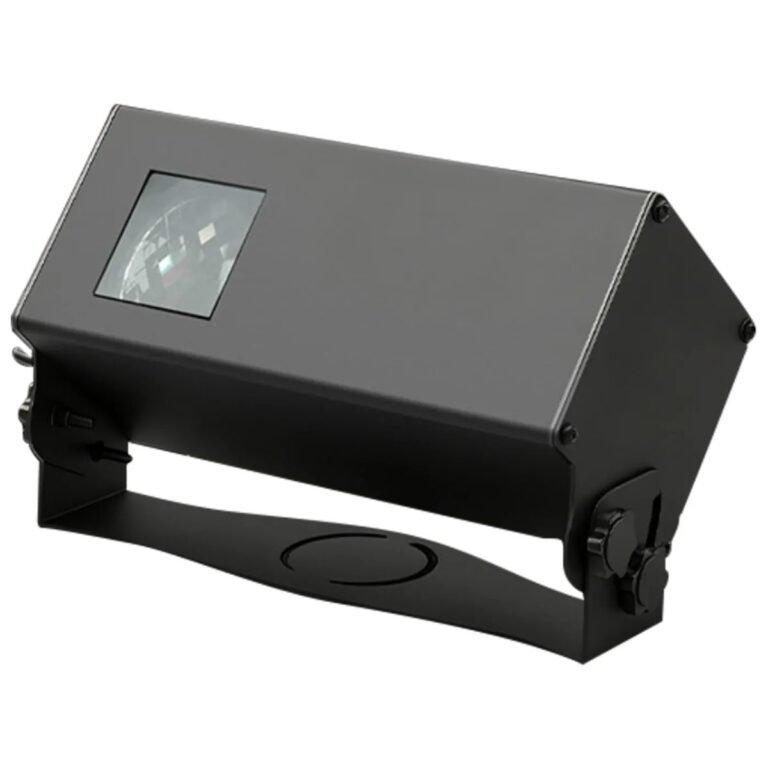
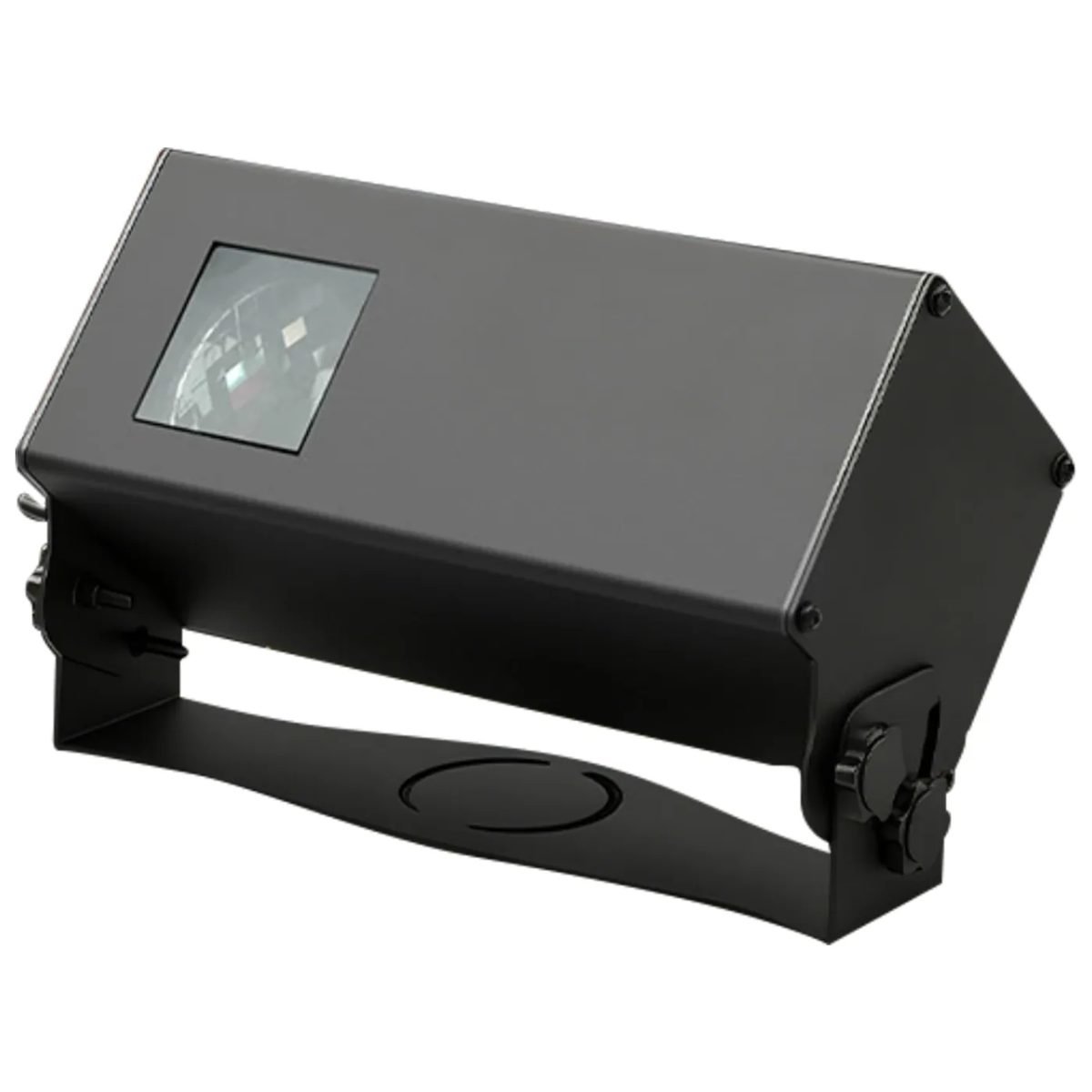
BWL-OL-001 is useful here only as an identity example. The public SKU anchors a specific product record, but the photograph above does not show a class, standard, test result or project approval. The same discipline applies even when a marketing image looks highly specific: visible form is not evidence scope.
I never let the word “safe” replace the columns. If the identity, evidence, release method and decision owner are not connected, the answer is not yet ready for a sourcing decision.
Why Must Exact Product Identity Come Before a Laser-Safety Claim?
Buyers sometimes start with the document because it appears more authoritative than a product sheet. That reverses the verification order.
Freeze the exact public SKU, selected sellable version, supplied power set and controlled document revision first. Only then can a classification statement or evidence file be checked for relevance. A product family name, similar housing or shared marketing image is not a dependable bridge between the unit under review and the evidence.
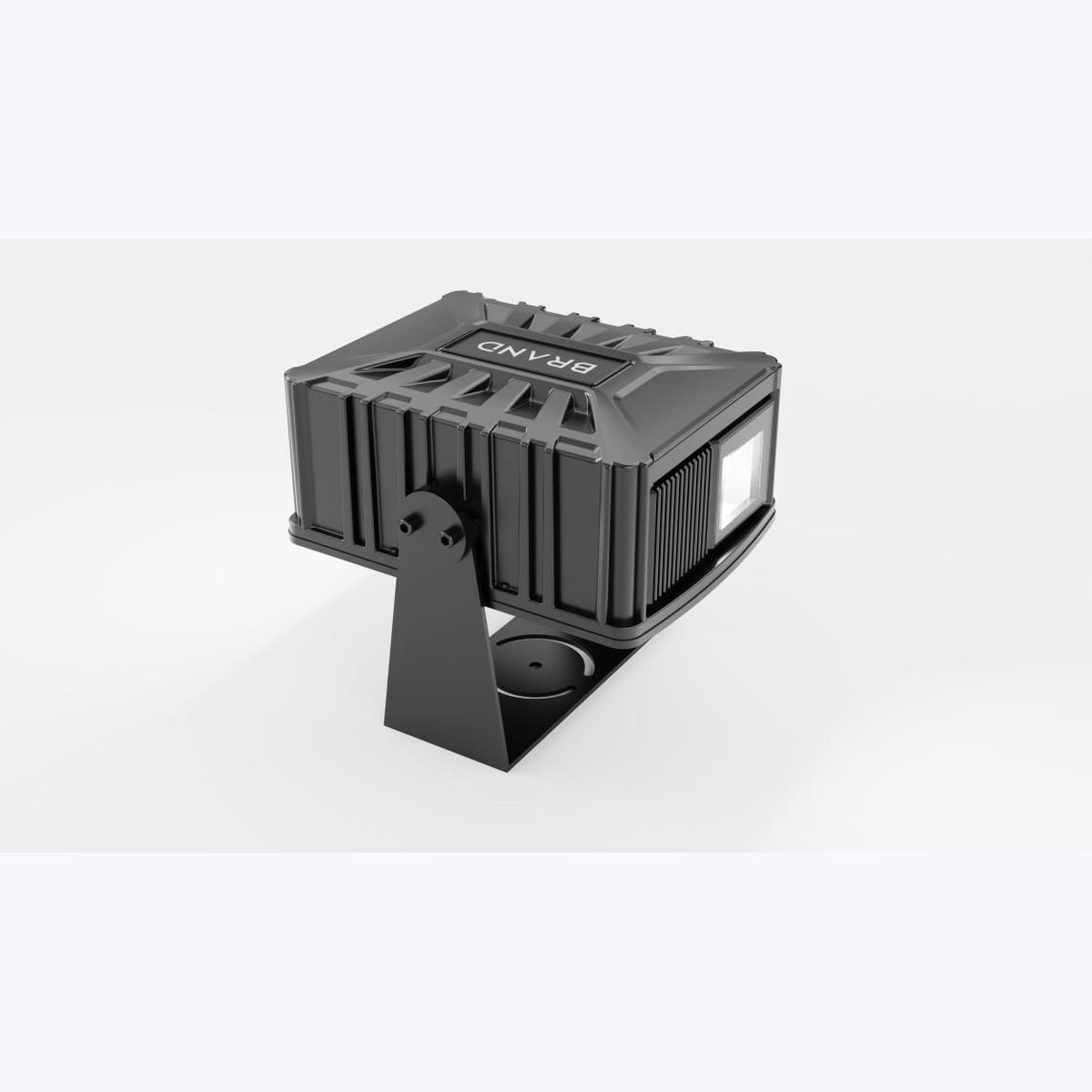
BWL-OL-004 illustrates why a public SKU can still need another identity layer. Its current public title distinguishes an APP family version and a DMX512 professional version. If a buyer requests evidence for “the BWL-OL-004,” I ask which version is actually in the project packet. I also record the approved power set and document revision because a product conversation can otherwise combine a current housing, an older file and an unspecified supplied configuration.
I write the identity block at the top of the evidence request:
| Identity layer | Record before evidence review | Why it matters |
|---|---|---|
| Public product | BWL SKU and current public title | Stops a visual resemblance from becoming the product identifier |
| Sellable version | Exact named version or selected configuration | Prevents one version's material from being applied to another without a mapping |
| Supplied set | Power unit, plug/cable path, controls and included accessories | Keeps the reviewed object aligned with what the buyer expects to receive |
| Controlled files | Label, manual, declaration/report index and their revisions | Prevents “latest file” from meaning different things to different teams |
| Commercial reference | Quotation, request or project line that names the above state | Connects the evidence review to an executable purchase decision |
This identity work does not decide whether the product is suitable. It establishes what the later answer is about. If the supplier changes a version, accessory or controlled file, I reopen the affected rows rather than assuming the earlier evidence remains applicable.
The detailed method for reading a report and checking tested-model versus series-model coverage belongs in our guide to whether a test report covers the projector model being purchased. In this checklist, I keep only the upstream rule: no evidence review begins from “looks the same.”
How Should a Buyer Separate Classification, Standard, and Evidence Scope?
A supplier can answer all three topics in one sentence, but they are not one claim.
I record classification, named standard and supporting evidence in separate fields. The classification is the supplier's stated result; the standard defines the referenced framework; the evidence shows what was evaluated or declared, under which identity and revision. A complete answer connects the fields without pretending they are interchangeable.
This separation matters because each field can fail in a different way. The stated class may be clear while the exact product mapping is unresolved. A standard may be named while the revision or report identity is absent. A document may be genuine but cover a tested identity that the buyer cannot map to the current SKU and version. Those are different evidence gaps and should produce different follow-up questions.
I use a four-part mapping record:
| Mapping element | What I capture | Question it answers |
|---|---|---|
| Supplier statement | Exact wording, date, author and stated product scope | What is the supplier actually claiming? |
| Evidence identity | Document type, number, issuer/lab as shown, issue date and revision | Which file or controlled record is being relied on? |
| Product mapping | Tested/model identity, series relationship and link to the public SKU/version | Is the file relevant to the product under review? |
| Limits/open items | Exclusions, unmatched names, changed configuration and unresolved fields | What does the current evidence not settle? |
The last row is not an accusation. It is a work queue. If a name mismatch has a controlled mapping, add it. If a version changed, ask what part of the evidence must be reconsidered. If the document is being retrieved, mark it pending with an owner and date. If the supplier cannot support a model-level statement, narrow the public or purchasing claim rather than stretching evidence across the gap.
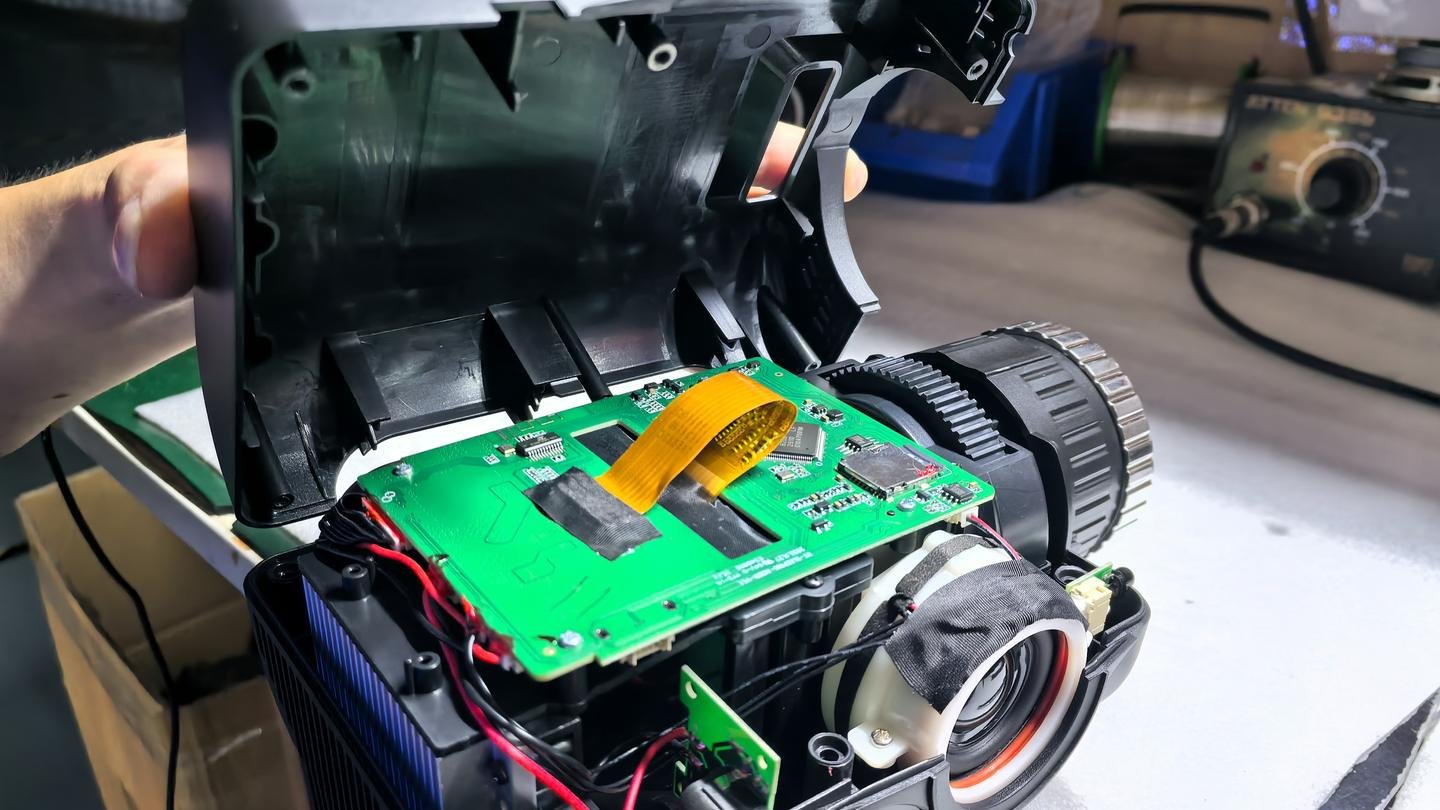
I also keep photographs in their proper place. The circuit-board image above visibly shows an opened projector and electronics during inspection. It may support a general statement that factory inspection activity exists. It cannot identify a laser class, show which standard was used, establish that the pictured unit is one of the related SKUs, or replace a document-to-product mapping.
What Should Buyers Ask About Factory Release Controls and Records?
Product evidence and factory release controls answer related but different questions. A buyer needs to see both boundaries.
Ask what is checked, on which units, at what frequency, against which acceptance basis, by whom, and with what retrievable record. Then keep that factory release answer separate from document coverage and from site approval. “Every unit,” “sampled,” and “document reviewed” are materially different control descriptions.
I ask the supplier to describe the control as an executable sentence. “QC checks every unit before shipment against the named release criterion and records the result under this unit or batch reference” can be traced. “Quality is strictly controlled” cannot. If sampling is used, the buyer should know that it is sampling rather than silently reading it as a per-unit check. If the control is document-based, it should not be described as a physical test.
| Release-control field | Supplier answer needed | Evidence boundary |
|---|---|---|
| Object | Exact unit, batch, version or supplied configuration being checked | Does not transfer automatically to another model |
| Attribute | The named release characteristic | Does not prove unrelated electrical, environmental or performance attributes |
| Method | Equipment/procedure reference and relevant setup | A method name alone does not show that a unit passed |
| Frequency | Per unit, defined sample or another stated frequency | Must not be upgraded in the buyer's summary |
| Acceptance basis | Release criterion and controlled revision | Is not automatically the buyer's project/site criterion |
| Record | Unit/batch identifier, result state, date and responsible function | A test-room photograph is not the record |
| Exception path | Hold, correction/recheck, escalation or other defined disposition | Does not prove that exceptions never occur |
I then ask how the record follows the commercial handoff. Will the buyer receive a summary, retain a document index, or be able to request a record tied to the shipment identity? What identifier appears on the packing list, carton, product or factory file? Who owns retrieval if the buyer asks after receipt? The suitable answer depends on the project, but “we test” is not a retrieval method.
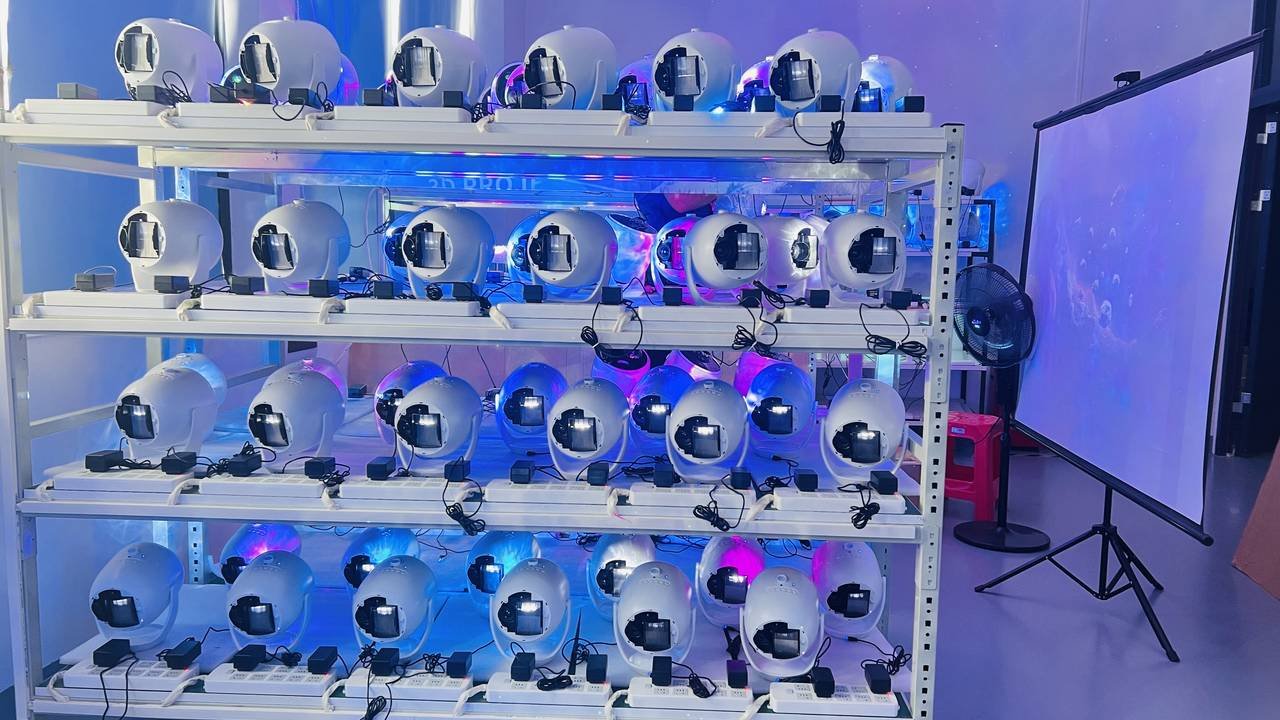
The rack image is deliberately limited. It shows many powered projectors and a projection screen in a factory environment. I do not identify it as a laser testing room, attribute a class to the visible products, state a test duration or infer a pass result. A photograph can orient a buyer to a process; the controlled record carries the decision.
What Does Bowlum's Per-Unit Class 1 Release Process Prove?
Bowlum has a confirmed factory process that is useful only when I state it with its full boundary.
Bowlum confirms that its laser products must meet Class 1 before shipment in a per-unit factory release process, and that the factory has its own laser testing room. This supports a process-level answer about how applicable laser units are released. By itself, it is not an exact-model certificate, market authorization, local installation acceptance, aiming approval, site-safety guarantee or evidence for a non-laser product.
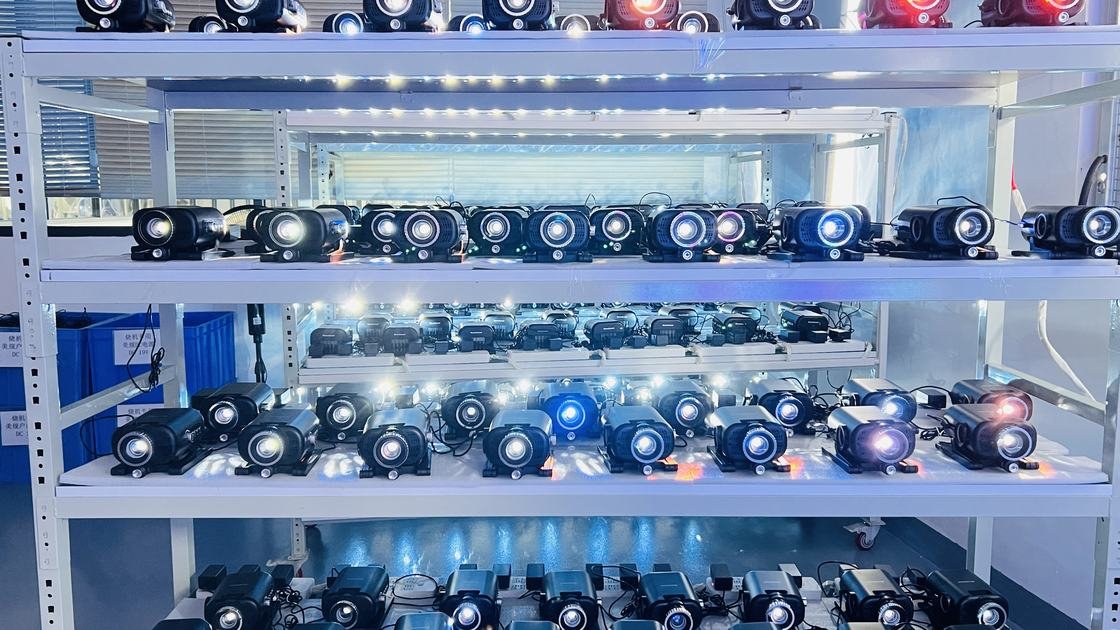
I use that statement in the release-control row, not as an answer to every safety question. It tells a buyer three important things about the declared process: the scope is laser products, the frequency is per unit, and the release point is before shipment. It also gives the buyer a precise next request: how will the unit/shipment identity and release result be recorded or made retrievable for the project under review?
| What the confirmed process supports | What remains a separate decision |
|---|---|
| Bowlum operates its own laser testing room | Which exact-model document supports the buyer's required classification statement |
| Applicable laser products are checked per unit | Whether a particular document maps to the selected SKU/version/configuration |
| Each applicable unit must meet Class 1 before shipment | Whether a country, venue, customer or appointed reviewer accepts the project |
| The control is a factory shipment-release step | Whether aiming, access, mounting, operation and site conditions are acceptable |
| A clear question can be asked about release records | Whether the buyer's contract needs a particular record format or handoff |
I do not attach this process claim to BWL-OL-001 or BWL-OL-004 as a substitute for model-level evidence. Their images and public identities help define what must be mapped, not what class must be inferred. I also do not use the process to claim optical performance, service life, field reliability or a particular project result.
Bowlum separately confirms roughly eight hours of aging for every unit as another factory release control. That fact can help a buyer distinguish a per-unit process from a sample-based statement, but it does not prove laser classification or extend the laser-release statement to a non-laser attribute. Controls can coexist without becoming interchangeable.
When I describe our per-unit Class 1 release, I place it in one cell of the evidence chain. Keeping it there makes the claim stronger, because the buyer can see exactly what it answers and what still needs an owner.
How Should Outdoor or Public-Project Questions Be Assigned?
The product may be chosen before a site exists, while the final review may depend on conditions the supplier cannot see.
I separate supplier-owned facts from buyer-owned project information and reviewer-owned acceptance. The supplier identifies the product, supplies mapped evidence and states release controls. The buyer defines the intended site, mounting, aiming, access, operating plan and requested documents. The appointed reviewer decides what that particular project accepts.
That allocation prevents two opposite mistakes. In the first, a buyer expects a supplier to approve a municipal, venue or property decision without the full project context. In the second, the supplier avoids clear product questions by calling everything “local.” The evidence matrix should show which questions belong to the product and which remain site-specific.
| Question | Supplier contribution | Buyer/project contribution | Acceptance owner |
|---|---|---|---|
| What product is proposed? | Exact SKU, version, supplied set and controlled files | Confirm selected commercial configuration | Buyer procurement/project owner |
| What safety statement is being made? | Classification wording, named standard and mapped evidence | State the claim needed for the project packet | Buyer plus appointed reviewer |
| How are units released? | Frequency, criterion, record and exception path | State any contract record/handoff requirement | Buyer quality/procurement owner |
| Where and how will it operate? | Provide product instructions and declared boundaries | Define location, mounting, aiming, access and operation | Appointed site/local reviewer |
| What happens when something is open? | Clarify supplier-controlled evidence or narrow the claim | Obtain project-specific review or revise the plan | Named owner with a dated decision |
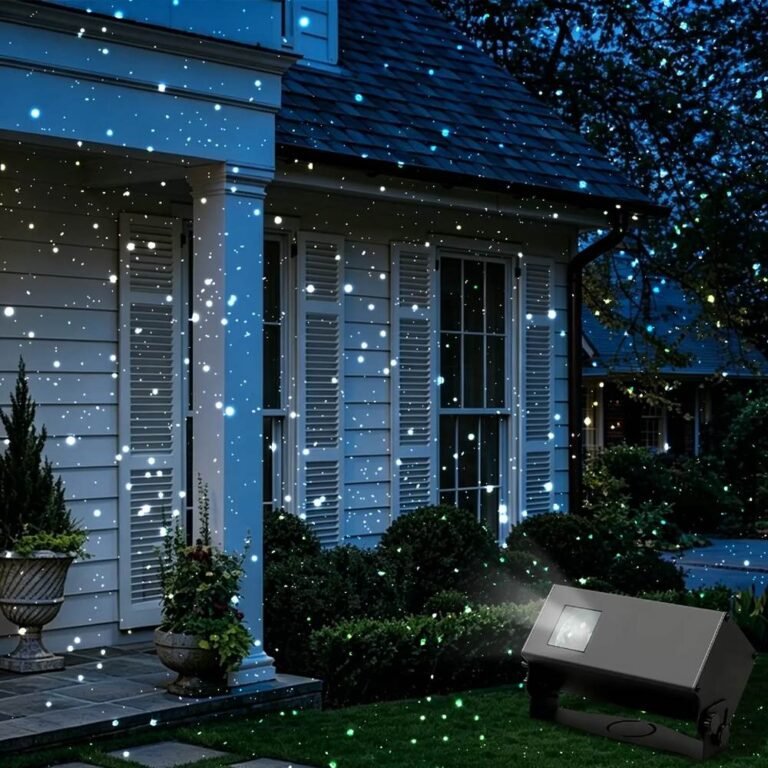
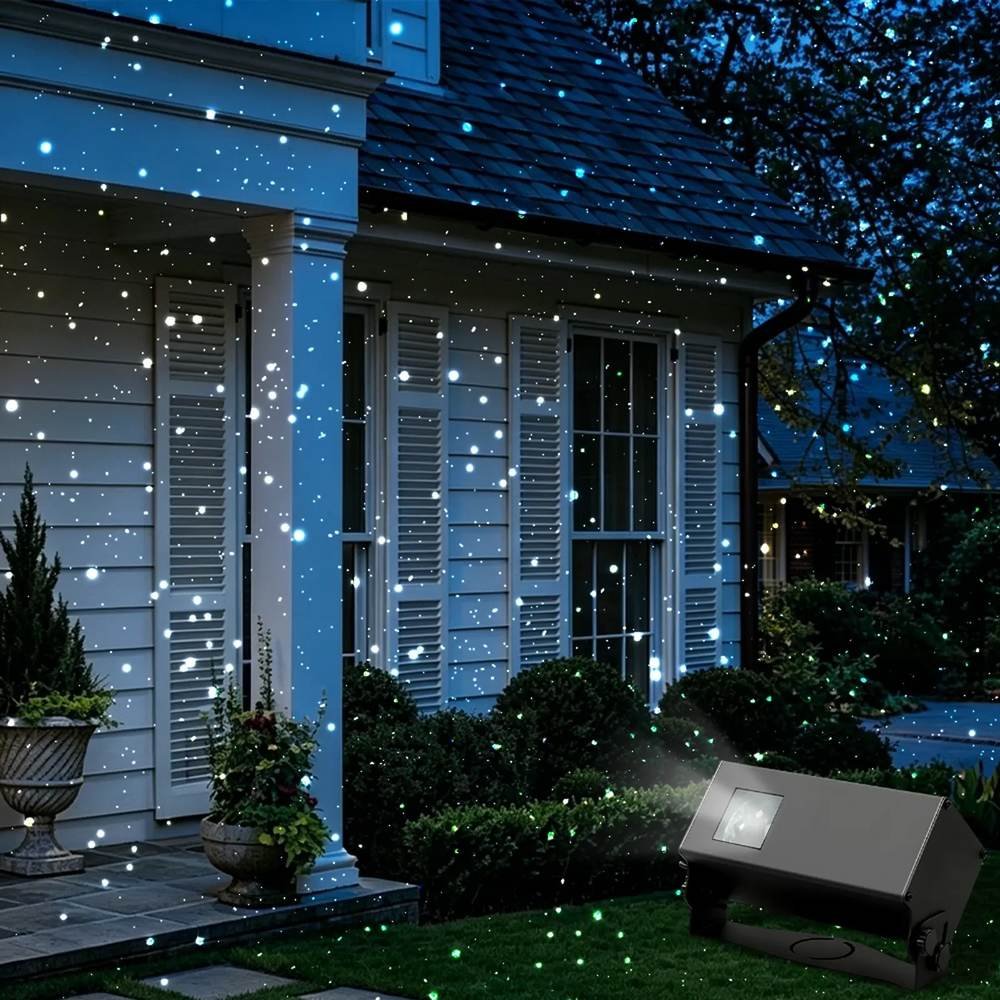
I treat the outdoor application image above as visual context only. It shows a house and garden with decorative light points, plus a product composited into the scene. It does not reveal an actual mounting position, beam path, access boundary, surrounding activity, operating procedure or reviewer decision. Marketing artwork should never be promoted into a site assessment.
For a broader handoff across product, power, environmental, labels, instructions and local-review rows, I use the project installation document readiness matrix. The laser checklist stays narrow: it tells the buyer what to ask the supplier and where the supplier's answer ends.
How Should Laser Safety Questions for Suppliers End in a Release Decision?
A checklist becomes useful when incomplete answers lead to explicit actions rather than a vague sense of confidence or suspicion.
I close each row with one of four decisions: accept as mapped for the stated scope, request a specific clarification or file, narrow the claim/configuration to match available evidence, or hold the sourcing/project decision for the named reviewer. A missing item is an open state—not automatic proof of deception, danger or failure.

My release table keeps the finding, evidence and authority together:
| Row | Current state | Required next action | Owner | Decision effect |
|---|---|---|---|---|
| Exact product/configuration | Mapped or unresolved | Freeze or correct SKU/version/set/revision | Buyer + supplier | No evidence conclusion until identity is stable |
| Classification/standard statement | Recorded or clarification pending | Obtain exact wording and scope | Supplier | Narrow claim if scope cannot be supported |
| Evidence mapping | Mapped, partial or pending | Resolve product/document identity and limits | Supplier + buyer reviewer | Accept only the supported scope |
| Factory release control | Defined or incomplete | Add frequency, criterion, record and exception route | Supplier | Do not upgrade a generic statement |
| Record handoff | Available, retrievable or not defined | Name identifier, owner and delivery/retrieval path | Supplier + buyer | Add contract/project condition if needed |
| Project/site review | Open, in review or accepted by owner | Submit buyer's project facts to appointed reviewer | Buyer | Keep supplier evidence separate from local decision |
This table also protects a capable supplier from an unfair leap. A retrieval delay may require a date and owner; it does not establish that the factory lacks a process. A product-name mismatch may require a controlled mapping; it does not establish that the document is false. Conversely, a polished file should not silence a real scope gap. The next action should match the specific missing connection.
A Municipal-Buyer Case: Turning “Safe for Public Use?” Into an Evidence Matrix
A municipal buyer in a small Midwestern city was preparing an outdoor seasonal-lighting review. The opening request was short: was the laser projector “safe for public use”? I treated the wording as a project brief, not as a question a supplier should answer with one universal yes.
First, I asked the buyer to freeze the proposed public SKU, version, supplied power set and current files. Next, I opened separate rows for the stated classification, named standard, supporting-document identity, product mapping, release frequency and record path. I placed Bowlum's per-unit Class 1 laser-product shipment-release process in the factory-control row and wrote its limits beside it.
The site questions moved into a different part of the sheet: intended location, mounting and aiming concept, access conditions, operating responsibility, and the buyer's appointed reviewer. I did not invent the city's requirements or predict what that reviewer would accept. The buyer could now see which supplier answers were ready, which files still needed mapping, and which questions could not be closed by the factory.
The result was not a tender approval, order, shipment or installation. It was a better decision boundary. The buyer replaced one unanswerable sentence with a traceable request, named owners and a hold point for local review.
My rule is simple: a laser-safety request is ready only when every supplier claim points backward to an exact product and evidence scope, and every project decision points forward to the person authorized to make it.
Conclusion
Laser-safety sourcing improves when the buyer asks connected questions and refuses to make one answer do several jobs. Exact identity, classification wording, named standard, evidence mapping, release control, record retrieval and project review should remain visible from RFQ to decision. That structure neither guarantees a site outcome nor treats every gap as a supplier failure. It shows what is supported, what is open and who must decide next.
Frequently Asked Questions
Are laser Christmas lights safe?
A category name cannot settle that question. Start with the exact product and configuration, then map the supplier's classification statement to supporting evidence and factory release controls. Mounting, aiming, access, operation and local acceptance belong to the buyer's project review. This checklist does not provide a universal legal or site-safety answer.
What laser safety questions should I ask a projector supplier?
Ask for the exact SKU/version/configuration, stated classification, named standard, supporting-document identity, product-to-document mapping, release frequency and criterion, retrievable record, exception path and the boundary between supplier facts and buyer-owned site review.
Does Class 1 mean a laser projector is approved for any project?
No. A classification statement has a defined product and evidence scope. It does not by itself approve a country, venue, aiming plan, installation, operating procedure or site. Those decisions require the appropriate project information and reviewer.
Is one laser certificate enough to approve a supplier?
No single document proves the entire supplier and project chain. Verify what product/version the document covers, which statement it supports, whether the current configuration is mapped, how shipped units are released and what project-specific review remains open.
What does Bowlum's per-unit Class 1 release process prove?
It supports Bowlum's process-level statement that applicable laser-product units must meet Class 1 before shipment and are handled through a per-unit release process. It is not, by itself, an exact-model certificate, market authorization, site approval, aiming assessment or guarantee of other performance attributes.
Can a factory or product photograph prove laser classification?
No. A photograph can show visible product identity or process context. It cannot establish the named standard, tested identity, evidence scope, test method, frequency, result, document revision or local project acceptance.
What should I do when a supplier cannot immediately provide one item?
Record the exact missing connection, assign an owner and date, and choose a proportional action: request clarification, retrieve the file, narrow the claim/configuration, or hold the decision for the appointed reviewer. Do not convert an unresolved item into either an approval or an accusation.