
A projector buyer places three supplier quotations side by side. One says “MOQ is very low.” Another promises “guaranteed delivery.” The third is full of dimensions, test language and commercial detail. It is tempting to label the shortest quote risky and the longest quote professional. When I review them, I do neither. I underline every material promise and ask what exact product, condition, evidence, owner and next action sit behind it.
The problem is not that broad quotation phrases are automatically dishonest. Many began as shorthand between people who already understood the context. The problem is that a buyer outside that context may treat shorthand as an order commitment. A precise number can fail for the same reason when it belongs to the wrong variant, packing plan or timeline boundary.
The strongest quotation is not the one with the most numbers or the fewest flattering adjectives. It is the one that makes each material promise testable through scope, conditions, evidence, responsibility and a defined consequence or next action. Low MOQ is a supply-path question—not proof that the supplier is a factory or a trader.

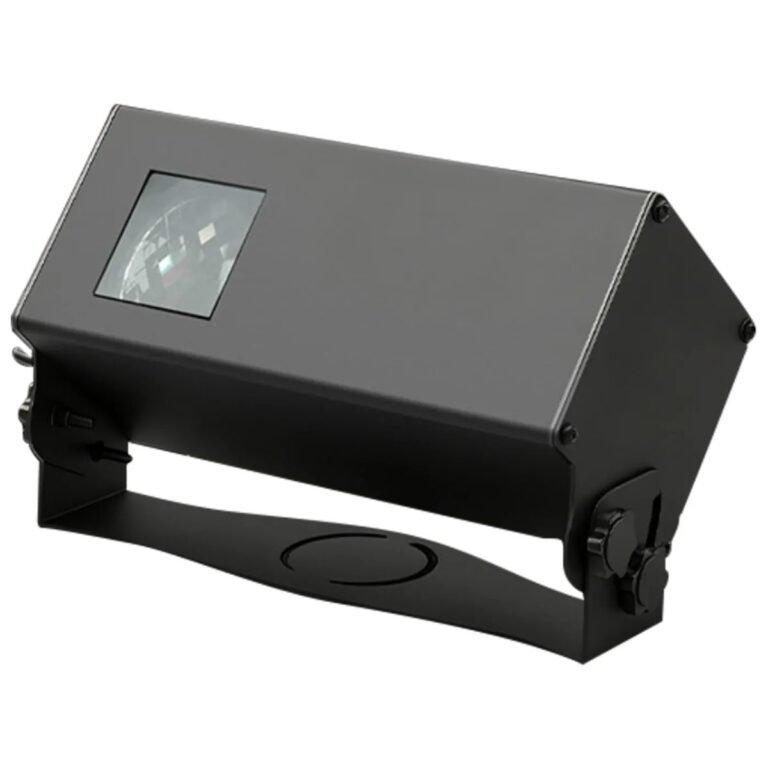
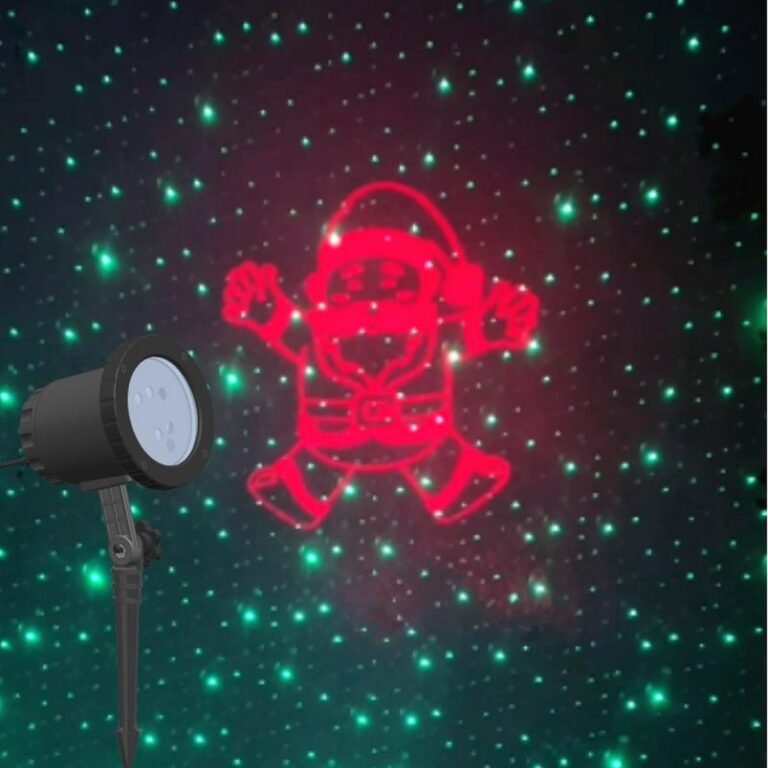
Those racks contain visibly different products, but a quotation can flatten them into a single line called “projector.” Below, I show how to translate vague phrases, investigate a low MOQ without jumping to an identity claim, separate production timing from delivery, and normalize three offers without rewarding document length. This article does not replace a separate factory-verification review or an exact projector specification check; it begins after the quotations arrive.
What Supplier Quotation Red Flags Should Projector Buyers Notice First?
Buyers often search for words that prove a supplier is unreliable. The more useful red flag is a material statement whose commercial meaning changes depending on information the quotation omits.
Notice phrases such as “very low MOQ,” “guaranteed delivery,” “high quality,” “factory price,” “complete documents,” and “flexible customization.” None is automatically false, but none is decision-grade until the supplier defines the exact product scope, applicable conditions, evidence, responsible party and what happens when the condition changes.
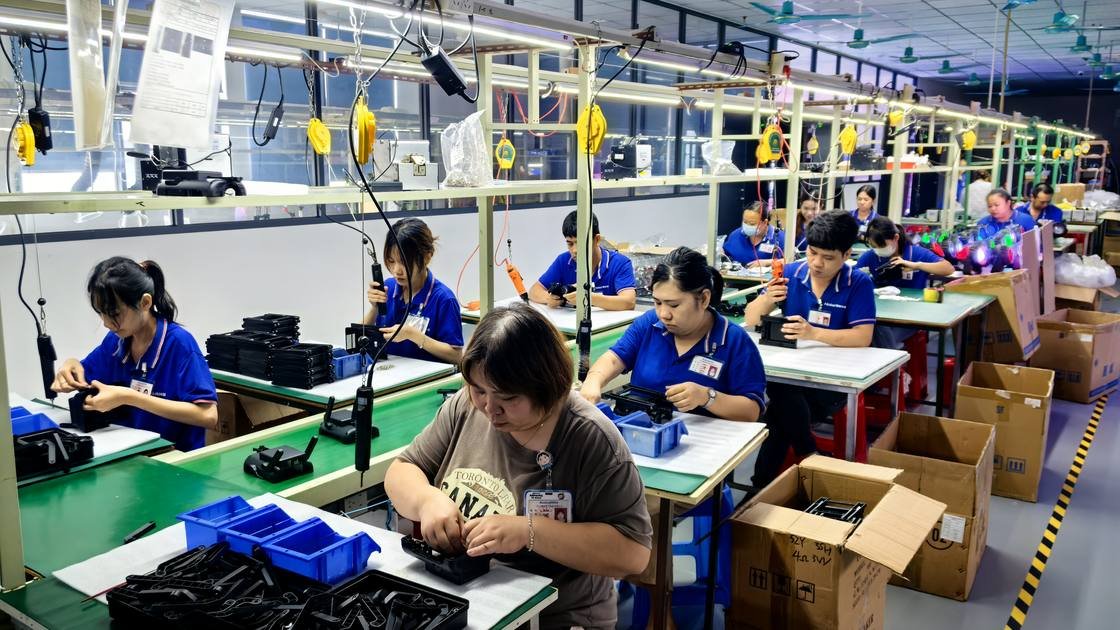
I do not cross those phrases out. I translate them. The distinction matters because a buyer needs a clarification request, not a personality judgment about the salesperson.
| Quotation phrase | Missing commercial meaning | Useful clarification |
|---|---|---|
| “MOQ is very low” | Low for stock, sample, mixed order or dedicated production? | Name the supply route, exact configuration and reorder condition |
| “Delivery guaranteed” | Production ready, handed to forwarder, arrived at port or received? | Define start event, finish boundary, assumptions and schedule owner |
| “High quality” | Which product result and which inspection? | Name the approved sample, process, evidence and acceptance result |
| “Factory price” | Does it describe price position or manufacturing identity? | Keep commercial offer and supplier-identity verification separate |
| “Complete documents” | For which model, market and product/component scope? | List the exact document status beside the exact configuration |
| “Flexible customization” | Which changes, approvals and production path? | Define included change, excluded change and re-quotation trigger |
The phrase becomes useful when both sides can tell whether the supplier performed what was written. That may require a number, but not always. Product identity, an approved sample, a named owner, a test record or a revision boundary can make a non-numeric commitment observable.
I also separate an open item from a red flag. If the supplier marks a field pending and states who will close it before approval, the quotation is showing uncertainty honestly. If the supplier uses confidence to hide the same gap, the buyer cannot plan around it.
A vague phrase is not a verdict on the supplier. It is a request for the missing boundary.
Does a Low MOQ Mean the Supplier Is a Trading Company?
Low MOQ is frequently used as a shortcut for supplier identity. That shortcut fails because the same quantity can come from several very different supply routes.
No. A low MOQ can come from finished stock, a shared standard configuration, a sample or pilot quantity, pooled demand, a mixed assortment, or a special production arrangement. Ask how that quantity will be supplied, whether the exact configuration is repeatable, and what MOQ applies to the next order before drawing any conclusion about factory or trader status.

Bowlum's basic factory MOQ is normally 1,000 pieces, with possible variation by model or project. That is a factory-level commercial starting point, not a universal quantity for every configuration and not a rule for identifying other suppliers. If a smaller quantity appears in a quotation, I ask which path makes it possible.
| Possible low-MOQ path | What the buyer may actually receive | Question that protects the reorder |
|---|---|---|
| Finished stock | Existing product in the available configuration | Is the same configuration available again, or is this a one-time lot? |
| Sample or pilot | Evaluation units rather than a production commitment | What changes when the order moves to formal production? |
| Shared standard configuration | A common build already planned for other demand | Which functions, color, accessories and packing are fixed? |
| Pooled or mixed order | Quantity combined across products or buyers | Which items can be mixed, and which terms remain per SKU? |
| Special production arrangement | A dedicated exception with defined conditions | Is the exception documented for this order and the next one? |
For BWL-OL-004, the public product identity covers a 7-Color APP family version and a DMX512 professional version. A low quantity of one available configuration would not automatically establish availability for the other. The buyer must keep variant, control method, accessory set, artwork and packing attached to the MOQ statement.
Why Identity and Supply Route Are Separate Tests
A manufacturer can sell stock below its normal production MOQ. A trader can coordinate a large dedicated run. A distributor can hold genuine factory production. None of those facts can be inferred from quantity alone.
I verify factory identity through the supplier's legal, operational and production evidence. I verify the quotation through the offered supply route. Combining those tests creates false positives: a genuine manufacturer looks suspicious because it supports a pilot, while a non-manufacturer looks proven because it quotes a large order.
MOQ tells you how this order may be supplied. It does not tell you who owns the production line.
What Makes a Supplier Delivery-Time Promise Verifiable?
A lead-time number feels objective, yet two suppliers can quote the same duration while measuring different parts of the journey. The buyer discovers the difference only after an approval, shipment or handoff consumes the missing time.
A verifiable delivery promise names the event that starts the clock, the event that stops it, the product and configuration assumed, buyer approvals or dependencies, the owner of each stage, and the change process. A number without those boundaries is a duration, not a complete schedule commitment.
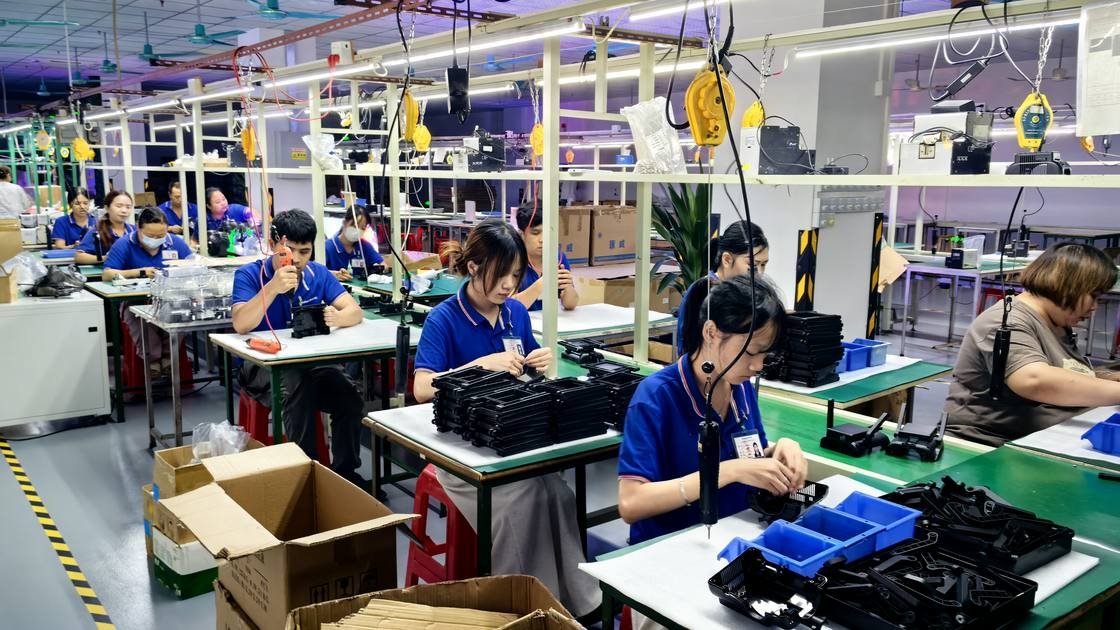
Our confirmed standard factory production lead time is 35 days. I state it as factory production, not door-to-door delivery and not a universal arrival promise. The fact record does not define ocean freight, customs, domestic delivery or every approval condition, so those stages stay outside that number until the quotation names them.
Use this schedule translation:
| Schedule field | Buyer question | Decision-grade answer contains |
|---|---|---|
| Start event | When does counting begin? | A named approval, order or readiness event |
| Production scope | Which exact product/configuration is assumed? | SKU, variant, customization and packing state |
| Finish boundary | What does “delivered” mean here? | Ready for inspection, released, handed over or received—one named point |
| Dependencies | What must the buyer or another party complete? | Artwork, sample, documents or other defined approval |
| Ownership | Who controls each stage? | Factory, buyer, forwarder or another named role |
| Change handling | What happens if scope or approval timing changes? | Revised schedule, notice and responsible owner |
The final row is not necessarily a financial penalty. It can be a written schedule revision, a decision to hold production, a notification deadline or an approval escalation. This article is not legal contract advice; it is a way to make schedule movement visible before the season depends on it.
I will not convert our 35-day production fact into a promise for another factory, another product or another logistics route. A buyer can use our wording as a model of scope: name exactly which stage the number describes and leave the other stages with their real owners.
Does Every Quotation Commitment Need a Number?
The original instinct behind “put a number after every promise” is useful: avoid claims that nobody can test. But numerical precision is only one way to make non-performance visible.
No. Quantities, durations, dimensions and percentages need accurate numbers, but product identity, revision, evidence source, approval state, responsible owner and remedy can be verifiable without one. A strong commitment makes success and non-performance observable; it does not force every sentence into a metric.
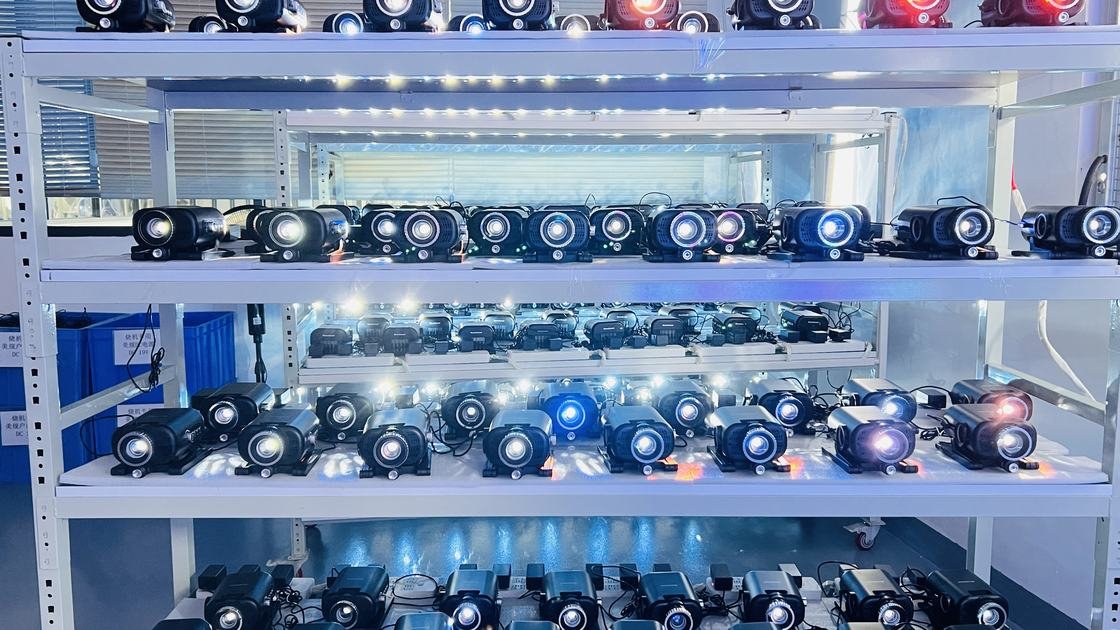
Our aging statement demonstrates the difference. Bowlum runs every unit for roughly eight hours during aging. The number matters, but so do the non-numeric scope words every unit and during aging. Without them, “eight hours” could refer to a sample, one development test or an unrelated process.
Our one-year warranty duration has the opposite lesson. The duration is confirmed, while the fact record does not fully separate whole product from accessory, define the start point or prescribe one remedy. I can publish the one-year duration within that boundary, but a buyer still needs the order-specific scope and response process before treating it as a complete warranty clause.
| Commitment type | Numeric element | Non-numeric elements that still decide meaning |
|---|---|---|
| MOQ | Quantity | Per SKU/variant, supply route, mixed-order rule, reorder condition |
| Factory lead time | Duration | Start event, finish boundary, product scope, dependencies, owner |
| Packing | Pieces, dimensions and weights | Exact packing configuration, revision and approval state |
| Warranty | Duration | Covered item, start point, evidence, response path and remedy |
| Quality process | Time, sample size or frequency where applicable | Exact unit scope, method, record, acceptance and process owner |
| Product identity | Often none | SKU, variant, revision and approved reference |
| Change approval | Often none | Who approves, what triggers re-approval and which record becomes controlling |
A quotation can therefore contain many accurate numbers and still be weak. It can also contain a strong non-numeric commitment, such as “bulk production must match the signed sample revision,” provided both sides identify that sample and define how conformity will be checked.
I use one test: can an independent colleague read the quotation later and tell whether the promised state was reached? If yes, the commitment may be verifiable. If the answer depends on remembering a chat that never entered the document, the quotation is incomplete.
How Should Buyers Translate “High Quality,” “Factory Price,” and “Certified”?
These three phrases sound like conclusions. In a sourcing decision, each should become a different verification path rather than one general request for “proof.”
Translate “high quality” into product-specific process and acceptance evidence; treat “factory price” as a commercial description that does not prove manufacturing identity; and attach any certification or document statement to the exact product, destination, scope and evidence status. The phrases may open a discussion, but they cannot close one.
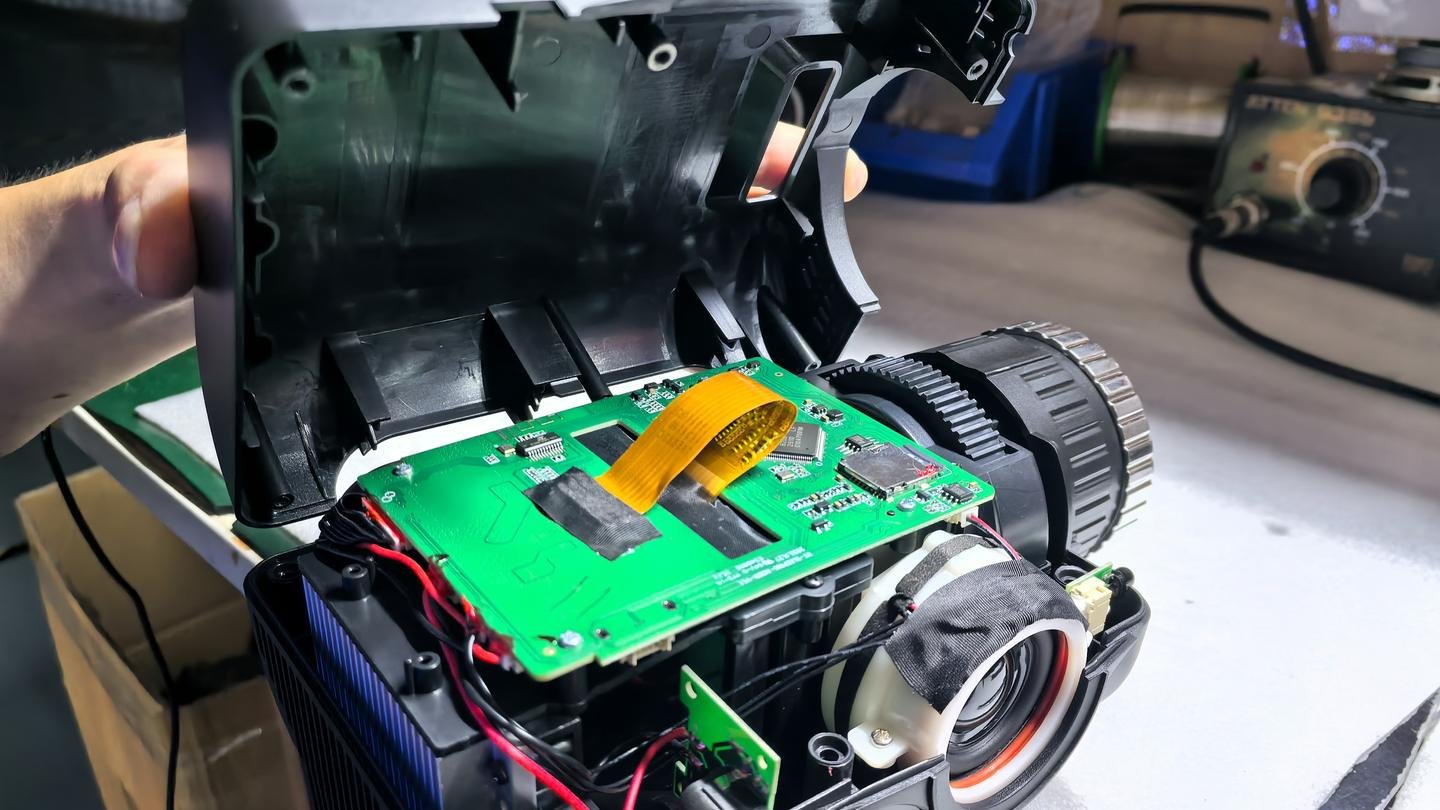
I place the three phrases on separate review lines before I compare suppliers. A quality process cannot prove factory ownership, a commercial offer cannot prove document scope, and a document list cannot replace product acceptance.
| Phrase | Replace it with | Do not infer |
|---|---|---|
| “High quality” | Exact configuration, approved result, production control, inspection record and response path | A defect rate, lifetime or zero-failure promise |
| “Factory price” | Commercial offer, included/excluded scope and price basis inside the private quotation | That the seller owns the factory |
| “Certified” or “documents available” | Exact product, market, whole-product/component scope, document type and current evidence status | Category-wide coverage |
| “Flexible customization” | Exact requested change, included work, approval points and re-quotation trigger | That every change follows the same production path |
For “high quality,” our roughly eight-hour aging of every unit is one specific factory control. It does not establish every form of durability, and it does not replace a model-specific acceptance plan. The circuit-board image above shows a real inspection context, but the photograph alone cannot tell a buyer which product, criterion or result applied. Process, record and scope have to travel together.
For “factory price,” keep identity verification separate. A quotation cannot prove who owns a building merely by describing the price source. The existing Bowlum factory-verification guide covers that broader investigation; repeating its live-video, registration and production checks here would blur two different buyer jobs.
For certification language, this article stops at document scoping. The buyer should not accept a company-level adjective as model-level coverage, but the actual verification belongs in a product-and-document review. That boundary also keeps one component's document from silently becoming a whole-product promise.
Can a Detailed Supplier Quotation Still Be Misleading?
Detail creates confidence, especially when a quotation includes model codes, carton counts and precise timing. The risk is not only invented numbers; it is an accurate number attached to the wrong configuration or revision.
Yes. A detailed quotation can mislead when its values belong to another variant, optional accessory set, packing plan, sample revision or timeline boundary. Verify the relationship among the number, exact SKU, chosen configuration and controlling approval record instead of treating precision as self-authentication.

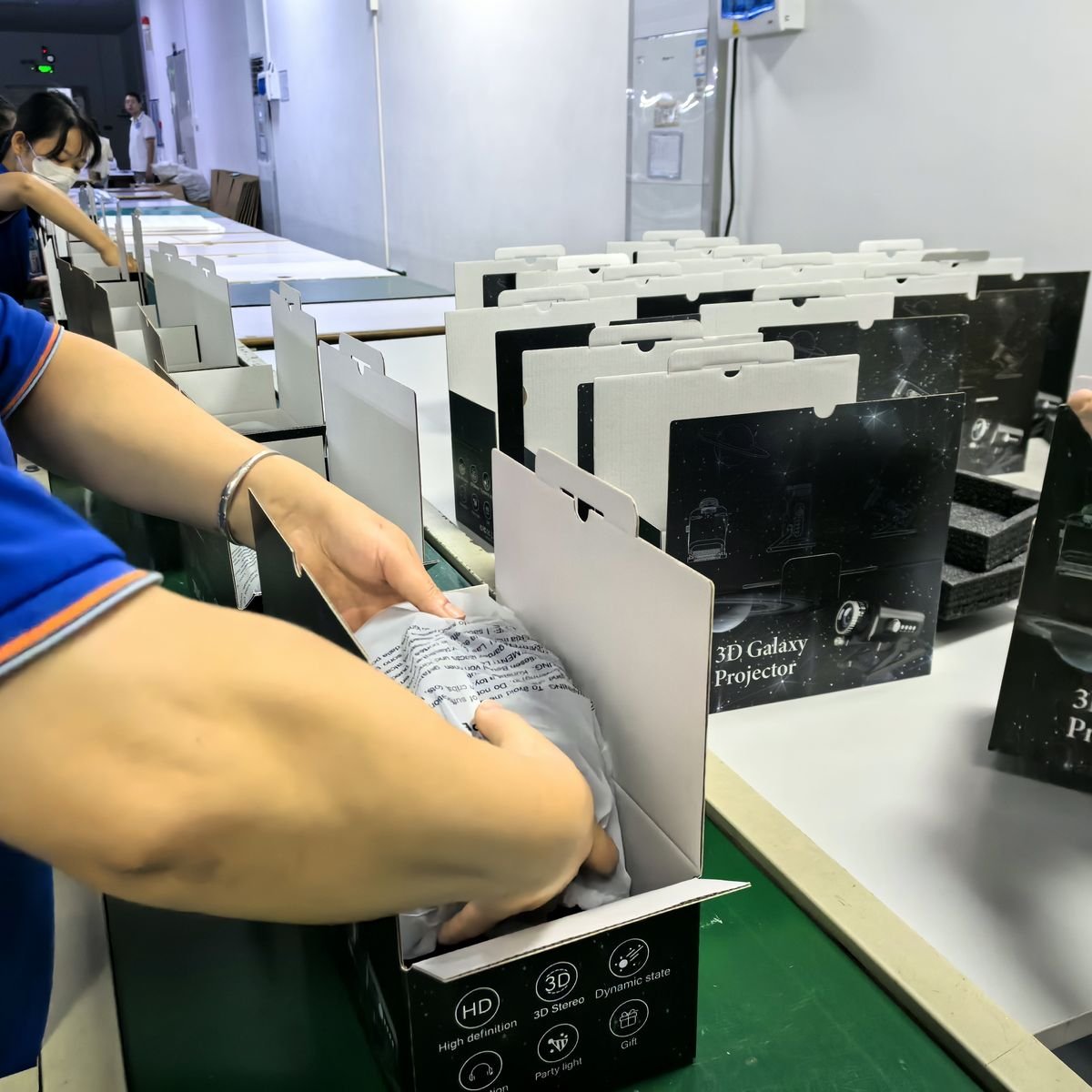
BWL-SP-011 is a clean example. Its controlled data contains two valid carton configurations: 12 pieces and 16 pieces per carton. Both are real. A quotation that lists only “16 pieces per carton” may be correct for the selected plan and wrong for another. The precise number becomes decision-grade only when the quote names the configuration being supplied.
BWL-OL-004 has a different packing record: six pieces per carton. That figure must stay attached to BWL-OL-004 and its applicable packing plan. Moving it into a general “outdoor projector” row would create a polished error even though the source number itself is genuine.
Our published star projector carton guide explains the packing calculation and configuration choice in depth. The quotation lesson is narrower:
| Detailed field | Why it can still mislead | Scope check |
|---|---|---|
| Product code | Internal shorthand may cover several variants | Map it to the public SKU, exact variant and revision |
| Carton count | More than one valid plan may exist | Name the approved packing configuration |
| Product function | Option may not be included in quoted variant | Match function list to the approved sample |
| Document list | Document may cover another model or component | Record product and scope beside each item |
| Production duration | Start or finish boundary may differ | Define both events and dependencies |
| “Included” accessory | Accessory identity may be absent | List the exact accessory set |
Risk Disclosure: More Detail Can Hide the Most Important Blank
A long quotation can make an empty field harder to notice. Buyers should preserve an explicit unresolved column rather than forcing every supplier answer into yes/no. An open product revision or document scope can outweigh pages of complete-looking commercial detail.
I prefer a shorter quotation that exposes its conditions over a longer one that inherits values from a nearby model. The buyer's goal is not document completeness. It is decision completeness for the exact order.
How Do You Compare Three Projector Supplier Quotations on Equal Terms?
Supplier templates arrange information differently, so reading them line by line rewards presentation rather than comparability. Build one buyer-owned matrix and make every supplier answer the same commercial questions.
Normalize each quotation into seven rows: product identity, MOQ supply path, production-time boundary, included configuration, quality/acceptance evidence, packing plan, and owner/change response. Keep unresolved items visible and compare evidence quality—not document length or raw number count.
Use a blank comparison table before copying supplier language:
| Buyer-owned row | Supplier A | Supplier B | Supplier C | Unresolved / next action |
|---|---|---|---|---|
| Exact product and revision | ||||
| MOQ and supply route | ||||
| Factory production start/finish | ||||
| Included variant and accessories | ||||
| Quality process and acceptance | ||||
| Packing configuration | ||||
| Owner, change and response path |
A Buyer Story: Three Quotations Became One Clarification Sheet
A distributor in the Midwest compared three seasonal-projector quotations. One offered a lower MOQ but did not name the supply route. One gave a firm production duration but used “delivery” as the heading. One contained the most packing detail, yet its product row did not identify the selected control configuration.
I did not rank the suppliers by the number of fields they completed. I moved each statement into the seven-row matrix, marked what the statement could support, and left the missing scope open. Then I gave the distributor the same clarification sheet for all three suppliers: identify the exact configuration, explain the MOQ route, define the production clock, attach packing to the chosen plan, and state who owns each open item.
The comparison changed before any order decision. The lower MOQ became understandable as an offered supply route rather than evidence of supplier identity. The duration became a production-stage statement rather than an arrival promise. The detailed packing quote remained provisional until the configuration matched. The distributor could now compare three answers to one question set instead of three different sales templates.
That is the result I want from quotation review: not an instant winner, but fewer hidden assumptions entering the sample, purchase order and artwork process.
The buyer should own the comparison format; otherwise each supplier chooses the question its quotation appears to answer best.
Conclusion
Supplier quotation red flags are not secret words that reveal a factory, trader or scam. They are boundaries that a commercial document has not yet made visible. Low MOQ needs a supply route. Delivery needs a start and finish. Quality needs a process and acceptance path. Packing needs an exact configuration. Document language needs product and scope.
Some of those commitments require numbers; others depend on identity, evidence, ownership and a defined next action. My final rule is to normalize every quotation into the same buyer-owned matrix and preserve the unresolved column. If a colleague can later identify what was promised, when it applied, who owned it and what record controls the decision, the term is usable. If the answer lives only in sales shorthand, I keep it open.
Frequently Asked Questions
What does MOQ mean on an Alibaba supplier quotation?
MOQ is the minimum order quantity under a particular supply path and configuration. Ask whether it applies to stock, samples, a shared standard build, a mixed order or dedicated production, and what quantity applies to the reorder.
Does a low MOQ mean the supplier is a trading company?
No. Manufacturers, traders and distributors can each offer low or high quantities for different reasons. Verify supplier identity separately and use the quotation to understand how this exact order will be supplied.
What is the biggest red flag in a supplier quotation?
A material promise with no clear scope, condition, evidence, owner or next action is a stronger warning than any single phrase. The statement may be true, but the buyer cannot yet use it to approve an order.
What should a supplier delivery-time quotation include?
It should name the clock's start event, finish boundary, exact product/configuration, buyer dependencies, stage owners and change process. Separate factory production from freight, customs and local delivery.
Does every supplier promise need a number?
No. Quantities, durations and dimensions need accurate numbers, while product identity, evidence scope, approval state, owner and remedy may be verifiable without one. The requirement is observable performance, not numerical decoration.
Does “factory price” prove that a supplier is a manufacturer?
No. It describes a commercial position in the quotation and does not establish ownership of a production facility. Check legal and operational factory evidence through a separate supplier-verification process.
Is the most detailed supplier quotation always the best one?
No. Detailed values can belong to another variant, packing plan, revision or timeline boundary. Normalize all quotations into the same buyer-owned matrix and keep unresolved scope visible.