
When distributors ask me whether permanent Christmas lights will replace seasonal installation work, I do not start with the technology. I draw the building and ask what the property owner is willing to leave on it after January. That single question separates three different offers. A permanent line-of-light system becomes part of the exterior. Seasonal strings create a familiar outlined or wrapped display but require recurring installation and removal. A projector remains removable while putting an animated or patterned effect across a surface. Each can be a professional choice, but each creates a different labor model, service promise, and inventory problem.
Permanent Christmas lights do not make seasonal projection obsolete. They solve a different job: keeping a controllable line-of-light system installed year-round. Projection remains relevant when the buyer wants a removable, broad-surface effect that can change without attaching lights across every visual area. The right portfolio decision begins with the site and service model, not with declaring one format the universal winner.
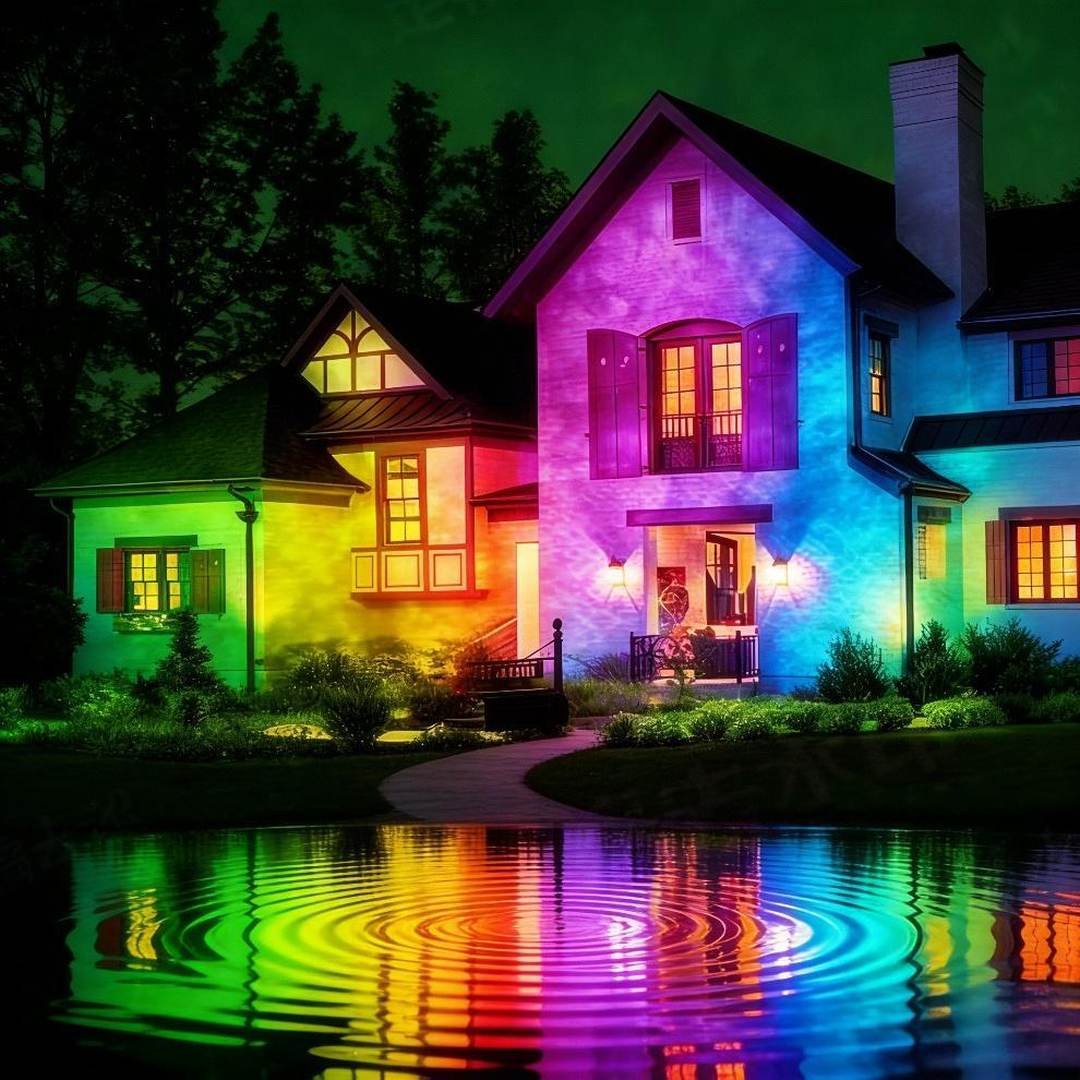
I should make Bowlum's position explicit: we manufacture projection lighting; we do not manufacture permanent line-of-light systems. The permanent-lighting discussion below is therefore not a claim that our projectors perform the same job. It is the framework I use when a distributor or brand owner is deciding whether a projection range deserves a place beside other professional holiday-lighting formats. The most useful answer is often a portfolio with clear boundaries, not a forced winner.
What Do Buyers Actually Mean by “Permanent Christmas Lights”?
The word permanent can make the decision sound simpler than it is. I ask a buyer to translate it into physical and commercial terms: what stays attached, how visible it is in daylight, how it receives power and control, who commissioned it, and who returns when a section behaves incorrectly.
For a professional buyer, permanent Christmas lights are not merely holiday lights left up longer. They are an installed exterior system whose mounting, wiring path, control method, daytime appearance, and ongoing service become part of the property decision. The value is year-round readiness; the tradeoff is that the product and its support relationship remain with the building.
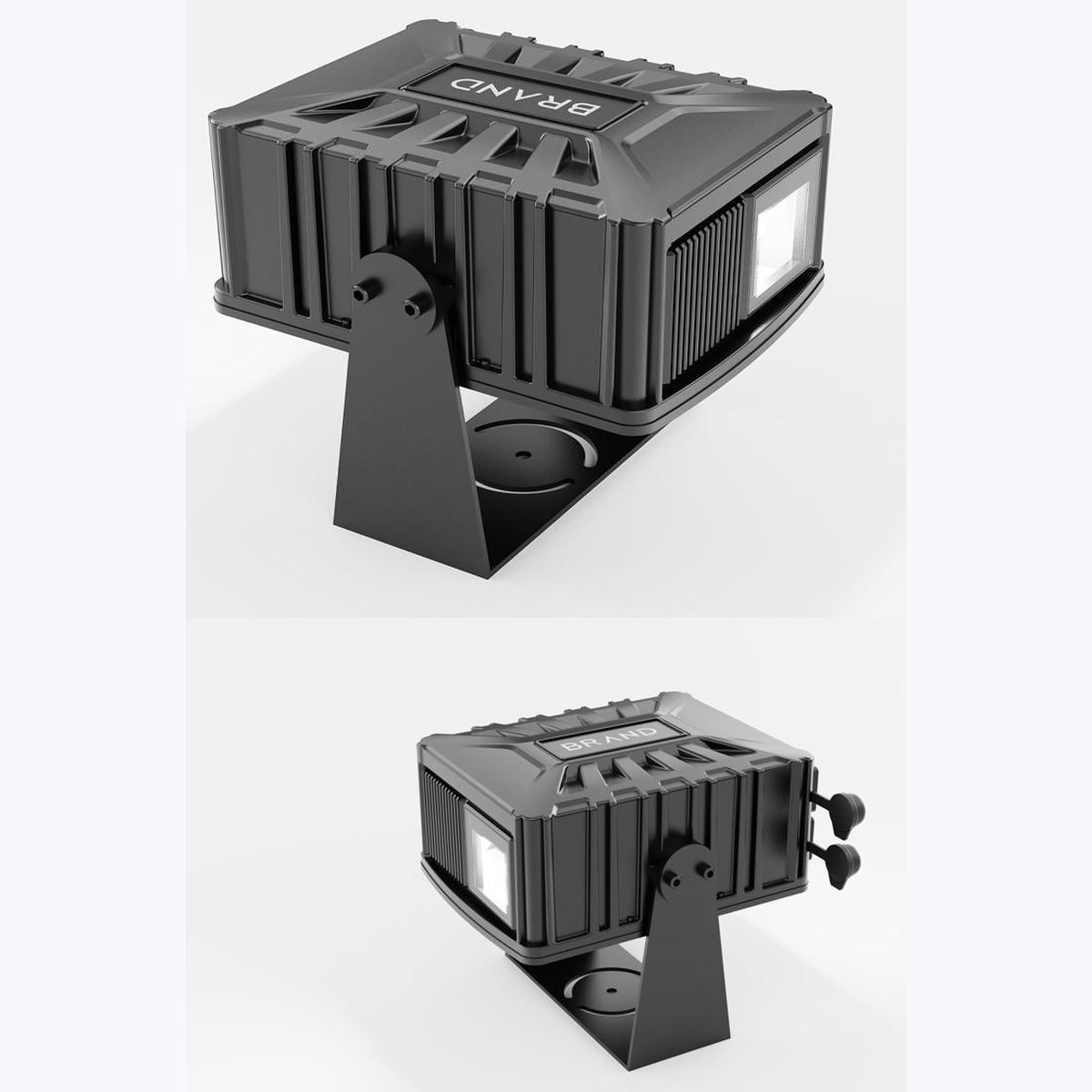
That distinction matters to channel strategy. A carton of seasonal equipment can move from one site to another. A permanent system is usually planned around a particular facade, roofline, wiring route, and controller. The sale may include design, installation, commissioning, app setup, documentation, and ongoing service. Even when the hardware looks simple, the offer is tied to the property.
Projection has a different physical logic. The projector is mounted at an appropriate point, aimed at a target surface, powered, and configured for the required effect. It still needs a secure mounting position, a suitable power plan, clearance, and site approval. “Removable” does not mean “place it anywhere.” It means the effect can be withdrawn without leaving a line of lighting installed across the facade.
I use the following table to stop a sales conversation from collapsing three offers into the phrase “holiday lighting.”
| Decision dimension | Permanent line-of-light system | Seasonal strings or motifs | Outdoor projection |
|---|---|---|---|
| What remains after the season | Installed lighting and associated exterior components | Normally removed and stored | Projector and temporary mounting normally removed |
| Visual language | Outlines, lines, zones, and programmed colors | Outlines, wraps, figures, and dense point-light displays | Moving points, ripples, snow, patterns, or surface effects |
| Main field work | Initial design, installation, commissioning, and later service | Repeated installation, removal, testing, and storage | Positioning, aiming, power, programming, and removal |
| Site dependency | Closely tied to building geometry and installation path | Closely tied to layout but equipment may be reusable | Closely tied to throw path, target surface, ambient light, and mounting point |
| Change between seasons | Mostly programming and selected component service | Physical redesign and reinstallation are possible | Effect or program may change within the capability of the selected model |
| Channel burden | Installer capability and long-term component support | Seasonal labor and organized storage | Application guidance, control training, spares, and site qualification |
The table is not a ranking. It is a description of where the work goes. Permanent systems reduce one type of recurring setup by moving more responsibility into the initial installation and the long-term service relationship. Projection reduces the need to trace every visual edge with physical lights, but it introduces optical and positioning questions. Seasonal strings remain strong when the buyer specifically wants the texture, outline, density, or tradition that only physical strings and motifs create.
“Permanent,” “seasonal,” and “removable” describe operating models before they describe product features.
When Does Projection Solve a Different Job From Permanent Lighting?
When I review a site for projection, I look for surfaces and viewing conditions, not roofline length. I want to know what the effect must cover, where the projector can sit, whether people or vehicles can interrupt the path, how much competing light reaches the surface, and how the installer will secure power and mounting.
Projection fits when the objective is a removable animated or patterned layer across a surface, especially where tracing the same area with installed lines would produce a different visual result. It does not replace permanent lighting when the buyer's requirement is a precise architectural outline that is always available.

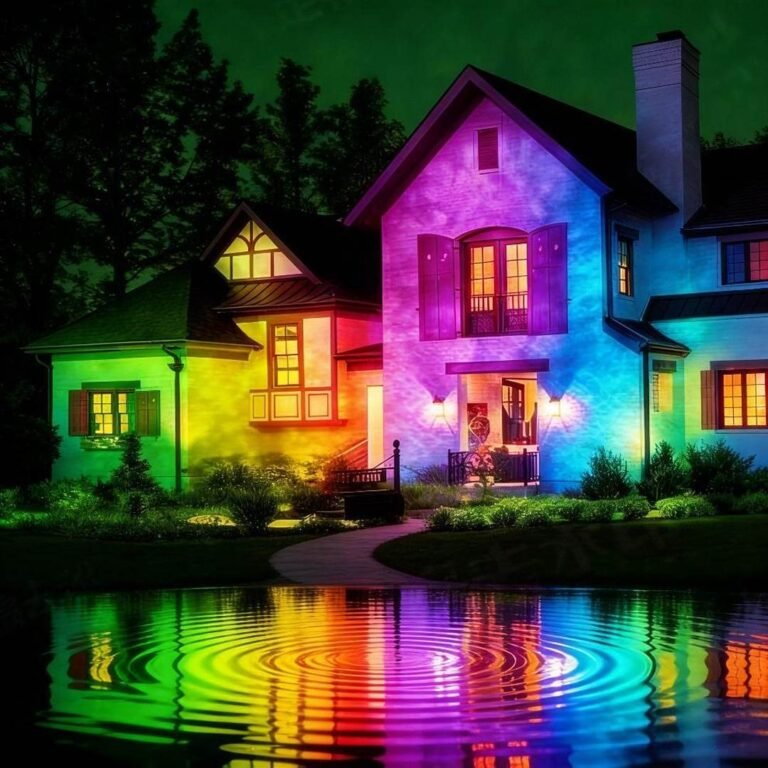
Consider a hotel entrance. A permanent outline may give the building a consistent architectural identity throughout the year. A projection layer may add moving snow, water-ripple color, or firefly points for a particular season or event. Those effects can coexist because they occupy different visual roles. The permanent system defines the building; the projector changes the atmosphere around it.
There are also sites where projection is a poor fit. A facade with heavy obstructions, strong competing light, no safe and secure throw position, or constant pedestrian interruption may not give a stable result. A buyer who wants crisp lines around every architectural edge should not be sold a surface effect as if it were the same thing. I would rather reject that application than win an order based on an ambiguous demonstration image.
The reverse is also true. A buyer who wants a temporary moving texture across a broad wall may not need to turn the entire request into a permanent exterior-light installation. That buyer still needs to evaluate the exact projector, mounting, target, and environment. Marketing images are useful for seeing an effect concept; they are not a substitute for a site test.
The Questions I Use Before Discussing a Model
| Site question | Why I ask it | What a weak answer hides |
|---|---|---|
| What exact surface should carry the effect? | Surface color, texture, openings, and shape affect visibility | “The whole building” may combine several unsuitable planes |
| Where can the projector be securely mounted? | Position determines the optical path and service access | A beautiful rendering may assume an impossible location |
| What competing light is present at show time? | Ambient light changes perceived contrast | Daytime photos or isolated demos may mislead |
| Who or what crosses the projection path? | People, trees, vehicles, and weather movement can interrupt it | The intended viewing experience may not stay consistent |
| Is the desired look an outline, a motif, or a surface effect? | It decides whether projection is even the right format | Different technologies get compared by price instead of result |
| Who will program and service the system? | Control capability must match the operator | An advanced controller may become an unused feature |
I do not use a published coverage number as the first qualification because a number without retained test conditions can create false certainty. The practical approach is to record distance, target size, surface, ambient light, viewing position, effect, and settings during a sample test. For commercial work, the buyer should keep that record with the approved setup rather than relying on a catalog image.
How Does Permanent Lighting Change an Installer’s Business Model?
The most important change is not that the installer visits the property only once. A permanent system can still require design, commissioning, customer training, troubleshooting, component replacement, and future changes. I ask distributors to model the service relationship that remains after the initial installation team leaves.
Permanent lighting shifts revenue and risk from repeated seasonal setup toward higher-stakes initial installation and continuing system support. An installer needs a clear policy for design ownership, commissioning, controller access, replacement components, response time, and what happens when the property or network changes.
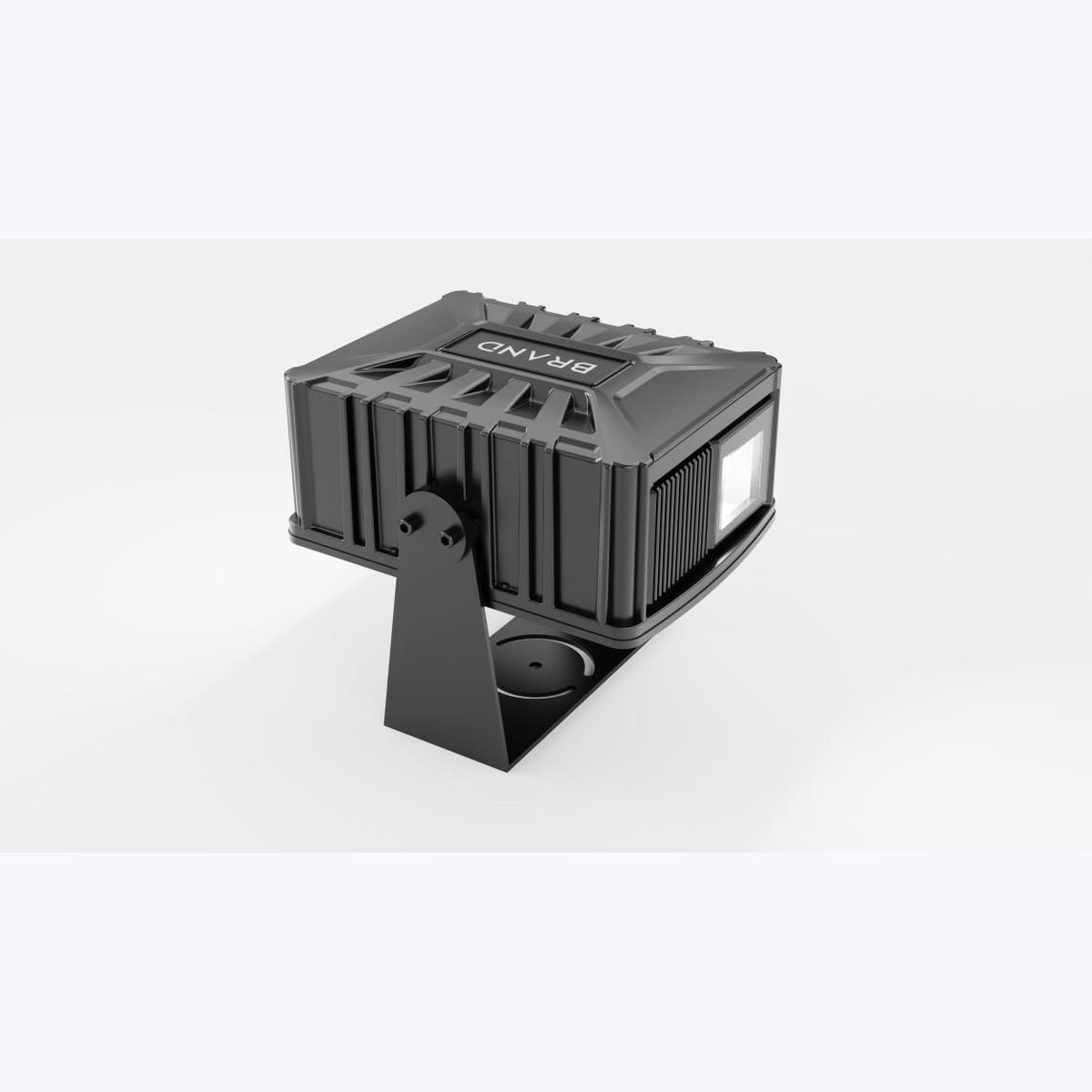
Seasonal work concentrates labor into a narrow window. Permanent work can reduce annual removal and reinstallation, but it makes the initial specification harder to reverse. If an installer selects the wrong spacing, wiring path, controller, or mounting approach, the correction is tied to the property. The customer is buying continued usability, not only lights on opening night.
Projection creates another service profile. The equipment is removable, but the effect depends on aim, settings, environmental conditions, and the operator's control method. A product with DMX512 capability can make sense where a trained team needs coordinated control; it may be unnecessary for a buyer who wants a fixed or simple app-controlled display. Our published guide to DMX512 in holiday lighting explains that boundary in more detail.
For a distributor, this means the catalogue should not be arranged only by visual effect. It should also be arranged by the capability of the downstream partner. A professional installer who already programs DMX-controlled shows can use a different product and support package from a small decorator who needs repeatable presets. Product sophistication is useful only when the channel can deploy and maintain it.
Service Responsibilities by Offer
| Responsibility | Permanent-light installer | Seasonal string installer | Projection installer or integrator |
|---|---|---|---|
| Site survey | Building outline, fixing path, wiring, controller location | Layout, attachment points, power, removal path | Target surface, throw path, ambient light, mounting, power, control |
| Commissioning | Zones, scenes, app or controller access | Circuit test and display check | Aim, focus or effect setup where applicable, program, timer/control test |
| Customer handover | System access, use boundaries, service process | Schedule, operation, removal and storage plan | Approved setup, control instructions, operating and repositioning boundaries |
| Local spares | System-specific components and controller path | Compatible strings, connectors, and common accessories | Compatible projector, power/control parts, and mounting accessories |
| Return visit trigger | System or installation issue, configuration, property change | Weather movement, physical damage, failed section, customer change | Aim or mounting change, power/control issue, environmental mismatch, product issue |
This is why I resist the phrase “install it once and forget it.” It is a marketing simplification, not an operating plan. Every professional format needs a named service owner. The difference is what that person must know and what stock the distributor must hold.
A lower annual installation burden does not eliminate service; it changes the kind of service the buyer is purchasing.
What Should a Distributor Stock If Installers Serve Mixed Sites?
A distributor does not need every effect in every control version. I start with recurring site types, then work backward to a small range that covers distinct jobs. That keeps the portfolio from becoming a warehouse full of visual variations that solve the same application.
Stock by application and operator capability: one product for simple seasonal pattern use, one for removable broad-surface ambience, and a professional control option only where downstream partners can use it. Permanent lighting may sit in the same portfolio, but it should have its own installation and support program rather than being treated as another effect SKU.
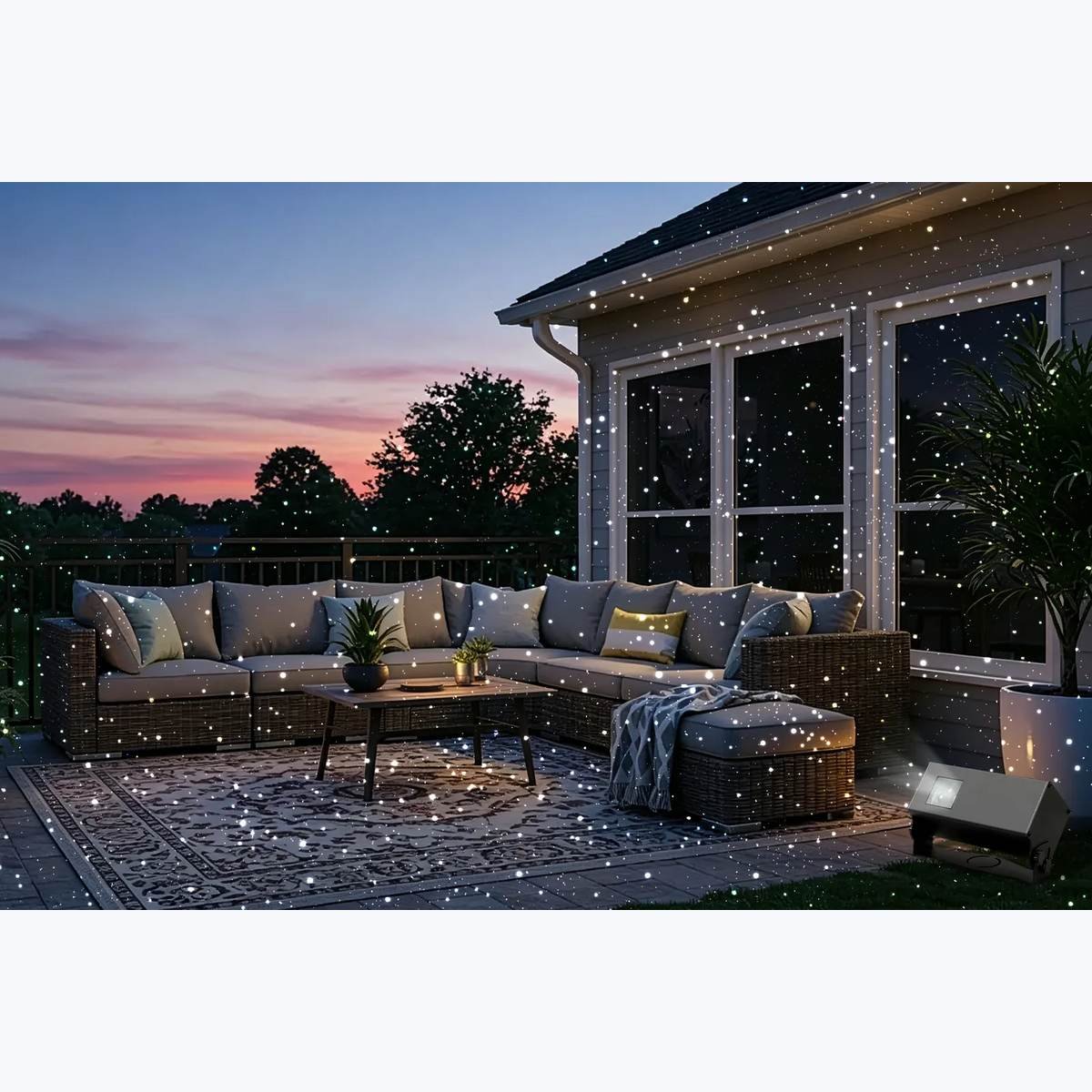
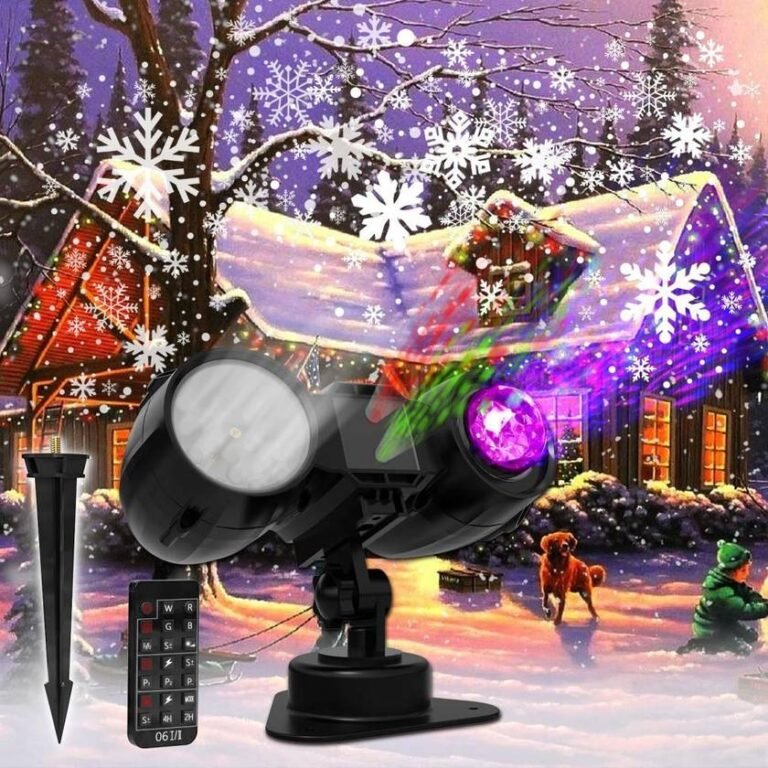
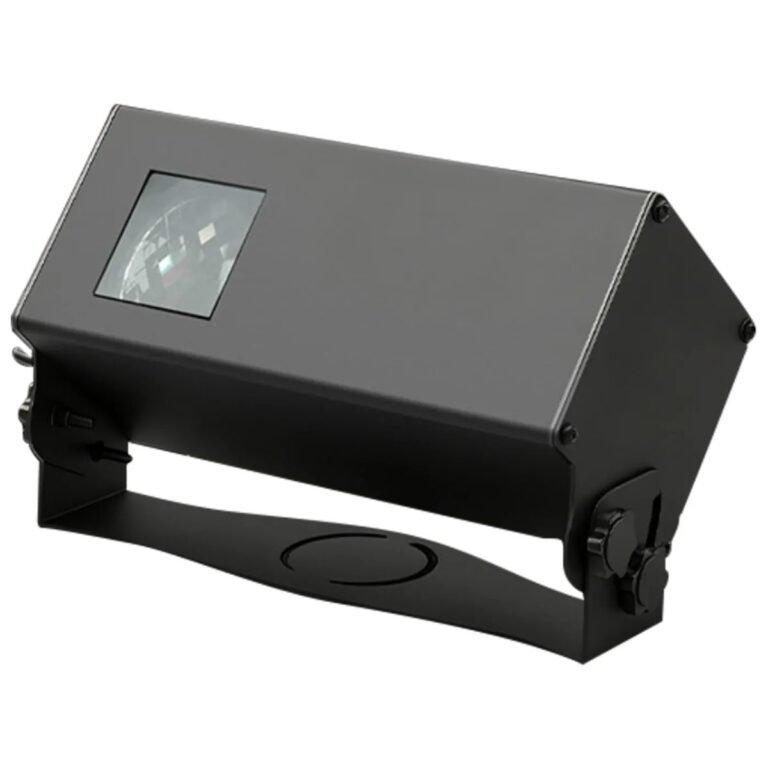
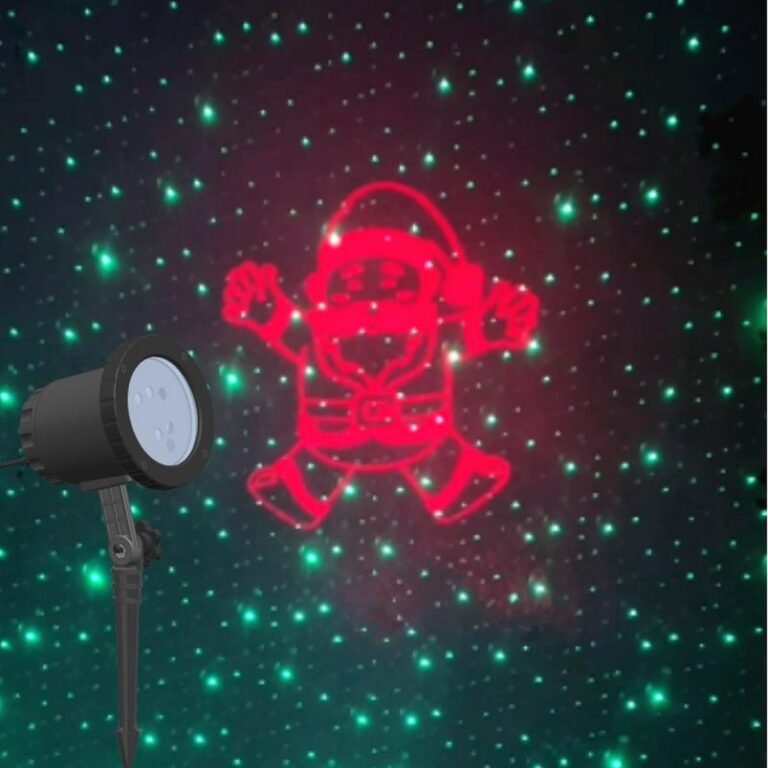
At Bowlum, BWL-OL-003 is presented as an outdoor smart water-ripple projector with a DMX512 professional version. Its one-piece die-cast aluminum housing and IP65 listing are product facts, but neither tells a distributor whether the local installer has the right site or control capability. BWL-OL-004 presents a firefly-style outdoor effect and is also associated with a DMX version in our product data. For a simpler holiday-specific offer, BWL-HP-003 combines snow and water-style patterns and is listed IP44 with remote control. Those facts belong to their exact models; I do not turn them into a range-wide certification or performance statement.
I would organize the buying conversation like this:
- Name the site class. Residential facade, hospitality entrance, garden, event venue, retail exterior, and municipal site create different installation constraints.
- Name the visual job. Architectural outline, static motif, moving points, water-ripple ambience, snow effect, or coordinated show.
- Name the operator. Homeowner, seasonal installer, AV integrator, landscape contractor, or venue technician.
- Name the control level. Simple remote, app-based grouping, or a professional protocol such as DMX512.
- Name the service promise. Who holds spares, who diagnoses a field problem, and how quickly the downstream buyer expects an answer.
This sequence keeps the distributor from buying advanced units merely because the feature list is longer. It also prevents a simple model from being stretched into a site that needs coordinated professional control. The catalogue becomes easier to explain because each product has a job.
A Portfolio Test I Use
For every proposed SKU, I ask the team to complete one sentence: “This model stays in the range because it solves for when ___.” If two products receive the same answer, we look for a real operational difference. If none exists, the assortment may be duplicating inventory rather than expanding coverage.
I also ask which product can be replaced locally if a job opens tomorrow. A broad range with no spare depth is less useful to installers than a narrower range with known configuration, documentation, and compatible replacement stock.
How Can an Installer Present All Three Options Without Confusing the Customer?
I have seen sales materials compare technologies by counting features. The customer receives pages of colors, effects, apps, remotes, and control terms but still cannot tell which offer changes the building and which comes down after the season. I rewrite that conversation around ownership and use.
Present permanent lights, seasonal strings, and projection as three site outcomes: an installed year-round outline, a physically installed seasonal display, or a removable surface effect. Then state the field conditions and service included with each. Customers can compare outcomes; they cannot responsibly compare unexplained feature counts.
A useful proposal should answer five things before listing product features:
- What will the customer see? Define outline, surface effect, motif, movement, and viewing area in plain language.
- What remains on the property? State what is permanent, what is seasonal, and what is removed.
- What must the property provide? Include power, mounting access, network or controller access where relevant, and an approved operating position.
- What can change after installation? Separate program changes from physical redesign or repositioning.
- Who supports the system? Identify commissioning, customer training, spares, and return-visit boundaries.
A Distributor Portfolio Case: The Third Offer
A Midwest distributor came to me with a recurring conflict that I use as a composite scenario. Its installer partners could already quote seasonal strings, while some property owners were asking about systems that could remain on the building. The distributor initially framed projection as a cheaper substitute for both. That positioning created confusion because a moving water-ripple effect does not do the job of a precise roofline, and a permanent outline does not create the same broad moving texture.
I asked the team to stop comparing boxes and build three sample briefs. The first specified a year-round architectural outline with a long-term service plan. The second specified a traditional seasonal installation with removal and storage. The third specified a removable projection layer for sites that wanted a changing surface effect and had a suitable mounting and throw path. We then attached a “not suitable when” line to each brief.
The result was not a claim that projection had won the account. The result was a cleaner qualification process. Installers could decline the wrong technology earlier, and the distributor could discuss a DMX-capable water-ripple option only with partners who had an actual use for professional control.
The strongest three-option proposal gives every format permission to lose the wrong site.
I recommend showing an on-site sample whenever projection is seriously considered. Record the location, distance, target, ambient conditions, effect, and control settings. A sample protects both parties from treating an edited marketing image as a site guarantee.
What Evidence Should a Buyer Request Before Adding a Projection Line?
The permanent-lighting conversation often creates urgency: distributors do not want to miss a category shift. I slow the process down and ask what evidence will let the team sell, install, and support the exact projection models under consideration. Trend anxiety is not a product qualification method.
Before adding a projection line, verify the exact model identity, control method, enclosure and ingress-protection claim, mounting and power scope, product-specific safety evidence where applicable, packing data, factory test process, and the buyer's own application sample. Do not extend one model's evidence across a family.
At our factory, every unit receives approximately eight hours of aging testing. Our standard factory production lead time is 35 days, and our basic factory MOQ is normally 1,000 pieces, with model or project variation possible. Those are factory-level operating facts. They do not replace an exact-model review, and the lead time does not include international freight, customs, domestic delivery, or the buyer's receiving inspection.
For laser products, our factory operates its own laser test room and requires laser products to meet Class 1 before shipment. Public product claims still need model-level discipline. BWL-OL-004 is recorded with Class 1 under IEC 60825-1 in our product data; I would not copy that statement to BWL-OL-003 or BWL-HP-003 without evidence for those exact models. IP ratings must be handled in the same way: BWL-OL-003 and BWL-OL-004 are listed IP65, while BWL-HP-003 is listed IP44.
Buyer Evidence Checklist
| Evidence item | What to verify | What it does not prove by itself |
|---|---|---|
| Exact model and configuration | Product code, control version, accessories, power supply, mounting parts | That every related model has the same specification |
| Product data and instructions | Rated functions, setup, control, operating boundaries | Suitability for an untested facade or environment |
| IP claim | Exact model and construction represented by the claim | Protection in every mounting position or against every field condition |
| Laser safety evidence where relevant | Exact product identity and applicable classification evidence | A range-wide claim for non-covered models |
| Factory test process | What is checked, for how long, and how the batch is traced | A prediction that no field issue will ever occur |
| Packing data | Pieces per carton, dimensions, weight, accessory layout | Final freight cost or arrival timing |
| Application sample | Actual target, position, ambient conditions, effect, and operator | Performance at a different site with different conditions |
Buyers should also separate warranty from immediate service. Bowlum's confirmed factory warranty is one year, but a factory warranty does not place a compatible spare in an installer's vehicle. The importer or distributor still needs a local replacement and diagnosis process appropriate to the promise it makes downstream.
Our outdoor laser projector guide can help frame product selection, while the broader factory-verification checklist explains how to test supplier claims before a bulk order. Neither replaces an exact-model, exact-site review.
Conclusion
Permanent Christmas lights matter because they reveal what some buyers value: year-round readiness and less repeated physical setup. That signal should influence a distributor's planning, but it does not turn every holiday-lighting job into a permanent installation. Seasonal strings still create physical outlines and displays that other formats do not duplicate. Projection still earns a place when a suitable site needs a removable animated or patterned surface effect. My advice is to stop asking which technology wins the category and ask which operating model the property, installer, and distributor can support. Define what stays, what comes down, what the customer sees, who commissions it, and who carries the spare. Once those answers are written, the right format is usually much easier to see.
Frequently Asked Questions
Will permanent Christmas lights replace seasonal installation businesses?
They will change the offer for sites that value a year-round installed outline, but they do not perform every seasonal-lighting job. Seasonal strings, motifs, and projectors create different visual results and service models. Installers can qualify sites by what should remain on the building, what should be removable, and who will provide ongoing support.
Are outdoor projectors a substitute for permanent Christmas lights?
Not when the customer wants a precise architectural line that stays installed. Projection is better treated as a removable surface-effect format for moving points, ripples, snow, or other patterns, subject to a suitable target, mounting point, power plan, ambient light, and clear optical path.
Does Bowlum manufacture permanent Christmas lights?
No. Bowlum manufactures projection lighting, not permanent line-of-light systems. The comparison in this guide is intended to help distributors and professional buyers decide where projection fits beside other holiday-lighting formats without treating them as identical products.
What is the main business difference between permanent lights and projection?
Permanent lights create an installed system tied to the property and an ongoing service relationship. Projection uses removable equipment to create a surface effect, but it needs site qualification, aiming or positioning, power, control, and local support. The labor and risk do not disappear; they move to different stages.
When is DMX512 useful in a holiday projector?
DMX512 is useful when trained operators need coordinated professional control as part of a larger show or installation. It is not automatically the right choice for every seasonal job. The buyer should match the control version to the downstream operator's real programming and service capability.
Can an IP65 projector be installed anywhere outdoors?
No. An IP rating is one part of product qualification, not permission for every location or mounting condition. The installer still needs to assess power connections, drainage, mounting orientation, physical security, environmental exposure, access, and the exact model documentation.
What should a distributor verify before stocking outdoor projectors?
Verify the exact model and control version, accessories, power and mounting scope, IP claim, product-specific safety evidence where relevant, packing data, factory test process, application sample, local spare plan, and the skill level of the installers who will deploy it.
How should installers compare permanent lights, strings, and projection for a customer?
Compare the intended visual outcome, what remains on the property, installation and removal work, site requirements, what can change after commissioning, and who supports the system. Presenting those outcomes is clearer than comparing feature counts or assuming one format is universally cheaper or better.