
A supplier has passed the commercial review. The vendor record is open, the quotation is accepted, and the approved sample is somewhere in an office. Then production asks which variant to build, packaging asks which artwork is final, and QC asks what the buyer actually approved. When I see “supplier approved” at the top of that file, my first question is: approved to do exactly what, and who releases each next step?
The problem is not that sourcing teams are careless. The problem is that supplier approval is treated as the end of a decision, when it should begin a transfer of decisions from sourcing to engineering, production, QC, packaging and receiving.
A projector supplier onboarding checklist becomes production-ready only when it names owners, freezes the exact sellable configuration, converts the approved sample into a reproducible baseline, releases packaging and acceptance records, controls changes, and schedules a first-batch review before any reorder inherits approval.

The assembly-line image shows where a commercial choice becomes many controlled actions. It does not prove capacity, output or a particular product result. Below, I walk through the six handoff gates that make the choice executable. If the factory is still being compared or verified, start with the remote factory audit evidence-chain guide; this article begins only after that selection work is complete.
Who Owns Each Supplier-Onboarding Handoff Before Production?
Many onboarding sheets list documents but not decisions. A file can be complete as an administrative record while every operational question still sits between the buyer, salesperson and factory team.
Give every production handoff row one buyer-side owner, one factory-side owner, an approval state and a release artifact. “Supplier approved” is not an owner, and an email thread is not a release state. Production should not begin from a collection of unassigned attachments.

I separate four states before I assign names: not submitted, under review, approved and blocked. “Sent” is not a fifth approval state. It only means one side transmitted something. The buyer may own the final artwork decision while the factory owns the controlled production file; both roles must be visible.
Build a Release Map, Not a Contact List
The owner is the person or function that can close the row, not everyone copied on the message. A practical map looks like this:
| Handoff row | Buyer-side decision owner | Factory-side execution owner | Release artifact |
|---|---|---|---|
| Product configuration | Product or sourcing lead | Product/engineering lead | Frozen configuration record |
| Approved sample baseline | Product/QC reviewer | Engineering/QC owner | Signed baseline and exception list |
| Artwork and labels | Brand/packaging reviewer | Packaging/document owner | Versioned artwork release |
| Packing configuration | Logistics/operations owner | Packaging/production owner | Selected carton plan and included-set list |
| Acceptance plan | Buyer QC/receiving owner | Factory QC owner | Conditions, checks, evidence and disposition path |
| Change notification | Named cross-functional approver | Factory change owner | Reviewed change record before implementation |
| First-batch closeout | Program owner | Program/production owner | Review register with closed and open actions |
I do not prescribe those job titles to every company. Smaller buyers may give several decisions to one person; a retail chain may separate them across departments. What matters is that the decision right is explicit and does not disappear when sourcing hands the project over.
Keep Company-Level Onboarding Separate From Product Release
Legal identity, supplier forms and social-audit information still belong in onboarding. They do not release a product configuration. For Bowlum, I can state that we have BSCI and WCA audit history and can arrange a new audit when a customer initiates it. I do not describe either record as currently valid, and I do not use audit history as proof that one projector, sample or production batch has passed a product requirement.
The schedule needs the same separation. Our confirmed 35-day figure is a factory production cycle. I place it only in the production stage; I do not present it as total time for supplier onboarding, sample approval, buyer decisions, transport or arrival. The source record does not support those extra stages.
A supplier file answers “who may enter the process.” A production handoff answers “who may release this exact decision.” Keep both, but never let one impersonate the other.
What Product Configuration Must Be Frozen Before the First Batch?
An approved product name can still hide several buildable versions. If the handoff records only the family name, production may deliver a legitimate variant that is not the one the buyer reviewed.
Freeze the exact public SKU, variant, included accessories, power and control configuration, label/artwork version, selected packaging plan and open evidence items before first production. Any field that is unresolved should remain visibly open rather than being filled from a similar model.

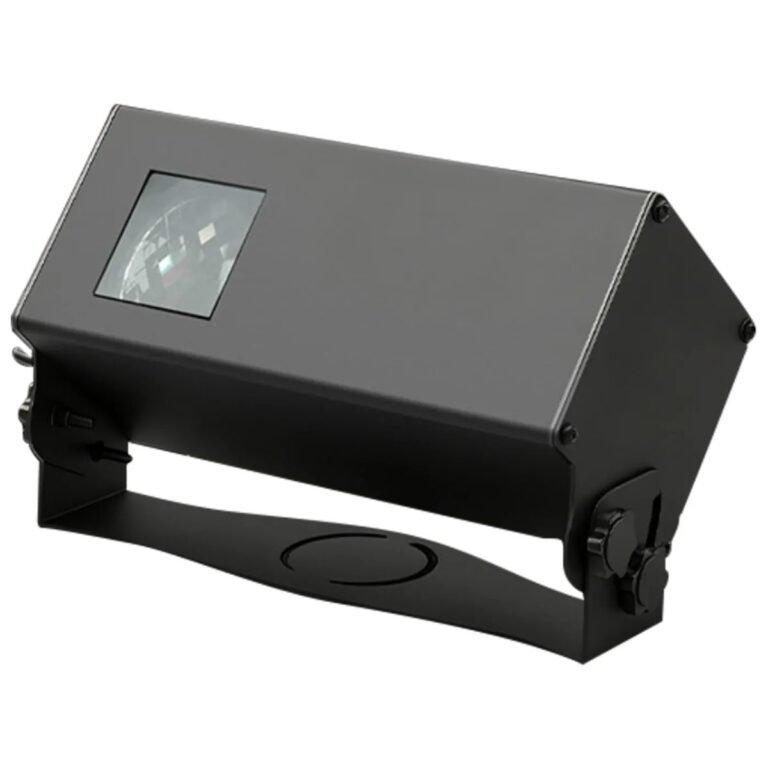
BWL-OL-004 shows why the public name alone is not a production instruction. Its current catalog record distinguishes a 7-color APP family version and a DMX512 professional version. The marketing image above does not prove which control version a buyer selected, and it cannot replace the configuration row. I write the exact public SKU and the chosen version together before the sample can become a production reference.
Freeze the Decisions That Can Drift Independently
A configuration sheet should be detailed enough to stop inheritance from a neighbouring product without trying to expose confidential engineering files. I use these fields:
| Configuration field | What must be explicit | Why a family name is insufficient |
|---|---|---|
| Sellable identity | Public SKU and buyer-facing name | Similar products can share a category or housing style |
| Variant or control version | Exact selected option and functions in scope | APP and DMX control are different production instructions |
| Included set | Unit, approved power path, controls, cables and mounting/accessories | A sample photo may omit or rearrange included parts |
| Product labels | Approved content, language, placement and version | Product identity and destination information can drift separately |
| Artwork and instructions | Released files and revision identifiers | “Final” in one email may not be the file packaging received |
| Packing configuration | Named carton plan, included-set layout and approved protection | One SKU can have more than one valid packing plan |
| Evidence status | Approved, pending or not applicable by exact scope | A missing file should not become a family-wide claim |
| Open decisions | Owner and required release point | Unknowns remain actionable instead of invisible |
I also record what is not part of the configuration. A product image is not an electrical specification. A company audit is not product evidence. A quotation description is not the final artwork. These exclusions prevent a strong-looking attachment from answering the wrong question.
Freeze Does Not Mean “Never Change”
Configuration freeze creates a known comparison point; it does not ban every later change. The buyer may revise artwork, choose another approved carton plan or request a product change. The rule is that the delta becomes visible, the affected owners review it, and the previous approval does not carry forward silently.
When I cannot map a requested option to the selected SKU and sample, I hold the field. That is faster than letting production resolve the ambiguity and discovering after packing that two teams used different meanings of “same version.”
How Does an Approved Sample Become a Production Baseline?
“Same as sample” sounds precise until the sample moves offices, loses its adapter or remote, or is approved only through a short video. The physical unit matters, but a unit without a controlled record is difficult for another team to reproduce.
Turn the approved sample into a baseline by recording its exact identity and configuration, observable functions, agreed test setup, approved visual result, allowed exceptions, photographs or video, and approval owner. The baseline should let production and QC repeat the decision without relying on the original conversation.

The rack above is a real Bowlum factory process image. It does not prove that BWL-OL-004 or any other named SKU passed a particular test, and it does not reveal the test conditions. I use it to show why a baseline needs both a repeatable setup and a record. A row that says only “looks good” cannot travel from the buyer to the rack.
Record What Another Reviewer Must Reproduce
I structure the baseline around decisions rather than adjectives:
| Baseline element | Record this | Avoid this shortcut |
|---|---|---|
| Identity | Public SKU, selected version and sample/reference ID | “Same model as before” |
| Complete set | Approved controls, power path, accessories and mounting parts | A beauty image with parts outside the frame |
| Setup | Distance or position, surface, ambient condition and selected mode where relevant | “Normal room” or “outdoor effect” |
| Observable functions | Functions and control responses the buyer actually accepted | Every feature copied from a catalog family |
| Visual reference | Fixed-view images/video and a written pass boundary | Automatic-camera footage with no context |
| Exceptions | Every accepted deviation or open item | Verbal “close enough” approval |
| Decision | Approver, state, date and next release point | A forwarded message with no final state |
The amount of detail should follow the risk. A label-color correction does not require the same record as an optical-effect decision, and a buyer should not invent measurements simply to make the sheet look technical. What matters is whether the responsible teams can repeat the accepted condition and recognize a meaningful difference.
Separate the Reference Unit From the Reference Record
Where practical, retain the approved physical sample in a controlled state. Also retain the record because physical samples can be handled, mixed with accessories or become unavailable. I compare production against both: the unit shows the accepted construction and experience, while the record explains what was actually approved and what remained open.
The baseline is not a universal product certificate and not a promise of field lifetime. It is the buyer's production reference for this configuration. That narrow role makes it useful.
“Same as sample” becomes operationally auditable only after another person can identify the sample, repeat the approved check and name the difference.
What Packaging and Acceptance Details Belong in the Handoff?
Packaging is often released through the brand team while product acceptance is written by QC or receiving. When the two records are not connected, a correct product can enter the wrong box, or a receiving team can reject a configuration it was never told to expect.
The handoff should connect the exact included set, selected carton configuration, approved artwork and labels, factory release checks, and buyer receiving criteria. Keep packaging execution and product acceptance as separate owners, but make both reference the same frozen SKU and version.
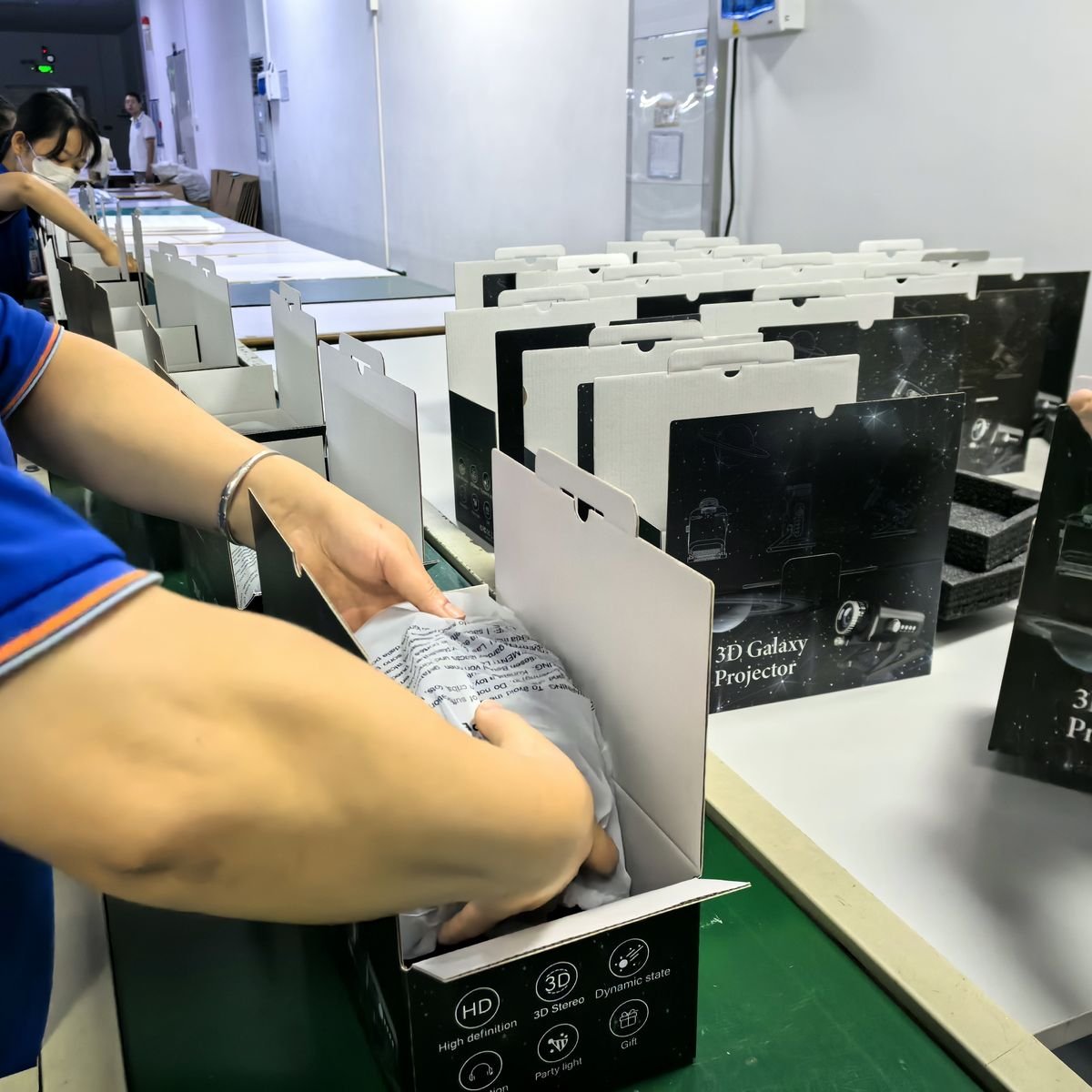
This image shows a real packing process for projector products, not the BWL-OL-004 or BWL-SP-011 carton plan. I use it only to illustrate that artwork, protective material, included parts and packing sequence meet at one workstation. The exact plan still comes from the controlled product record.
Select the Carton Plan; Do Not Merely Attach It
BWL-SP-011 has two valid recorded packing configurations: a 16-piece carton and a 12-piece carton. That does not create a conflict in the catalog. It creates a selection decision in the project handoff. The buyer and factory need to name which plan applies to the first batch rather than attaching both and expecting packing staff to infer the intention.
Our detailed projector carton and CBM guide explains how to compare packing plans. The onboarding handoff has a different job: record the plan that was chosen, the included set it protects and the owner who may change it.
I connect four records:
| Record | Minimum handoff content | Release owner decides |
|---|---|---|
| Included-set list | Every unit, control, cable, power item, accessory and document in the box | Whether the sellable set is complete |
| Artwork/label release | File revision, language/market version and approved placement | Whether packaging may print or proceed |
| Packing configuration | Carton plan, count, protection arrangement and evidence status | Which valid plan production should execute |
| Acceptance plan | Exact SKU/version, checks, conditions, evidence and disposition path | What factory QC and buyer receiving each evaluate |
Factory Release and Buyer Receiving Are Different Gates
Factory QC controls whether a unit or batch may leave the production process. Buyer incoming acceptance controls whether the delivered goods meet the agreed receiving plan. The checks can refer to the same frozen configuration, but neither team should assume the other owns its decision.
I write the boundary into the sheet: what the factory records before release, what evidence travels with the shipment, what the buyer checks on arrival, and who resolves an exception. This article does not prescribe a sampling plan or legal inspection standard. Those details belong to the buyer's risk, channel and qualified QC process.
What Changes Must a Projector Supplier Report Before Production?
The highest handoff risk appears after the configuration looks settled. A component becomes unavailable, artwork is corrected, an accessory changes or software is revised, and each team assumes the delta is too small to reopen approval.
Require written notice before a change to the selected product, component, power/control path, software, label, artwork, instructions, accessories or packing configuration enters production. The notice should identify the old state, proposed state, affected evidence and required re-approval; it should not assume that functional similarity preserves approval.
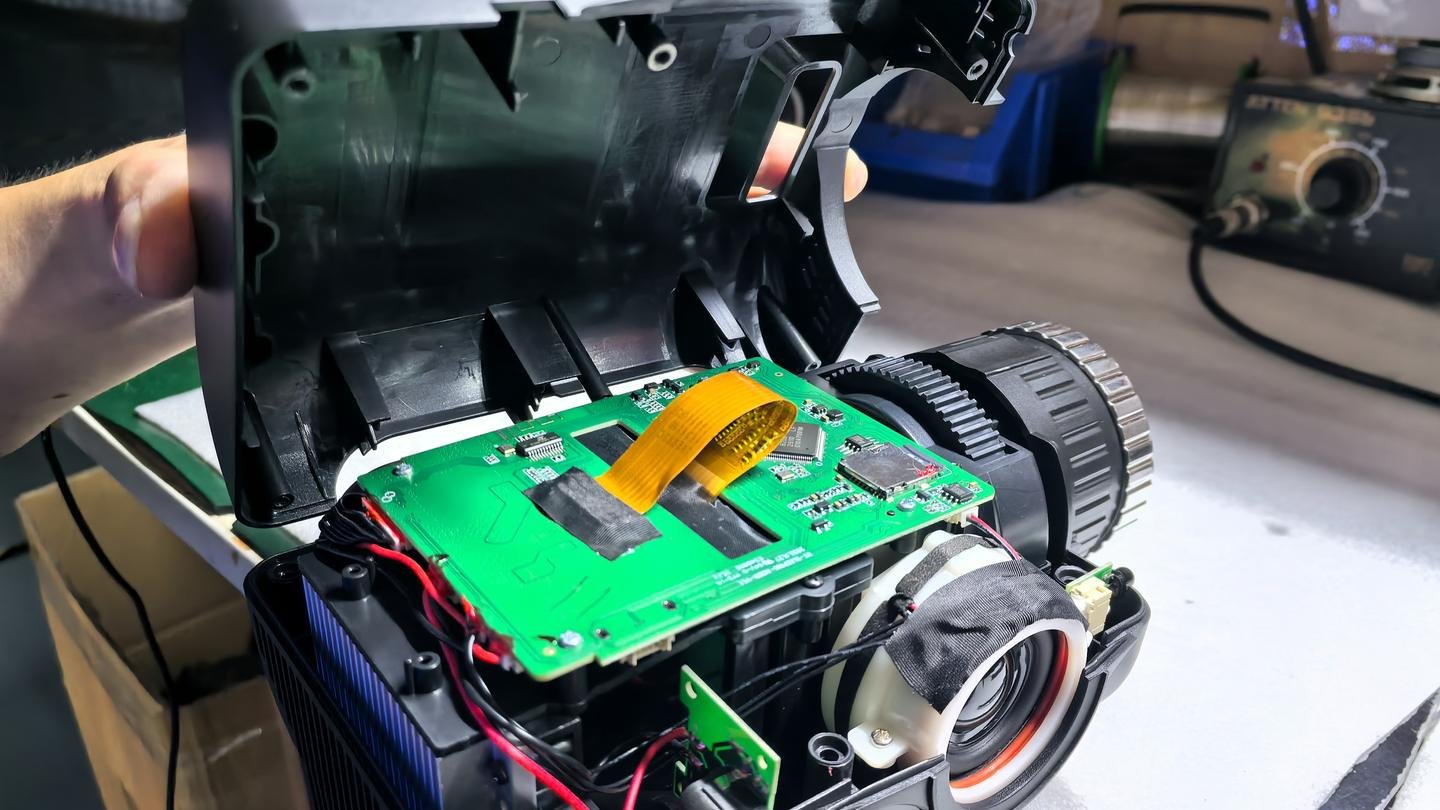
The photograph makes one risk visible: an internal assembly can change while the outer product still looks familiar. It is generic factory-process context, not proof of the construction or inspection result for either related SKU in this article.
Use One Change Record Across Functions
I will not approve a change from a sentence such as “equivalent part” or “same function.” I ask for the delta and route it to the owners affected by that delta:
| Proposed change | Questions the notice must answer | Possible review owner |
|---|---|---|
| Variant or control function | Does the selected use, baseline or instruction change? | Product/engineering |
| Internal component or optical path | Does construction, effect, test method or evidence scope change? | Engineering/QC/compliance reviewer |
| Power item or accessory | Does the approved set or compatibility record change? | Engineering/product/QC |
| Software, app or control interface | Do functions, support responsibilities or instructions change? | Product/software/support owner |
| Product label or document | Does identity, destination information or evidence mapping change? | Compliance/brand/document owner |
| Artwork or instructions | Does the released file, language or buyer claim change? | Brand/packaging reviewer |
| Carton or protection | Does packing count, geometry, included set or acceptance evidence change? | Packaging/logistics/QC |
The required action may be a document review, an updated baseline, another sample or a formal hold. I do not prescribe one answer for every delta. I require that the previous approval stop inheriting until the responsible owner has made that answer explicit.
Where Change Control Fails
Change control fails when notification arrives after production, when sales is the only recipient, when the old and new states are not compared, or when the buyer approves appearance while another affected function remains unaware. It also fails when a supplier hides every small production adjustment behind confidentiality. This onboarding register does not need the supplier's complete proprietary design file, but the buyer does need enough information to review changes that affect the approved product and its evidence.
I keep a simple rule: if a proposed change could alter what the buyer receives, how it is evaluated, what documentation applies or how it is supported, it enters the handoff register before production release.
What Should the First-Batch Review Close Before Reorders?
The first production batch is where the handoff itself becomes testable. The review should not ask only whether units worked; it should ask whether every released decision reached the correct team and whether every deviation returned to an owner.
Before a reorder inherits the first approval, review configuration execution, baseline evidence, packaging release, factory and receiving records, approved changes, deviations and open actions. Close each item, assign a new owner and date, or keep the reorder condition visible.

Every Bowlum unit receives roughly eight hours of aging. I record that as a factory release control. The image itself does not establish the aging duration. I do not call the process proof of product life, seasonal durability, certification or buyer acceptance, and the image above does not identify the article's related SKUs. The buyer still needs its own first-batch review against the frozen handoff.
Review the Handoff, Not Just the Product
The first-batch register should answer:
- Did production use the released SKU, version and included set?
- Did the test evidence refer to the approved baseline and its stated conditions?
- Did packaging use the selected configuration and released artwork?
- Were all changes notified and approved before implementation?
- Did receiving or channel feedback reveal an ambiguous acceptance field?
- Which decisions can carry into the reorder, and which must reopen?
If the review uncovers unit symptoms or a possible repeated issue, move those observations into a structured defect record. Our projector batch and return-log guide covers that separate diagnostic task. Here, I am checking whether the onboarding system gave that investigation the identity, baseline and ownership it needs.
A Regional Retail-Chain Example: Approved Supplier, Unreleased Product
A regional retail chain had completed its supplier approval and moved the projector program toward first production. The onboarding folder contained the vendor record, product presentation and commercial documents, but the operative sheet had no single owner for the selected control version, packaging release, receiving check or change notice.
I did not repeat the factory audit or reopen the quotation comparison. I drew a line under those completed decisions and converted the remaining work into six gates: owner map, frozen configuration, sample baseline, packaging release, acceptance plan and change control. Where a required file was still missing, I marked the row blocked instead of calling the supplier incomplete as a whole.
The buyer changed the production discussion from “Is the supplier approved?” to “Which release rows are approved?” It assigned decision owners and placed a first-batch review before any reorder could inherit the configuration. The useful result was not another supplier score; it was a handoff that showed exactly what could proceed and what still had to close.
Another buyer can reuse that distinction with any factory. Finish selection first. Then stop evaluating the supplier as one object and start releasing named product decisions to named operating owners.
Supplier approval chooses the relationship. The first-batch handoff proves whether that relationship can carry one exact product decision from buyer intent to repeatable execution.
Conclusion
A projector supplier onboarding checklist should not be another pre-selection audit or a folder index. Its job begins after the supplier is chosen: transfer decision rights into production without losing product identity, sample intent, packaging choice, acceptance boundaries or change ownership. Assign each row, freeze the exact SKU and version, build a reproducible sample baseline, release packing and acceptance separately, and review every delta before it inherits approval. Keep the 35-day factory production cycle separate from the wider project timeline, and keep roughly eight hours of unit aging in its proper role as a release control. My final rule is operational: I do not release first production from the words “supplier approved”; I release it only when every required product decision has an owner, a state and an executable record.
Frequently Asked Questions
When should a projector supplier onboarding checklist start?
Start this production-handoff checklist after supplier selection and commercial comparison are complete. It should transfer the exact configuration, sample, packaging, acceptance and change decisions to named buyer and factory owners before production release.
Who should own supplier onboarding after sourcing selects the factory?
Assign an owner by decision rather than giving the whole checklist to one generic contact. Product, engineering, QC, packaging, logistics, brand and compliance responsibilities may sit with different people; every release row needs one clear closer on each relevant side.
What should be frozen before the first projector production batch?
Freeze the public SKU, exact variant, included set, power/control configuration, product labels, artwork/instructions, selected carton plan, evidence status and open decisions. A family name or approved product image is not enough.
Is an approved sample enough for mass production?
No. Turn the sample into a controlled baseline with identity, complete configuration, repeatable setup, observable functions, visual reference, accepted exceptions and named approval. Retain the physical unit where practical, but do not rely on it without a record.
Does Bowlum currently have valid BSCI or WCA audit status?
This article does not claim current validity. Bowlum has BSCI and WCA audit history and can arrange a new customer-initiated audit. That company-level process remains separate from release of a product configuration or batch.
Does Bowlum's 35-day lead time include onboarding and shipping?
No such total timeline is supported here. The confirmed 35 days refers only to the factory production cycle; onboarding, sample and artwork approval, buyer decisions, logistics and arrival remain separate stages.
What should be reviewed before reordering the first production batch?
Review the executed configuration, sample-baseline evidence, packaging release, factory and receiving records, approved changes, deviations and every open action. A reorder should inherit only the decisions that the responsible owners explicitly close.